

- India,
- 12-Jan-2026 01:31 PM IST


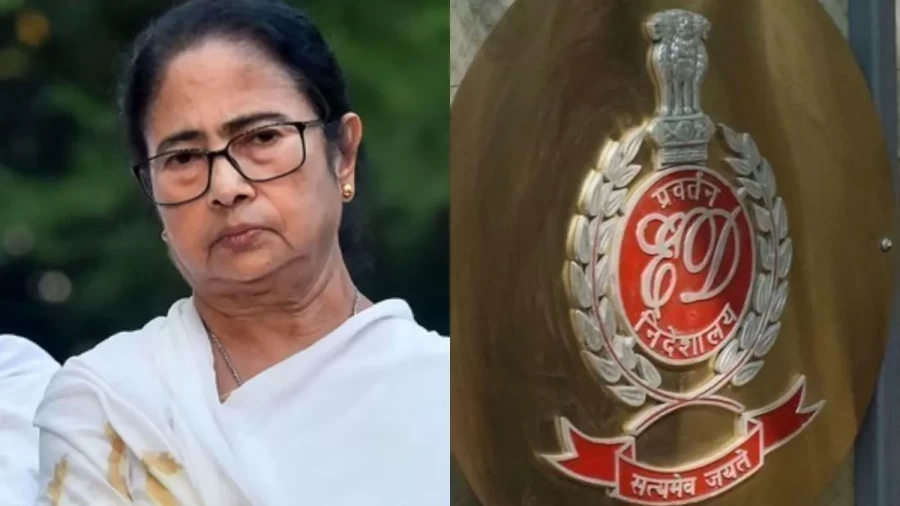
The Enforcement Directorate (ED) has filed a writ petition against West Bengal Chief Minister Mamata Banerjee in the Supreme Court, a move that's expected to Importantly escalate her political and legal challenges, while the petition stems from allegations of intimidation and threatening of three ED officials during a search operation conducted in Kolkata. The ED has leveled serious accusations against the West Bengal government and the Chief. Minister, including obstructing the search operation and interfering with the central investigating agency's work.
Allegations of Misconduct Against ED Officials
The ED's petition explicitly states that its officials were wrongfully restrained and intimidated during a crucial search operation in Kolkata. This petition has been filed on behalf of three ED officials who. Were present in West Bengal during the action and allegedly faced this misconduct. The central agency views this incident as a severe impediment to its ability. To function within its legal mandate, prompting it to approach the country's apex court. These allegations highlight a perceived interference by the state government in the functioning of central investigative agencies, raising concerns about the rule of law.
Serious Accusations and the Coal Scam Context
The writ petition filed by the central investigating agency, ED, contains extremely serious allegations against Chief Minister Mamata Banerjee and several other individuals. Specifically, the petition states that West Bengal Chief Minister Mamata Banerjee and the Director General of Police (DGP) obstructed a search operation, while this incident is linked to the Rs 2,742 crore coal scam, with the obstruction allegedly occurring during a search conducted on January 8. The ED has requested the Supreme Court to direct the registration of a CBI FIR and an investigation against West Bengal Chief Minister Mamata Banerjee, DGP Rajeev Kumar, and CP Manoj Verma. Given the gravity of these accusations, this case could evolve into a major confrontation between the state and the central government.
Alleged Obstruction of Search Operation
The petition details how Chief Minister Mamata Banerjee and the DGP allegedly forcibly entered and disrupted the search proceedings, while the ED claims that Chief Minister Mamata Banerjee, accompanied by over 100 police personnel, entered Prateek Jain's residence at 12:05 PM. Following this, laptops, mobile phones, and other crucial documents that had been seized by the ED were forcibly taken away in a truck. This incident directly questions the integrity of the ED's search operation and, according to the central agency, constitutes a violation of the rule of law. Such actions raise serious questions about transparency and fairness in the investigation process.
Attempted Disruption of High Court Proceedings
The ED's petition also alleges that Trinamool Congress (TMC) supporters attempted to hijack the High Court proceedings. The petition states that before the hearing in the High Court, TMC supporters created planned chaos through WhatsApp groups. This accusation points to external interference in the judicial process and attempts to exert political pressure. The ED believes this was an organized effort aimed at influencing the investigation process and obstructing legal proceedings. Such allegations are a matter of concern for the independence. And impartiality of the judicial system, potentially undermining public trust.
Demand for CBI Probe and Future Implications
In its petition, the ED has reiterated its demand for a CBI FIR and investigation against West Bengal Chief Minister Mamata Banerjee, DGP Rajeev Kumar, and CP Manoj Verma for obstructing the January 8 search in the Rs 2,742 crore coal scam, while this demand underscores the seriousness with which the ED is pursuing this matter and its desire for an independent and impartial investigation into the entire episode. The Supreme Court's hearing on this petition could intensify political turmoil in West Bengal and pose new challenges for Chief Minister Mamata Banerjee. The outcome of this case is also likely to have significant implications for state-center relations, potentially setting a precedent for future interactions between central agencies and state governments.
