

- India,
- 28-Jan-2026 09:09 AM IST


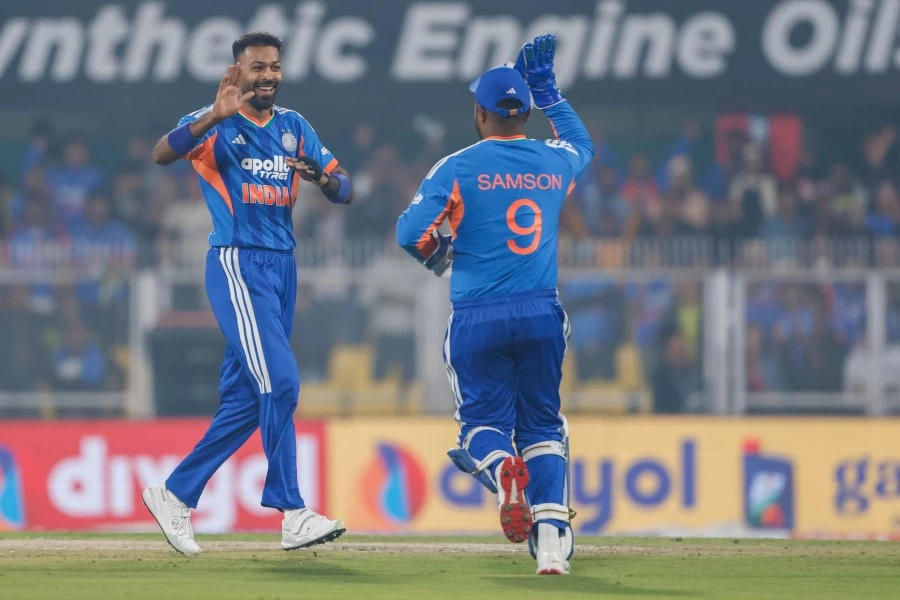
The Indian cricket team has been in sublime form during the ongoing T20 series against New Zealand. As the action shifts to Visakhapatnam for the fourth T20I, Team India finds itself in a comfortable position with a 3-0 lead in the five-match series. This dominance provides the team management with a perfect opportunity to test their bench strength and, more importantly, manage the workload of their star players. The biggest question ahead of the toss is whether Hardik Pandya should be rested for this encounter.
The Critical Need for Hardik Pandya's Rest
Hardik Pandya is arguably India's most valuable asset in the shortest format of the game. However, his history with injuries is well-documented. With the T20 World Cup 2026 on the horizon, India can't afford to lose Pandya to a long-term injury in a match that holds little consequence for the series outcome. Pandya has featured in all three matches so far. While his batting hasn't been tested much, he has been consistent with the ball, bowling eight overs across the three games. For an all-rounder of his physical profile, the cumulative stress on the body is significant.
Workload Management Under Gautam Gambhir
Head coach Gautam Gambhir and captain Suryakumar Yadav have been proactive with their rotation policy. Jasprit Bumrah was rested for the second game, and reports suggest he might sit out the fourth match as well. Applying the same logic to Hardik Pandya makes strategic sense. Given the humid conditions in Visakhapatnam, the risk of muscle cramps or strains is high, while since the series is already in the bag, resting Pandya would allow him to recover fully and stay fresh for more critical assignments.
Opportunities for Sanju Samson and Shreyas Iyer
If Pandya is rested, it opens up a spot for players like Sanju Samson or Shreyas Iyer. Samson, who has a massive following, has been waiting for a consistent run in the side. His inclusion would bolster the batting and provide him with the platform to showcase his skills. Plus, resting Pandya allows the team to test Shivam Dube's bowling capabilities more extensively, while dube is often seen as a backup for Pandya, and giving him more overs under pressure will help the team build a more solid squad depth.
Testing the Bowling Depth
Without Pandya, India might opt for an extra specialist bowler or an additional spinner like Ravi Bishnoi, while this would be a great test for the bowling unit to see if they can defend totals or restrict the opposition without the cushion of Pandya's four overs. With Washington Sundar's fitness being a concern, exploring other bowling combinations becomes even more vital, while the management needs to know how the team balances itself when its primary all-rounder is unavailable.
Conclusion: A Strategic Vision
To sum it all up, the fourth T20I is the ideal stage for Team India to make some tough calls. Resting Hardik Pandya isn't about his performance; it's about preserving a national treasure for the big stages, while gautam Gambhir’s philosophy of 'team first' and 'long-term planning' suggests that resting key players during dead rubbers is the way forward. A well-rested Hardik Pandya is far more dangerous than a fatigued one, and Team India should prioritize his longevity over a single match result.
