

- India,
- 17-Jul-2025 06:00 PM IST


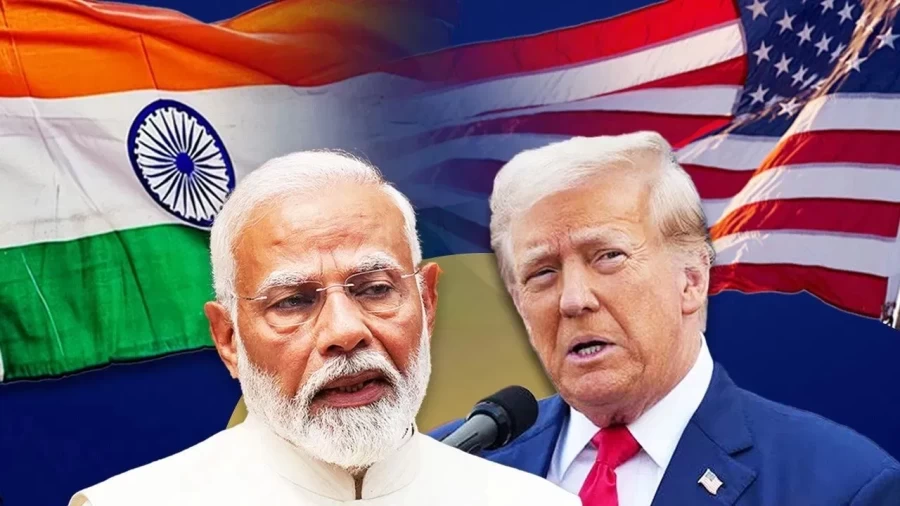
Donald Trump News: The ongoing talks between India and the US regarding the trade agreement have gained momentum in recent times. US President Donald Trump has indicated that this agreement with India could be like his trade agreement with Indonesia. However, such an agreement is feared to cause serious damage to India's domestic industries, especially the agriculture and dairy sector. In this article, we will analyze in detail the possible effects of this agreement, challenges and necessary precautions for India.
Trump's Indonesia Model: A Look
According to a recent report by Navbharat Times, Trump has said that the trade agreement with India could be based on the Indonesia model. In the Indonesia-US agreement, Indonesia has allowed American goods to enter its market without any restriction, while the US has imposed a 19% tariff on Indonesian goods. Additionally, Indonesia has promised to buy $15 billion worth of energy, $4.5 billion worth of agricultural products and 50 Boeing jets from the US. Trump has also expressed the expectation of similar conditions from India, so that American goods can be easily sold in the Indian market.
Trump's statement, "India is also working in this direction. Now we will get access to the Indian market. Earlier our people could not go there, but now we are getting this opportunity through tariffs," makes it clear that America is demanding complete opening of India's market.
Talks going on in Washington
Intense discussions are going on in Washington regarding this agreement between India and America. A team of the Indian Commerce Ministry is currently in Washington, and this is their fifth visit. Both the countries are discussing issues related to agriculture, automobile, and other important sectors. America has postponed the additional tax imposed on many countries including India till August 1, which has made this conversation even more important.
Danger of a one-sided agreement
The Global Trade Research Initiative (GTRI) has expressed serious concern about this agreement. According to GTRI, if India signs a “unilateral” agreement like Indonesia, it could result in huge losses for the Indian dairy and agriculture sector. Such an agreement would lead to:
Cheap imports of US goods: US goods will be easily sold in the Indian market without taxes, which will have a negative impact on the demand and prices of local products.
Heavy tariffs on Indian goods: A 19% tariff on Indian goods in the US will make Indian exports expensive, which will affect India's export market.
Economic losses: A flood of cheap US goods will reduce the sales of Indian companies, which will lead to money flowing out of the country and put pressure on the economy.
GTRI founder Ajay Srivastava warns, “A hasty and wrong agreement can cause long-term economic damage to India. India should be transparent in negotiations and protect its interests.”
Disagreement on key issues
India and the US have not yet reached a consensus on several key issues.
Some of the key points are as follows:
US demand: The US wants India to give tax exemption on its agricultural and dairy products. However, India has not given such exemption to any country in the dairy sector so far and is taking a tough stand this time too.
India's demand: India has demanded the removal of 50% tax imposed on steel and aluminum and 26% tax on automobiles from the US. India has also made it clear that if needed, it can impose retaliatory tax under the rules of the World Trade Organization (WTO).
Sector-specific demands: The US wants tax exemption on industrial goods, electric vehicles, alcohol, petrochemicals, and dairy-agricultural products. At the same time, India is demanding tax relief in sectors like textiles, gems and jewellery, leather, apparel, plastics, chemicals, shrimp, oilseeds, grapes and bananas. These sectors are important for India's economy and the livelihood of millions of people.
Timeline of the agreement
The two countries are working towards completing the first phase of the Bilateral Trade Agreement (BTA) by September-October this year. Before this, the possibility of an interim agreement is also being expressed. However, India will have to ensure that any agreement does not harm its long-term interests.
Precautions for India
- A trade agreement between India and the US can be beneficial for both countries, provided it is done in a balanced and transparent manner. India will have to take the following precautions:
- Protecting domestic industries: India will have to protect the interests of its small farmers, dairy sector, and other local industries.
- Mutual benefit: The agreement must ensure equal benefits for both countries. One-sided conditions should be avoided.
- Recourse to WTO rules: If the US imposes unfair tariffs, India has the right to retaliate under WTO rules.
- Long-term view: India should not hastily enter into any agreement that will weaken its economy in the long run.
