

- India,
- 26-Oct-2025 09:05 AM IST


Bollywood films have always had a profound impact on fashion, with the outfits, sarees, and jewelry worn by actresses often setting new trends in the industry, while in the 1980s, an era that saw Indian cinema reach new heights, one actress not only captivated audiences with her performances but also mesmerized them with her distinctive fashion sense. This was none other than Bollywood's first female superstar, Sridevi, while she achieved an extraordinary feat by wearing similar chiffon sarees in three different films, all of which became massive blockbusters, and remarkably, she also commanded higher fees than her male co-stars at the box office.
Sridevi, through her films in the 80s, breathed new life into the chiffon saree. Her enchanting expressions combined with the ethereal lightness of chiffon sarees created a magical allure that captivated audiences. What's even more remarkable is that she wore similar chiffon sarees in three distinct films, and all three proved to be roaring successes at the box office, further cementing her superstar status. This wasn't merely a coincidence but a unique confluence of her intrinsic style and compelling storytelling that consistently set her apart from the crowd.
The Magic of Chiffon Sarees and Three Blockbusters
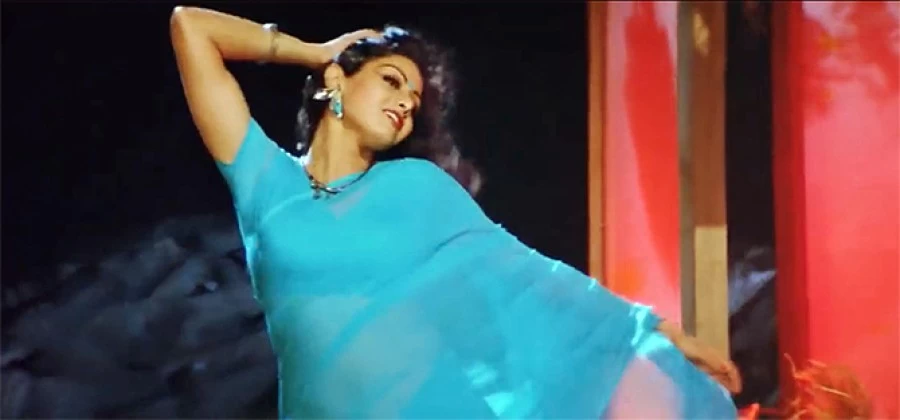
**The Blue Chiffon Saree of 'Mr. Released on May 29, 1987, 'Mr. India' remains one of the most iconic films in Indian cinema. The song 'Kaate Nahi Kat Te Din Aur Raat... ' from the movie is still etched in people's minds. In this song, Sridevi donned a blue chiffon saree, looking exceptionally beautiful and alluring. Her captivating presence not only gave the song a distinct identity but also elevated the blue chiffon saree into a significant fashion statement. Made on a modest budget of 3 crores, the film went on to earn over 10. Crores at the box office, achieving blockbuster status, with Sridevi's look and performance being key contributing factors.
'Chandni': The Yellow Chiffon Legacy
'Chandni,' a romantic musical drama released on September 15, 1989, was another huge superhit of its time. In this film too, Sridevi wore chiffon sarees, with the yellow chiffon saree, in particular, catching the audience's eye. Sridevi's innocence and beauty in the yellow chiffon saree perfectly embodied the character of 'Chandni, while ' This film proved to be a milestone in Sridevi's career, and through her cinematic choices, she Importantly established the chiffon saree trend deep within Indian fashion.
'Janbaaz': The Red Chiffon and a Powerful Cameo
Feroz Khan's 1986 film 'Janbaaz' was considered ahead of its time. Despite starring prominent actors like Anil Kapoor and Dimple Kapadia, Sridevi's cameo role remained unforgettable. Initially, Sridevi had declined to work on the film, but Feroz Khan eventually persuaded her. In 'Janbaaz,' she wore a red chiffon saree, featured in the popular song 'Har Kisi Ko Nahi Milta Yahan Pyar Zindagi Mein. ' This song and Sridevi's look in it are still widely cherished today. The film, made on a budget of 2 crores, grossed approximately 6 crores and was declared a hit, with Sridevi's brief yet impactful role playing a significant part.
Breaking Barriers: Earning More Than Male Leads
In the 1980s, Bollywood was predominantly a male-dominated industry where actors typically earned more than actresses, while however, Sridevi broke this convention. Leveraging her immense popularity and the consistent box office success of her films, she reportedly commanded higher fees than her male co-stars in several projects. This was a testament to her immense star power and stature within the industry, truly earning her the title of 'Lady Superstar. ' Her influence wasn't limited to fashion and acting; she also set new. Benchmarks for women in terms of remuneration, paving the way for future generations.
