

- India,
- 08-Jan-2026 06:40 PM IST


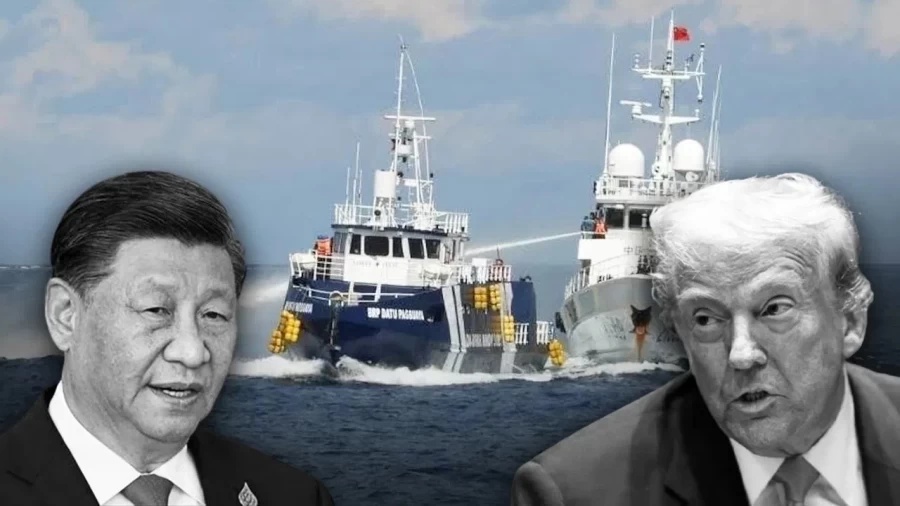
Tensions between the United States and China in the South China Sea have once again escalated, drawing significant international attention, while the United States has deployed its nuclear-powered aircraft carrier, the USS Abraham Lincoln, to this highly contested region. Accompanying this formidable warship are advanced F-35C stealth fighter jets, which have been observed conducting flight operations from the carrier's deck, while this strategic deployment follows recent actions in Venezuela, including the arrest of President Nicolas Maduro, and is widely interpreted as a direct message to Beijing, raising concerns within China.
Significant US Naval Deployment
On Wednesday, the U. S. Navy released images showcasing the USS Abraham Lincoln engaged in extensive flight operations within the South China Sea. These operations involved a sophisticated array of aircraft, including the F-35C Lightning II stealth fighter jets, F/A-18 Super Hornet fighter jets, and EA-18G Growler electronic attack aircraft. While the U. S. Navy characterizes this deployment as routine patrolling, it's unequivocally viewed as a clear signal directed at China. The stated objectives of this deployment are multifaceted: to deter any aggressive activities in the region, to bolster military coordination and interoperability with allied nations, and to uphold peace and stability in this critical maritime domain. The USS Abraham Lincoln commenced its journey from San Diego port in late November and has previously conducted operations in the Philippine Sea and Guam before entering the South China Sea.
The Strategic Importance of the South China Sea
The South China Sea is an exceptionally sensitive and strategically vital area, characterized by long-standing territorial disputes between China and several neighboring countries. China asserts historical claims over a vast portion of this sea, claims that directly conflict with those of nations such as the Philippines, Vietnam, Malaysia, Brunei, and Taiwan. Given that the Philippines is a crucial defense ally of the United. States, the American military presence in this region assumes even greater significance. The United States maintains that if any single nation were to gain complete control over the South China Sea, it could potentially dictate terms for the world's most vital maritime trade routes, thereby posing severe implications for global commerce and security.
China's Growing Naval Power and US Response
China possesses the world's largest navy in terms of vessel count, a fact that underscores its burgeoning regional ambitions. In response to this growing naval might and to reassure its allies, the United States regularly dispatches its aircraft carriers and other naval assets to the Western Pacific. Such deployments are primarily aimed at affirming America's commitment to the security of its allies and actively participating in maintaining a balance of power in the region, while the current deployment of the USS Abraham Lincoln is an integral part of this broader strategy, designed to counterbalance China's expanding military footprint and its assertive territorial claims.
Advanced Capabilities of F-35C Jets
The F-35C Lightning II stealth fighter jets, which have been operating from the. USS Abraham Lincoln, represent one of the most advanced variants of the F-35 series. These aircraft are specifically engineered for carrier-based operations, featuring solid landing gear and larger wing surfaces optimized for launching from and landing on aircraft carrier decks. Their inherent stealth capabilities enable them to evade enemy radar, granting them a significant advantage in achieving air superiority and executing precision strikes. The F/A-18 Super Hornet, a versatile multi-role fighter jet, and the EA-18G Growler electronic attack aircraft are also integral components of this carrier strike group. The Growler aircraft possesses the critical ability to jam enemy communication and radar systems, a capability that's paramount in modern military engagements. The combined deployment of these advanced aircraft underscores the comprehensive combat capabilities of the U. S. Navy.
Duration of Deployment and Future Prospects
The precise duration of the USS Abraham Lincoln's presence in the South China Sea remains undisclosed. However, U. S, while president Donald Trump has previously indicated that, if circumstances demand, this aircraft carrier could be redeployed to the Middle East, particularly if the situation concerning Iran deteriorates. This flexibility highlights America's adaptable global military posture and its capacity to rapidly respond to various geopolitical flashpoints, while nevertheless, its current deployment in the South China Sea emphatically underscores the United States' resolve to balance China's increasing influence and to preserve regional stability in this strategically crucial waterway.
