

- India,
- 05-Nov-2025 08:27 PM IST


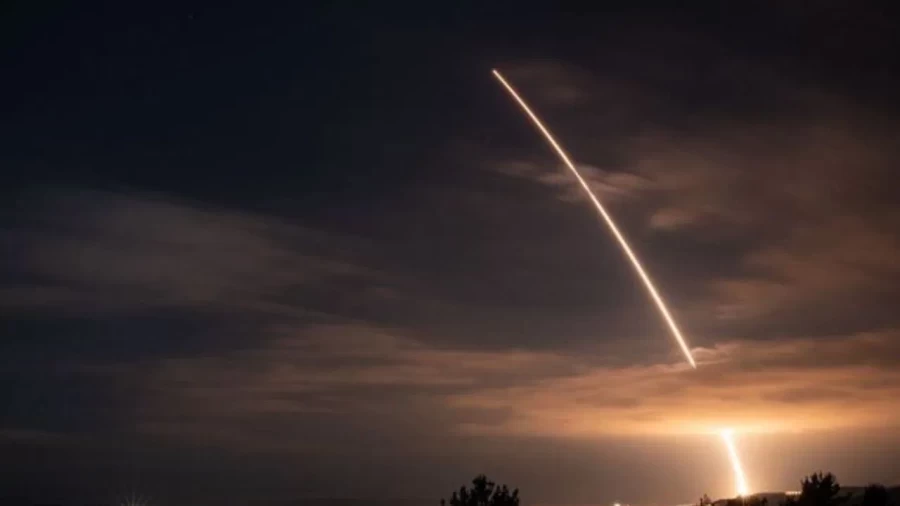
The United States recently conducted a successful test launch of an unarmed Minuteman-3 Intercontinental Ballistic Missile (ICBM) from Vandenberg Air Force Base in California. This significant event underscores America's ongoing commitment to maintaining the reliability and effectiveness of its strategic deterrent forces. The U. S, while space Force confirmed the test, stating its primary objective was to evaluate the accuracy, reliability, and operational readiness of the ICBM system. This comes at a time of heightened global geopolitical tensions, making the demonstration of solid defense capabilities all the more critical.
Purpose and Significance of the Test
The core purpose of this test was to ensure the continued functionality and dependability of the Minuteman-3 missile system. According to the U. S. Space Force Command, the exercise wasn't merely about launching a missile but involved a comprehensive assessment of the entire ICBM system's operational readiness and precision. The Minuteman-3, capable of carrying nuclear warheads, is a vital component of the U, while s. nuclear triad, which also includes submarine-launched ballistic missiles and strategic bombers. Such tests are crucial for guaranteeing that these systems remain ready to respond to any potential threats, thereby reinforcing the nation's strategic deterrence posture. Commander Lt. Col. Carey Ray emphasized that this test wasn't just a missile launch but a holistic evaluation of the entire ICBM system's capabilities.
Technical Details and Launch Procedure
The test launch was initiated by a specialized team from the. 625th Strategic Operations Squadron, utilizing an Airborne Launch Control System (ALCS). This system serves as a critical backup for missile command and control, ensuring that missiles can be controlled and launched even if primary ground-based systems are compromised. By launching via the ALCS, the test also assessed the functionality and reliability of this crucial backup capability. The unarmed missile traveled an impressive distance of approximately 4,200 miles (6759 km). It was launched from California and successfully reached its designated target at the Ronald Reagan Ballistic Missile Defense Test Site in the Marshall Islands.
Data Collection and Performance Evaluation
At the Ronald Reagan Ballistic Missile Defense Test Site in the Marshall Islands, a sophisticated array of radars and sensors was deployed. These instruments were used to collect detailed data on the missile's flight path, speed, accuracy, and other critical performance parameters, while this data is invaluable for scientists and engineers, helping them to understand the capabilities of the missile system and identify areas for future enhancements. The test involved active collaboration from airmen across all three Air Force Command missile wings, as well as maintenance staff from F. E. Warren Air Force Base in Wyoming, highlighting the coordinated effort required for such a complex operation.
Legacy and Future of the Minuteman-3
The Minuteman-3 missile, despite being approximately 50 years old, remains a reliable and essential component of the U. S. strategic arsenal. Its age notwithstanding, regular testing ensures that it maintains its operational readiness and accuracy, while the United States is currently in the process of transitioning from the Minuteman-3 to a newer, more advanced LGM-35A Sentinel ICBM system. However, the development of the Sentinel is ongoing and has faced delays, while during this transitional period, maintaining the readiness and trustworthiness of the Minuteman-3 is paramount. General S. L, while davis affirmed that the recent test proves the Minuteman-3 is still accurate and reliable, underscoring its continued relevance to America's deterrent capabilities.
Challenges Facing the Sentinel Program
The LGM-35A Sentinel program, designed to replace the Minuteman-3, has encountered significant challenges, while its estimated cost, initially projected at $78 billion, has now surged to over $140 billion. This cost escalation and delays in the development of the new missile are attributed to various factors, including timeline constraints, design complexities, and industrial issues. Despite these hurdles, the Sentinel program is crucial for America's future strategic. Defense requirements, and efforts are ongoing to ensure its successful development and deployment.
Future Tests and Strategic Implications
The previous test of the Minuteman-3 occurred in May, forming part. Of a regular and meticulously planned testing schedule for these missiles. Such tests are planned years in advance, with the U. S. having already scheduled tests through 2030, and plans beyond 2030 currently being formulated, while these routine evaluations aren't merely checks on missile functionality; they also send a clear message about America's commitment to maintaining its strategic capabilities and its readiness to respond to any potential threats. This test reaffirms the U. S. 's role in global stability and its unwavering dedication to its defense preparedness.
