

- India,
- 10-Jan-2026 05:48 PM IST


Iran is currently engulfed in a wave of violent anti-government protests, with claims emerging that at least 217 people have been killed, while according to Time Magazine, citing a doctor in Tehran, a staggering 217 protesters have died in just six hospitals in the capital, with the majority succumbing to gunshot wounds. This grim statistic underscores the escalating brutality of the crackdown by security forces and the severe human cost of the ongoing unrest, which has ignited both fear and outrage among the general populace. The situation reflects a deep-seated discontent that has now boiled over into widespread public demonstrations.
Security Forces Issue Stern Warnings and Intensify Crackdown
Security forces initiated widespread firing in several locations as protests intensified on Thursday night, and their operations have continued relentlessly since then. Amidst this escalating violence, an official from the Revolutionary Guards issued a stark warning on state television, urging parents to keep their children away from the protests, stating that no complaints would be entertained if they were shot. This statement highlights the government's unwavering resolve to suppress the demonstrations at any cost, even if it means risking the lives of minors, while it serves as a clear message to protesters that the authorities are no longer in a mood for leniency and are prepared to use extreme measures to restore order.
Government's Shifting Stance and Communication Blackout
Reports indicate that in the initial days of the protests, the government's stance was unclear, while an anti-riot police official even admitted that security forces were confused and unsure of what lay ahead. However, the bloody images and stern statements that emerged on Friday made it clear that the government was now employing its full force to quell the unrest. To control the protests and prevent further organization, the government has. Almost entirely shut down internet and phone services across the country. This measure severely restricts the flow of information, making it difficult for protesters to coordinate and for the outside world to get a clear picture of the situation on the ground, while such communication blackouts are a common tactic used by authoritarian regimes to suppress dissent.
International Condemnation and Expert Predictions
US President Donald Trump had previously warned the Iranian government that it would pay a heavy price if protesters were killed. This international pressure is mounting on Iran, but the government continues to reject what it perceives as external interference in its internal affairs. Experts suggest that now that the protests have spread to middle-class areas, the government won't hesitate to act ruthlessly, while they believe that the number of casualties could further increase in the coming days, as the government is likely to go to extreme lengths to maintain its grip on power. This trajectory threatens to plunge the country into an even deeper crisis, with potentially devastating consequences for its citizens.
A Nation Grappling with Multiple Crises
Iran is already contending with a multitude of challenges, including its ongoing conflict with Israel, crippling international sanctions, a deteriorating economy, and severe shortages of electricity and water, while these internal and external pressures have Importantly undermined the nation's stability. Plus, internal divisions within the government are evident. While President Masoud Pezeshkian has publicly adopted a softer stance, many of his ministers advocate for a hardline approach. This internal split complicates the government's response to the protests, while the government, for its part, accuses the United States and Israel of instigating these demonstrations, framing the unrest as a geopolitical proxy conflict rather than a genuine expression of domestic grievances.
The widespread anger across the country, particularly among GenZ, is primarily fueled by severe economic hardship. In December 2025, the Iranian currency, the Rial, plummeted to approximately 1. 45 million per US dollar, marking an all-time low. Since the beginning of the year, the Rial has lost nearly half its value, leading to rampant inflation. Food prices have surged by 72%, and medicine costs have. Increased by 50%, making daily life increasingly unbearable for ordinary citizens. Adding to this burden, the government's proposal to raise taxes by 62% in the 2026 budget has sparked. Immense public outrage, as it threatens to further exacerbate the already precarious financial situation of many Iranian households.
Supreme Leader Khamenei's Address: Blaming Foreign Elements
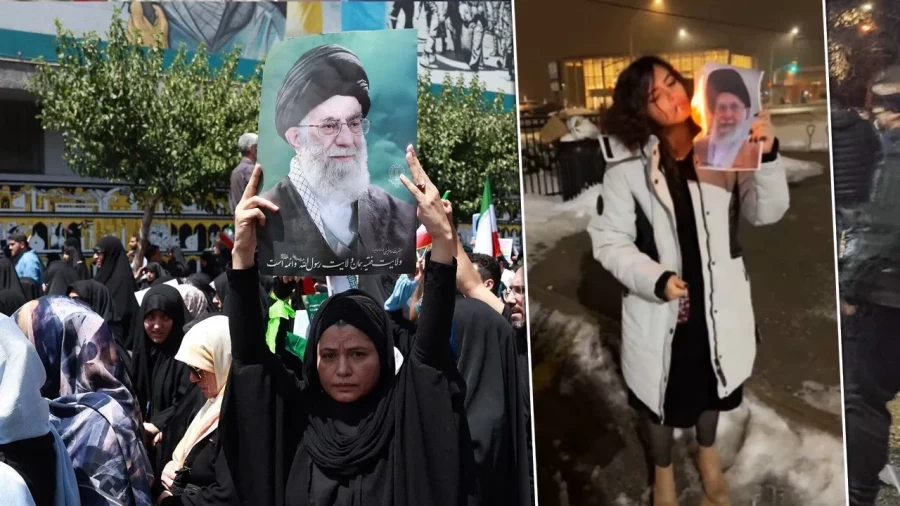
Amidst the nationwide protests, Iran's Supreme Leader Ali Khamenei addressed the nation for. The first time on Friday, with his speech broadcast on state television on Saturday. Khamenei declared that Iran wouldn't tolerate 'mercenaries working for foreigners. ' He asserted that foreign agents were behind the protests, instigating violence within the country. Khamenei stated that some 'troublemakers' in the country were damaging public property to please the American President. He advised Trump to focus on his own country's problems instead of interfering in Iran's affairs. He further emphasized that the Islamic Republic came to power through the blood of hundreds of thousands of great people and would never back down in the face of those who seek to destroy it. This address came shortly after Trump's renewed warning that the US might attack Iran if its security forces killed protesters.
The Return of the Crown Prince: A Symbol of Hope for Change
Some protesters have been chanting slogans in support of Reza Pahlavi, the son of the former Shah, who has called for intensifying the protests from abroad. People in Kurdish areas have also taken to the streets, with many protesters declaring that they've nothing left to lose, while iran's Crown Prince Reza Pahlavi has announced his intention to return to the country and join the ongoing protests. The 65-year-old Pahlavi has been living in exile in the United States for nearly 50 years, while on Saturday morning, he posted on social media, stating, 'I am also preparing to return to my country so that at the time of the victory of our national revolution, I can stand with all of you, among the great people of Iran. I am confident that that day is now very near.
Historical Context of Iran's Leadership and Demands for Pahlavi's Return
Following Iran's 1979 Islamic Revolution, Ayatollah Ruhollah Khomeini came to power,. Serving as Supreme Leader for 10 years from 1979 to 1989. He was succeeded by Ayatollah Ali Khamenei, who has been in power for 37 years since 1989. Today, Iran is grappling with severe challenges including an economic crisis, rampant inflation, international sanctions, unemployment, currency depreciation, and persistent popular movements. After 47 years, people, frustrated by the current economic hardship and strict religious rule, are now demanding change, while consequently, there are growing calls for the 65-year-old Crown Prince Reza Pahlavi to assume power. Protesters view him as a secular and democratic alternative. Young people and Gen Z believe that Pahlavi's return could bring economic stability, global. Acceptance, and personal freedom to Iran, offering a stark contrast to the current regime.
Iran's Economic Landscape: Challenges and Dependencies
Iran's economy is heavily reliant on oil exports, while in 2024, Iran's total exports amounted to approximately $22. 18 billion, with oil and petrochemicals constituting a significant portion, while imports reached $34. 65 billion, resulting in a trade deficit of $12. 47 billion. In 2025, this deficit is projected to widen further to $15 billion due to reduced oil exports and ongoing sanctions. Key trading partners include China (accounting for 35% of exports, with 90% of Iran's oil exports going to China), Turkey, the UAE, and Iraq, while iran has attempted to boost trade with neighboring countries and the Eurasian Economic Union, leveraging initiatives like the INSTC corridor and new transit routes with China. Nevertheless, GDP growth is estimated to be only 0, while 3% in 2025. Without the lifting of sanctions or the restoration of the nuclear agreement, stabilizing trade. And the value of the Rial will remain challenging, further exacerbating the country's economic woes.
Uncertain Future Amidst Unrest
The ongoing protests in Iran aren't merely a result of economic discontent but also a culmination of decades of political and social repression. Between the government's harsh crackdown and the growing desperation of. The protesters, the country is heading towards an uncertain future. The international community watches closely, but the internal conflict and accusations of external interference further complicate the situation. It remains to be seen in the coming days whether the government succeeds in completely. Suppressing the protests or if the public's anger paves the way for a larger transformation. Meanwhile, the fear of an increasing death toll looms large, further intensifying the gravity of this crisis.
BREAKING: Iranian protesters set fire to the Al-Rasool Mosque in Tehran.
— Dr. Maalouf (@realMaalouf) January 9, 2026
Iranians are completely done with the Islamic regime.
pic.twitter.com/VX5ZHrvK2O
An Iranian girl burns a picture of Ayatollah Khamenei and lights her cigarette, a new trend in Iran!
— Dr. Maalouf (@realMaalouf) January 10, 2026
Young Iranian women are leading the revolution against the Islamic regime.
pic.twitter.com/UIFYHMPBGA
