

- India,
- 29-Oct-2025 09:20 PM IST


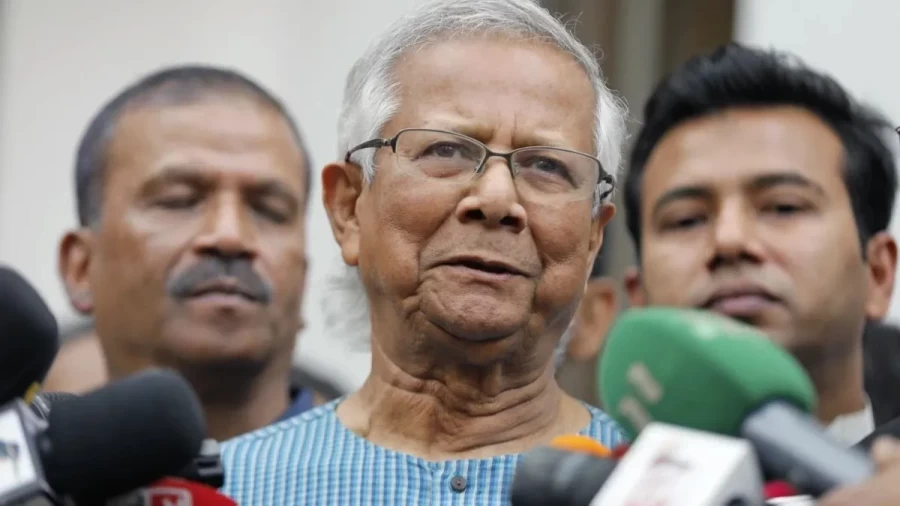
A significant decision by Bangladesh's interim government, led by Nobel laureate Muhammad Yunus, has stirred a fresh political storm in the nation. The government's plan to implement the 'July Charter' has been met with fierce opposition from the Bangladesh Nationalist Party (BNP), the country's main opposition, while the BNP, headed by former Prime Minister Khaleda Zia, has labeled the move a "betrayal" and "open deception," raising concerns about escalating political instability.
The Genesis of the 'July Charter' Controversy
At the heart of the dispute is the 'July Charter,' a document crafted to institutionalize the aspirations of the widespread student protests that occurred in July-August last year. These protests successfully unseated the then-ruling Awami League government, led by Prime Minister Sheikh Hasina,. Eventually paving the way for the formation of Muhammad Yunus's interim administration in August 2024. The charter proposes extensive reforms across more than 80 sectors, including politics, economy, judiciary, and education, aiming to steer the country back onto a democratic path.
BNP's Allegations of 'Betrayal'
BNP Secretary General Mirza Fakhrul Islam Alamgir expressed profound surprise at the interim government's decision. During a press conference on Wednesday, he asserted that this wasn't merely a betrayal of his party but of the entire nation. Alamgir alleges that the final report published by the National Consensus Commission completely omitted the BNP's. Dissenting notes, particularly those emphasizing transparency in electoral reforms and the crucial role of the opposition. The party contends that these disagreements were integral to the charter's spirit, and their disregard amounts to an "assassination of democracy.
Interim Government's Stance and Commission's Position
The Yunus government has not yet issued a direct response to the BNP's severe accusations. However, a member of the National Consensus Commission, speaking on condition of anonymity, stated. That all parties' disagreements on the charter's draft had been "merged into a majority consensus. " The commission has recommended implementing the charter through a public referendum, a move the BNP dismisses as "unilateral imposition, while " This situation presents a novel challenge for the interim government, which is tasked with fostering unity among all political stakeholders.
Khaleda Zia and BNP's Stern Warning
The BNP, under the leadership of former Prime Prime Minister Khaleda Zia, has issued a clear warning: if the party's views aren't immediately restored and their dissenting points acknowledged, the foundation of national unity will be severely undermined, while secretary General Alamgir stressed that the attempt to diminish the sacrifices of the 'July martyrs' is unacceptable. He indicated that if the necessary rectifications aren't made, the BNP would be compelled to take to the streets, potentially triggering another political crisis in the country. Political observers view this escalating dispute as a "test of transitional democracy, while " They emphasize that at this delicate juncture, the participation and consensus of all parties are paramount. The growing opposition from the BNP, alongside remnants of the Awami League, could weaken the interim government, especially at a time when Bangladesh is already grappling with a severe economic crisis and natural disasters like floods. This controversy poses a significant challenge to the nation's political stability, and the Yunus administration will need to navigate it with extreme caution to maintain peace and progress.
