

- India,
- 22-Sep-2025 02:08 PM IST


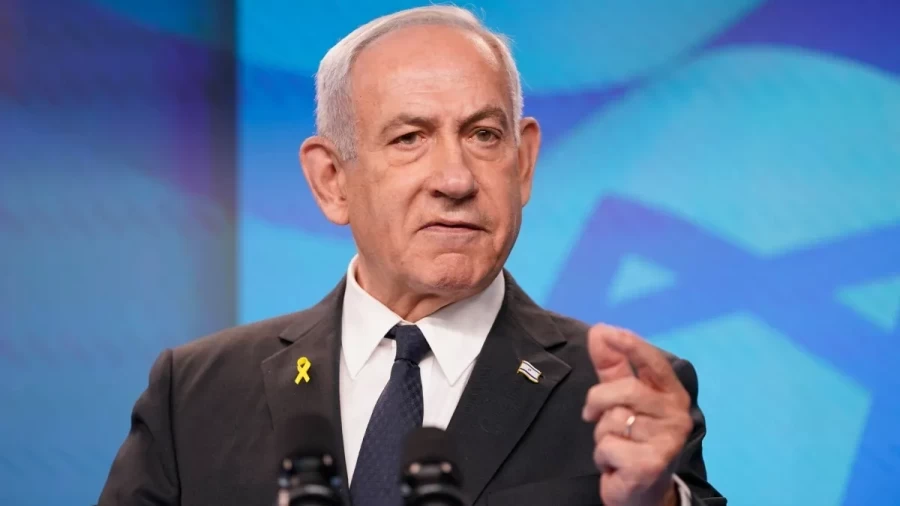
Benjamin Netanyahu: Central Asia has become the center of global politics. Amid Israel's ongoing military campaign against Hamas in Gaza, Britain, Canada, and Australia have announced their formal recognition of Palestine as a nation. This move has generated sharp reactions on the global stage, especially from Israeli Prime Minister Benjamin Netanyahu, who has categorically stated that "a Palestinian state will not be established."
Netanyahu's Stance: Rejecting a Palestinian State
Israeli Prime Minister Benjamin Netanyahu has described this decision by Britain, Canada, and Australia as a "reward" to Hamas. He asserted, "A Palestinian state will not be established west of the Jordan River." Netanyahu's statement reflects his long-standing stance that he considers a Palestinian state a threat to Israel's security.
Netanyahu is soon to travel to the United States, where he will meet with President Donald Trump. Following this visit, he plans to announce Israel's "response." The Israeli Foreign Ministry recently claimed that Hamas leaders linked the recognition of a Palestinian state to the October 7, 2023, attack in which Hamas infiltrated Israel and killed approximately 1,200 people.
Israel's Response on the Global Stage
At an Israeli cabinet meeting, Netanyahu stated that Israel would challenge efforts to establish a Palestinian state at the United Nations (UN) and other international forums. According to him, this move would not only threaten Israel's existence but also encourage terrorism. He said, "The world will engage with us on this issue in the coming days." However, Netanyahu has not yet disclosed the details of his plan.
The Two-Nation Theory and Its Challenges
The two-nation theory has been repeatedly invoked to resolve the Israeli-Palestinian conflict. This principle calls for the establishment of an independent Palestinian state in the territories captured by Israel in the 1967 war. However, this path faces numerous obstacles. Israel has established numerous Jewish settlements in the West Bank and East Jerusalem, where millions of people live. Furthermore, there is a deep dispute between the two sides over the city of Jerusalem itself. Israel is unwilling to vacate these areas, and Netanyahu considers this a threat to national security.
Global Recognition: How Many Countries Recognize Palestine?
According to an Al Jazeera report, approximately 146 countries (about 75%) recognize Palestine as a nation. India recognized Palestine in 1988. Previously, none of the G-7 countries (Canada, France, Germany, Italy, Japan, the United Kingdom, and the United States) recognized Palestine. However, now Britain, Canada, and Australia have declared their support. France, Portugal and other European countries may also join this list soon.
