

- India,
- 02-Mar-2026 04:48 PM IST


Tensions in the Middle East have reached a critical flashpoint following claims by Iran's Islamic Revolutionary Guard Corps (IRGC) of a direct missile strike on high-value targets in Israel. According to official statements from Tehran, the IRGC targeted the office of Israeli Prime Minister Benjamin Netanyahu and a strategic base belonging to the Israeli Air Force commander in Tel Aviv. This development marks a significant escalation in the ongoing conflict between the two nations, raising concerns about a full-scale regional war. The IRGC stated that the operation was a retaliatory measure against recent joint military actions by Israel and the United States.
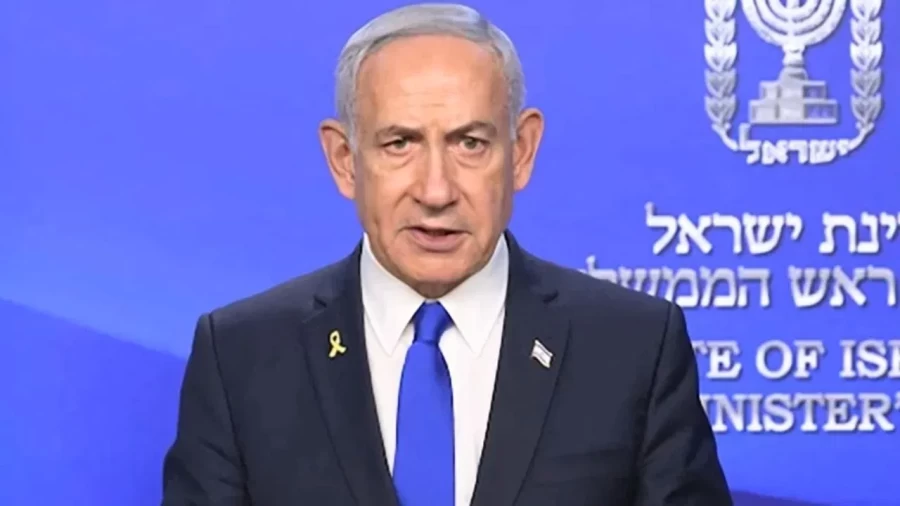
The Iranian military claims that the status of Prime Minister Netanyahu remains uncertain following the alleged strike. However, the Israeli government and the Israel Defense Forces (IDF) have categorically denied these reports, labeling them as misinformation. Israeli officials maintained that no such breach of their high-security zones occurred and that the Prime Minister is safe, while despite the denial, the claim has triggered high-level security consultations across the region and prompted international observers to monitor the situation for further military movements.
Details of the IRGC Claim and Missile Deployment
The Islamic Revolutionary Guard Corps provided specific details regarding the weaponry used in the alleged operation. According to Iranian military sources, 'Khyber' missiles were deployed to target the Israeli leadership's infrastructure. The Khyber missile is a long-range ballistic asset capable of precision strikes, which Tehran claims successfully bypassed Israeli defense layers. The IRGC emphasized that this strike was a direct response to the assassination of high-ranking Iranian officials and the perceived aggression by the US-Israeli alliance, while the statement further warned that any counter-attack would be met with even more devastating force from the Iranian side.
Israel's Official Denial and Defense Posture
In response to the claims originating from Tehran, the Israeli Prime Minister's Office issued a statement dismissing the reports of a missile strike on Netanyahu's office as entirely false, while the IDF spokesperson confirmed that the nation's multi-layered air defense systems, including the Iron Dome and Arrow interceptors, remain fully operational and have not detected any such impact in the capital. Israel has accused Iran of engaging in psychological warfare to mask internal instabilities. Security measures have been tightened across major Israeli cities, and the military remains on high alert to intercept any potential threats from Iranian territory or its regional proxies.
Escalation Following the Death of Ali Khamenei
The current surge in hostilities is deeply rooted in the reported death of Iran's Supreme Leader, Ali Khamenei. Reports suggest that Khamenei was killed during a joint operation conducted by American and Israeli forces, an event that has sent shockwaves through the Iranian political and military establishment. Since the reported incident, Tehran has vowed 'harsh revenge,' leading to a series of drone and missile attacks targeting Israeli urban centers and US military installations in the Gulf. The loss of the Supreme Leader has created a volatile power vacuum and intensified the ideological and military resolve of the IRGC and its allied militias in Lebanon, Syria, and Yemen.
US President Donald Trump's Ultimatum to Iran
Amidst the escalating violence, US President Donald Trump has issued a stern warning to the Iranian military leadership. In a televised address, the President called on Iranian military personnel to lay down their arms immediately. Trump stated that the military campaign against Iranian targets would continue unabated until all strategic objectives are met. He offered a guarantee of safety for those who surrender but warned of 'certain death' for those who continue to resist. The US administration has reinforced its military presence in the region, deploying additional carrier strike groups and advanced fighter jets to deter further Iranian aggression.
Regional Security and Global Implications
The direct confrontation between Iran and Israel has far-reaching consequences for global security and the international economy. The potential for a prolonged conflict in the Middle East threatens the stability of global oil supplies and vital maritime trade routes in the Strait of Hormuz. International diplomatic efforts are currently underway to prevent a total collapse of regional order, though both sides have shown little inclination toward de-escalation. Defense analysts suggest that the involvement of non-state actors and the use of advanced ballistic technology have transformed the conflict into a complex, multi-front war that could redefine the geopolitical landscape of the Middle East for years to come.
