

- India,
- 29-Apr-2026 05:52 PM IST


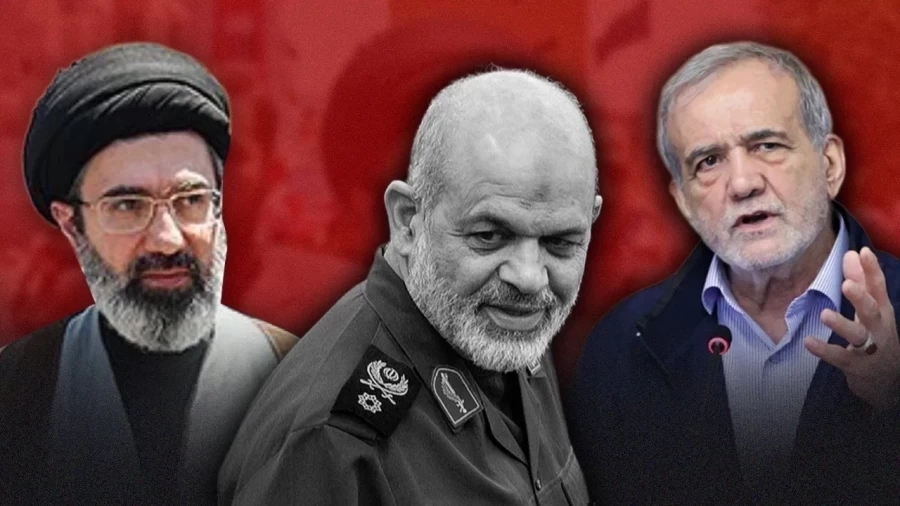
The Islamic Revolutionary Guard Corps (IRGC) has reportedly restructured the power dynamics within Iran, effectively hijacking the authority of the Supreme Leader. Amidst the ongoing conflict with the United States, all major policy decisions are now being spearheaded by IRGC commanders. According to a report by Reuters, Supreme Leader Mujtaba Khamenei has been relegated to a figurehead who is merely informed of decisions after they've been made, rather than being the primary decision-maker, while this development comes as the US blames the IRGC for obstructing diplomatic negotiations.
Mujtaba Khamenei's Health and Underground Status
Since his appointment as the Supreme Leader of Iran in March 2026, Mujtaba Khamenei has remained underground and away from the public eye. A report published by the New York Times claimed that Mujtaba was severely injured during an Israeli attack and is currently unable to speak properly. The report further suggested that he underwent plastic surgery following the incident, while however, the Iranian government has maintained silence and offered no official comments regarding his condition. This marks the first time in over a month that Iran's Supreme Leader has not made a public appearance.
Shift in Decision-Making Authority
Traditionally, the Supreme Leader of Iran also serves as the Chief Commander, holding the ultimate authority to make final decisions on all major national issues. During the tenure of Ayatollah Ali Khamenei, decisions were made after consulting with senior commanders, but the final word always rested with the Supreme Leader. The current war scenario has altered this landscape, with the IRGC seizing power. Mujtaba Khamenei is now reportedly functioning only as a titular head whose role is limited to being notified of the IRGC's actions.
Ahmad Vahidi and the IRGC's Influence
Ahmad Vahidi currently leads the Islamic Revolutionary Guard Corps and is considered a close confidant of the Khamenei family. Vahidi was appointed as the head of the IRGC in March of this year, succeeding Pakpour, who was killed during a meeting with the senior Khamenei. The IRGC was established in 1979 with the primary objective of protecting the position of the Supreme Leader. Currently, the force consists of approximately 200,000 members, and under Vahidi's leadership, its influence over state policy has reached unprecedented levels.
The ongoing conflict with the United States has fundamentally transformed Iran's internal power structure. While the Supreme Leader historically held absolute power, the IRGC commanders are now the primary architects of the nation's policies. The mystery surrounding Mujtaba Khamenei's health and his prolonged absence from public life has allowed the IRGC to consolidate its control over the state's decision-making apparatus.
