

- India,
- 29-Jan-2026 06:34 PM IST


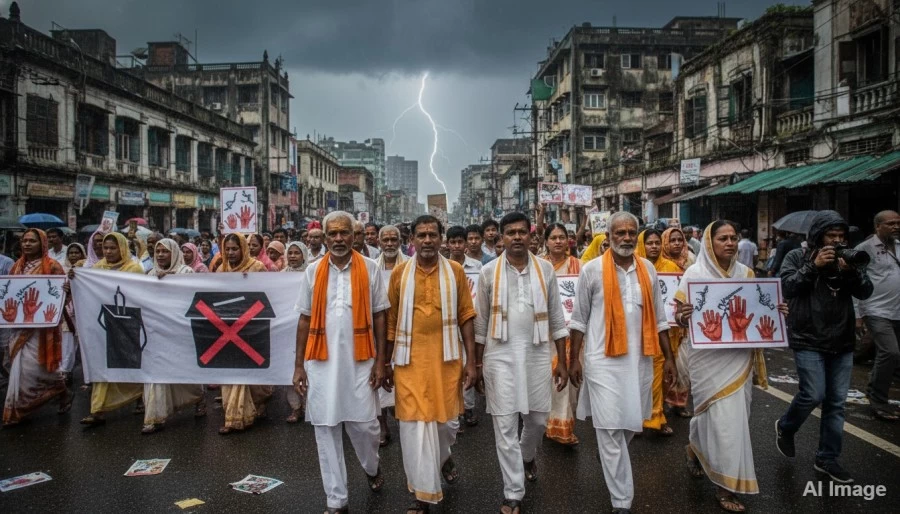
The political landscape in Bangladesh is witnessing a major upheaval as the general elections scheduled for February 12 approach. The Bangladesh Hindu Buddhist Christian Unity Council (BHDCU), the country's largest representative body for minorities, has raised a red flag, suggesting a potential boycott of the polls. The council cites a lack of security, rising communal violence, and a controversial referendum as primary reasons for this drastic consideration.
A Surge in Communal Violence
In a recent press conference held in Dhaka, the BHDCU presented alarming data regarding the safety of minorities, while according to their reports, within the first 27 days of January 2026 alone, there have been 42 incidents of communal violence. This includes the brutal murder of 11 Hindus, one case of rape, and multiple attacks on temples and churches, while the organization emphasized that the administration and the Election Commission have failed to instill confidence among the minority voters, who now fear for their lives and property.
The Referendum Controversy
This election cycle introduces a unique and controversial element: a dual-ballot system. Voters are expected to cast one vote for their parliamentary representative and another for a constitutional referendum. The BHDCU has expressed strong opposition to this referendum, arguing that it targets the secular fabric of the nation. They believe the proposed changes to the state's fundamental principles will marginalize minorities further and strip them of their equal rights as citizens of Bangladesh.
Hate Speech and Psychological Warfare
The council highlighted the devastating impact of hate speech being propagated by communal groups. These provocative statements aren't just words but are translating into physical attacks on marginalized communities. The atmosphere of fear is so pervasive that women and children are terrified of the potential post-election backlash. The BHDCU stated that the social divide being created by such rhetoric. Is reprehensible and threatens the very essence of communal harmony in the country.
The 8-Point Charter of Demands
To address these grievances, the minority leaders have put forward an 8-point demand list. Key demands include the immediate enactment of a Minority Protection Act, the establishment of a National Minority Commission, and the creation of a dedicated Ministry of Minority Affairs. They've called upon all political parties to adopt a 'Zero Tolerance' policy against communal violence and to guarantee that no minority voter will be harassed or targeted based on their political choices.
Political Implications and Responsibility
Historically, minorities in Bangladesh, particularly Hindus, have been seen as a. Loyal support base for the Awami League due to its secular stance. However, the BHDCU leaders clarified that they aren't 'slaves' to any political party. They warned that if the state fails to provide a secure environment for voting, the minority community will have no choice but to stay away from the booths. The responsibility for such a failure, they asserted, would lie squarely with the government and the Election Commission.
