

- India,
- 13-Oct-2025 02:59 PM IST


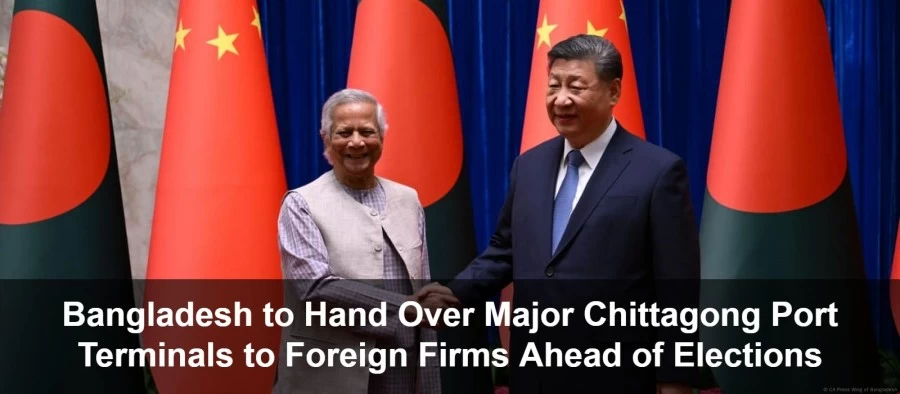
The Bangladesh government is embarking on a controversial plan to lease three major terminals of Chittagong Port, the country's largest and busiest, to foreign companies, with significant involvement from China. This port handles a staggering 92% of Bangladesh's import and export trade. The decision, coming just before the upcoming elections, has ignited fierce opposition from political parties and local business organizations.
Strategic Partnership with China Deepens
This development underscores the deepening strategic partnership between Bangladesh and China concerning ports and naval bases. China has been a major investor in Chittagong Port under its Belt and Road Initiative (BRI), while Plus, China has inked an agreement to invest $350 million to establish a special industrial economic zone in the area, which will Importantly bolster its strategic presence in the Bay of Bengal.
Agreements Expected by December
During a seminar in Dhaka on October 12, Mohammad Yusuf, Senior Secretary of the Shipping Ministry, confirmed that agreements for the operation of Laldiya and New Mooring Container Terminals (Chittagong) and Pangaon Terminal (Dhaka) with foreign companies would be signed by December this year. He specified that the Laldiya Terminal would be leased for 30 years, while the other two container terminals would be leased for 25 years.
Widespread Criticism and Opposition
The government's move has drawn sharp criticism from political parties, particularly the BNP and Jamaat-e-Islami, as well as prominent business organizations like the Bangladesh Garment Manufacturers and Exporters Association (BGMEA) and the Bangladesh Knitwear Manufacturers and Exporters Association (BKMEA). BNP's acting chairman, Tarique Rahman, stated that handing over the management of Chittagong Port to foreigners isn't the responsibility of an interim government, arguing such a significant decision should only be made by an elected parliament or government.
Concerns Over Urgency and Security Risks
Economist Professor Anu Mohammad highlighted the security risks involved in handing over the New Mooring Terminal to a foreign company without a tender, while he questioned the urgency, stating that if port capacity needs expansion, it should be undertaken by the next elected government. He also raised concerns about any prior commitments to foreign entities and emphasized that national assets linked to security shouldn't be ceded to foreigners under any circumstances.
Government's Defense: Efficiency and Savings
Responding to the criticism, Shipping Secretary Yusuf defended the decision, asserting there would be no strategic or geographical threats, citing examples of foreign operators running ports in Sri Lanka and India without issues. He pointed to existing inefficiencies, noting Bangladesh's average logistics cost of 15% compared to the global average of 7%. He added that ships take four days at Chittagong Port, whereas in Sri Lanka, it's less than a day. Yusuf argued that while foreign companies might increase the per-container fee by $170-180, a single day reduction in ship turnaround time would save businesses approximately $15,000 daily, leading to overall economic benefits.
