

- India,
- 09-Feb-2026 04:43 PM IST


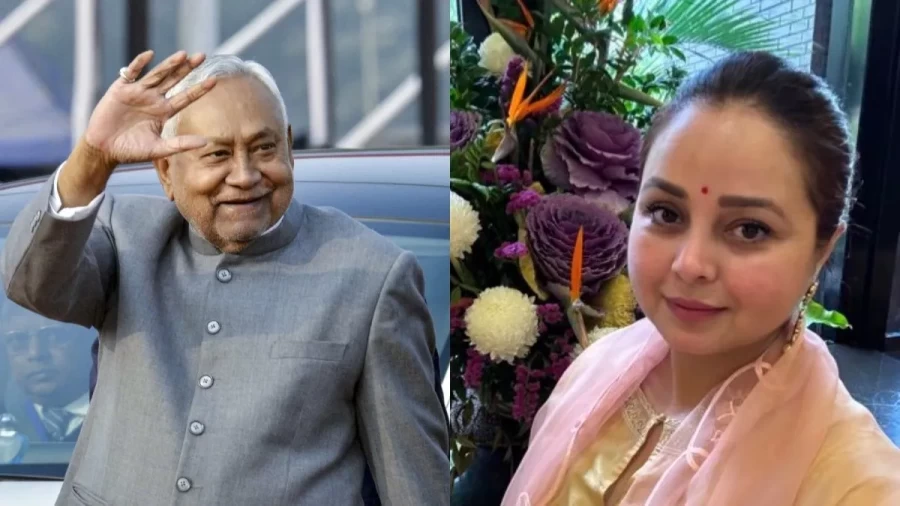
The Bihar Legislative Council witnessed a heated exchange during the ongoing budget session as Chief Minister Nitish Kumar made personal remarks directed at former CM Rabri Devi. The incident has triggered a significant political controversy in the state, with Rohini Acharya, daughter of Lalu Prasad Yadav, questioning the Chief Minister's linguistic conduct. The confrontation occurred amidst persistent sloganeering by opposition members over various governance issues.
The Context of the Chief Minister's Remarks
During the proceedings on Monday, opposition members disrupted the house with continuous protests. Chief Minister Nitish Kumar, visibly agitated by the obstruction, addressed the opposition benches. While pointing towards former CM Rabri Devi, he questioned her political contributions and the circumstances of her appointment to the post of Chief Minister, while his use of specific terminology to describe her role and competence led to an immediate uproar within the council, with opposition leaders terming the remarks as derogatory and unparliamentary.
Rohini Acharya's Response on Social Media
Reacting sharply to the developments, Rohini Acharya took to the social media platform X to express her disapproval. She stated that the Chief Minister has developed a habit of crossing the boundaries of parliamentary decorum. Acharya argued that when a leader lacks logical arguments and factual data, they often resort to undignified language to express frustration. She further alleged that the Chief Minister's statements over the past few years reflect a deep-seated bias against women, suggesting that his public stance on women's empowerment is merely a political facade.
Rabri Devi Demands Resignation Over Law and Order
Following the incident, RJD leader and former CM Rabri Devi launched a scathing attack on the state government. She demanded the resignation of Chief Minister Nitish Kumar and Deputy CM Samrat Chaudhary, citing a failure in maintaining law and order, while rabri Devi highlighted the increasing instances of crimes against Dalits, minorities, and women in the state. She emphasized that financial assistance alone can't empower women if they don't feel safe, calling for immediate administrative accountability for the rising crime rates.
Analytical Perspective on Parliamentary Decorum
According to political analysts, the increasing frequency of personal attacks within the legislative chambers undermines the sanctity of democratic institutions. Experts suggest that such exchanges often overshadow critical discussions on policy and public welfare, while the current controversy is seen as a strategic point for the opposition to consolidate its narrative against the ruling coalition, particularly on the issue of gender sensitivity and administrative efficiency. The standoff in the Legislative Council continues to affect the productivity of the budget session.
Conclusion and Political Implications
The verbal spat between the top leadership of Bihar has once again brought the issue of political discourse to the forefront. While the RJD intends to escalate the matter as a question of dignity and safety for women, the ruling JD(U)-BJP alliance maintains that the remarks were made in the context of political history. As the budget session progresses, the political atmosphere in Bihar remains tense, with both sides refusing to back down from their respective positions regarding the conduct within the house.
