

- India,
- 06-Mar-2026 09:11 PM IST


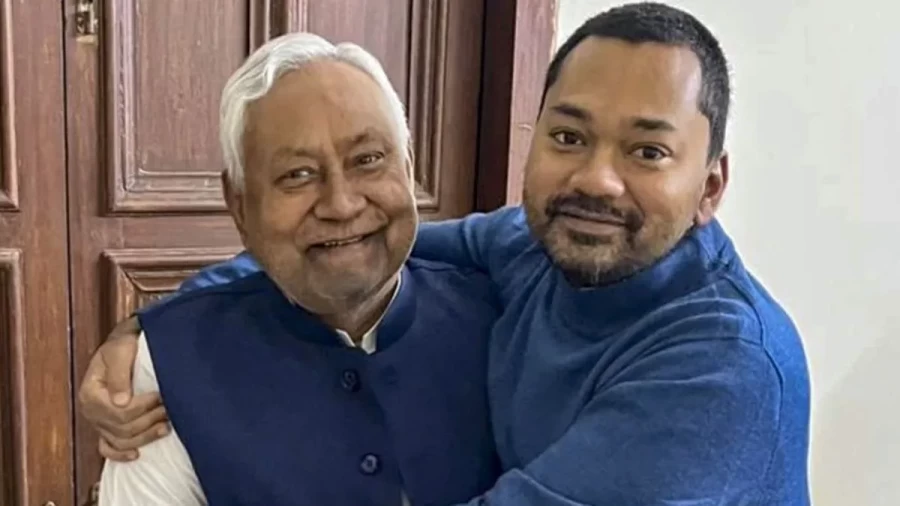
In a significant political development in Bihar, Chief Minister Nitish Kumar has announced a major transition in the leadership of the Janata Dal (United). During a high-level meeting held at the Chief Minister's official residence, 1 Anne Marg, involving JDU MPs, MLAs, and MLCs, it was formally decided that Nitish Kumar's son, Nishant Kumar, will join the party on March 8. Also, the party has decided to appoint him as the Deputy Chief Minister of Bihar. This announcement comes as Nitish Kumar prepares to transition from state politics to the Rajya Sabha, marking the end of an era in his nearly two-decade-long tenure as the head of the state government.
High-Level Meeting at the Chief Minister's Residence
The meeting at 1 Anne Marg was convened to discuss the future roadmap of the party and the transition of power. Senior party leader and Rajya Sabha MP Sanjay Jha informed the attendees about the decision regarding Nishant Kumar's entry into active politics. According to party sources, the proposal was met with unanimous support from the elected representatives, who signaled their approval by raising their hands. During the session, Nitish Kumar briefed the leaders on his decision to move to the Rajya Sabha and his future political role at the national level. He emphasized that despite being based in Delhi, he would continue to oversee the party's affairs and the governance of Bihar closely.
Political Debut of Nishant Kumar as Deputy CM
Nishant Kumar, who has maintained a low profile and stayed away from active politics until now, is set to take on a pivotal role within the JDU. Sanjay Jha confirmed that Nishant's formal induction into the party will take place on Sunday, March 8, followed by his appointment as the Deputy Chief Minister. This move is seen as an effort to ensure leadership continuity and to provide a fresh face to the party's top brass, while the demand for Nishant's inclusion was reportedly raised by several MLAs during the meeting, who argued that his leadership would strengthen the party's position. The leadership's decision to grant him the Deputy CM post underscores the significance of this transition.
Nitish Kumar's Transition to Rajya Sabha and Party Response
The decision of Nitish Kumar to move to the Rajya Sabha after serving as the Chief Minister for approximately 20 years has sent ripples through the political landscape of Bihar. While the move was presented as a strategic shift, it has caused a degree of confusion and surprise among party workers and grassroots leaders. Nitish Kumar addressed these concerns during the meeting, stating that the decision was made after careful consideration of the party's long-term interests. However, reports of dissatisfaction have emerged from various districts, with some workers expressing their apprehension through protests. The Chief Minister sought to allay these fears by promising his continued guidance to the state leadership.
Internal Dissent and Clarifications from JDU Leadership
The sudden announcement has led to visible unrest among a section of JDU supporters who are concerned about the implications of Nitish Kumar's departure from the state's helm, while many workers were seen carrying placards urging the Chief Minister to reconsider his decision. Addressing the internal turmoil, JDU spokesperson and MLC Neeraj Kumar stated that it's natural for dedicated workers to feel distressed during such a major transition. He clarified that Nitish Kumar is a leader who makes decisions based on conviction rather than external pressure. He also noted that the senior leadership is committed to addressing the grievances of the workers and ensuring a smooth transition of responsibilities.
Impact on Bihar's Political Landscape and Future Governance
The induction of Nishant Kumar and the elevation to the post of Deputy CM, combined with Nitish Kumar's move to the national stage, signals a new chapter for Bihar. The meeting aimed to project a united front, demonstrating that the party is ready to embrace new leadership while maintaining its core values. As March 8 approaches, the focus remains on how the new administrative setup will function and how Nishant Kumar will navigate the complexities of Bihar's governance. The transition is expected to bring about changes in the state's political dynamics, with the JDU aiming to consolidate its base under the new leadership structure while Nitish Kumar monitors the progress from the national capital.
