

- India,
- 10-Apr-2026 03:18 PM IST


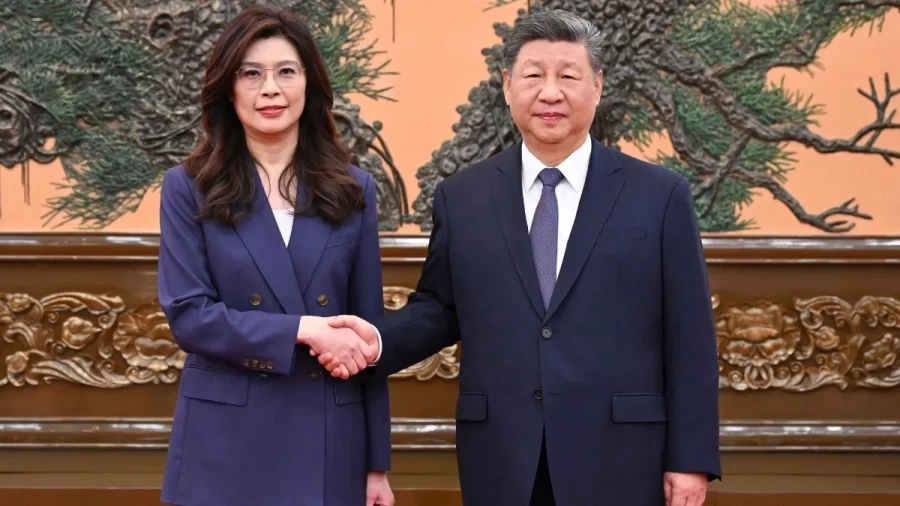
Chinese President Xi Jinping held a landmark meeting with Cheng Li-wun, the chairperson of Taiwan's primary opposition party, the Kuomintang (KMT), in Beijing on Friday. According to official reports from the Great Hall of the People, this meeting represents a strategic maneuver by Beijing to engage with Taiwan's political opposition at a time when global attention is diverted, while the timing of this engagement is particularly notable, as the United States is currently preoccupied with escalating military and diplomatic tensions involving Iran in the Middle East. Analysts suggest that China is capitalizing on this period of American distraction to consolidate its influence over cross-strait affairs.
A Strategic Parallel to Western Diplomacy
The meeting is being viewed by international observers as a calculated move mirroring strategies often employed by the United States, while according to officials, the approach of engaging with opposition figures when the incumbent government is adversarial is a well-documented diplomatic tactic. Similar to how the US has historically supported opposition leaders in countries like Venezuela, China is now fostering closer ties with the KMT to create a counter-narrative to the current pro-independence administration in Taiwan. This move is seen as an attempt to bypass the Democratic Progressive Party (DPP) government and establish a direct line of communication with political factions that favor a more flexible approach toward Beijing.
First Opposition Visit in a Decade
Cheng Li-wun's visit marks the first time in over 10 years that a KMT chairperson has traveled to mainland China for official talks. Beijing continues to maintain that Taiwan is an inseparable part of its territory and has repeatedly vowed to achieve national reunification. During the discussions, President Xi emphasized that people on both sides of the Taiwan Strait share a common Chinese heritage. He stated that the historical trend toward reunification is inevitable and can't be altered by external forces. This visit is part of a broader Chinese strategy to combine military posturing with diplomatic outreach to pro-Beijing elements within Taiwan's political landscape.
Xi Jinping's Vision for Cross-Strait Unity
During the high-level dialogue, President Xi focused on the themes of peace, development, and mutual cooperation. He expressed confidence that through dialogue, both sides could bridge their differences and work toward a shared future. Xi noted that the desire for peace is a common aspiration among the people on both sides of the strait. This meeting is the first formal interaction between the top leadership of the Communist Party of China and the KMT since November 2016. Beijing's officials have highlighted this engagement as a step toward stabilizing the region and promoting the "One China" principle through non-military channels.
Cheng Li-wun's 'Journey of Peace'
Describing her six-day trip as a "Journey of Peace," Cheng Li-wun emphasized the need for institutional solutions to prevent conflict. Starting her journey in Shanghai and moving through Nanjing before reaching Beijing, she advocated for a cross-strait community that prioritizes mutual benefits over political confrontation. Cheng stressed that the primary goal should be to avoid war and establish a framework for peaceful dispute resolution that could serve as a global model. According to KMT officials, the mission was intended to reduce tensions and explore avenues for economic and cultural cooperation that have been stalled under the current Taiwanese administration.
Geopolitical Timing and Regional Security
The meeting occurred just weeks before a scheduled visit by US President Donald Trump to China, adding another layer of complexity to the geopolitical situation, while by engaging with the KMT now, China is positioning itself as a proactive player in cross-strait relations while the US is distracted by the Iran crisis. This diplomatic maneuver allows Beijing to demonstrate its influence within Taiwan's domestic politics without immediate military escalation, while while the current Taiwanese government remains skeptical of such engagements, the meeting has successfully shifted the international focus back to the political dynamics of the Taiwan Strait and China's evolving strategy to achieve its long-term objectives.
