

- India,
- 09-Jan-2026 06:41 PM IST


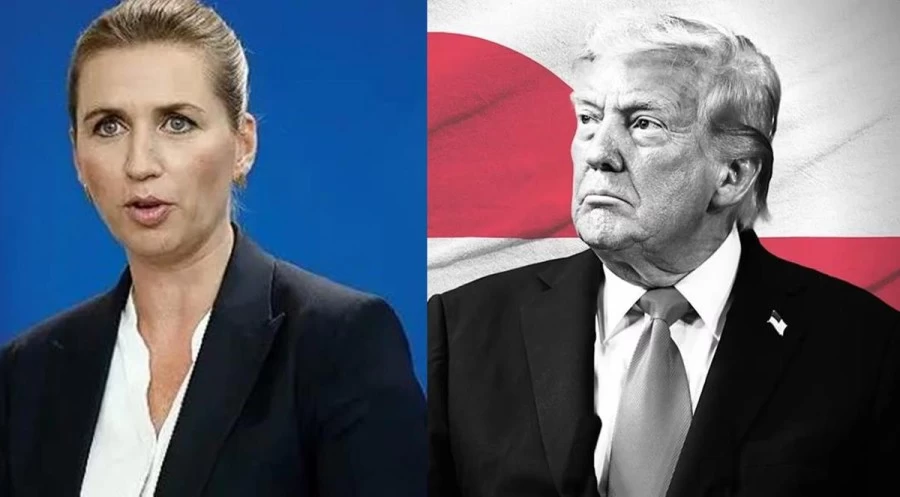
In a solid and unequivocal response to US President Donald Trump's threats to acquire or occupy Greenland, Denmark has issued a stern warning. According to a CNN report, the Danish Ministry of Defense has explicitly stated that if any foreign power attacks their territory, Danish soldiers will immediately retaliate and open fire without waiting for orders. This declaration comes amidst escalating geopolitical tensions in the Arctic region, where Greenland's strategic importance is increasingly highlighted.
Historical Precedent for Unordered Retaliation
This Danish rule, which allows soldiers to engage in combat without prior authorization from a senior officer, was established in 1952. The primary objective of this rule was to ensure that the military could respond instantly to any unforeseen attack on the nation, while the rule was first invoked in 1940 when Germany invaded Denmark. During that period, communication systems were severely disrupted, leaving soldiers uncertain about how to proceed, while learning from this critical experience, Denmark implemented a clear protocol to prevent similar confusion in the future. The Ministry of Defense has emphasized that this rule remains fully in. Effect today, serving as a crucial pillar in the defense of Danish sovereignty.
Trump's Ambition for Greenland and US Proposals
Donald Trump first floated the idea of purchasing Greenland as a 'real estate deal' during his initial term in 2019, a proposal that was rejected by both Denmark and Greenland at the time. Now, the White House is reportedly considering a plan to offer Greenlandic citizens between $10,000 (approximately 9 lakh rupees). And $100,000 (approximately 90 lakh rupees) per person to persuade them to separate from Denmark and join the United States. Sources indicate that this plan could cost an estimated $5 to $6 billion, considering Greenland's population of approximately 57,000 people, while uS officials have also suggested that the financial offer is merely one option, with diplomatic agreements and even the use of military force being considered as alternatives. Trump believes that due to the increasing presence of Russian and Chinese vessels, Greenland is vital for. US national security, and he seeks 'full control' over the island, not just a treaty or lease.
International Reactions and NATO Concerns
International reactions to the US threats have been strong. Italian Prime Minister Giorgia Meloni explicitly stated that she doesn't believe the US would undertake military action to seize Greenland, emphasizing that such a move would be detrimental not only to NATO but also to America's own interests. Meloni advocated for a strong NATO presence in the Arctic to deter external and potentially hostile interference. Danish Prime Minister Mette Frederiksen also warned that if the US were to launch a military attack on a NATO ally, it would signify the end of NATO and the post-World War II security architecture. European leaders, including those from the UK, France, Germany, Italy, Poland, Spain, and Denmark, issued a joint statement asserting that Greenland belongs to its people, and only Denmark and Greenland can decide its future.
Greenland's Stance and Autonomy
The people of Greenland have consistently opposed the idea of US acquisition. A survey conducted last year revealed that 85 percent of the population opposed US occupation. Greenland's Prime Minister, Jens-Frederik Nielsen, has repeatedly stated, “Our country isn't for sale. ” Greenland, which has been associated with Denmark for over 300 years, is an autonomous territory. Since 2009, the Greenlandic government has gained greater autonomy in coastal security and some foreign affairs, but core defense and foreign policy matters remain under Denmark's purview. The 1951 defense agreement, updated in 2004, included Greenland's semi-autonomous government to ensure that US military activities didn't adversely affect the local population.
Military Presence and Strategic Importance in Greenland
Greenland doesn't possess its own military, but both US and Danish forces are stationed there, while the US Pituffik Space Base (Thule Air Base) is located in northwestern Greenland and is crucial for missile warning systems and space monitoring. According to The New York Times, approximately 150 to 200 US personnel are deployed there. Denmark's Joint Arctic Command also operates in Greenland, comprising about 150 to 200 Danish military and civilian personnel responsible for surveillance, search and rescue, and the defense of sovereignty, while this includes the renowned Sirius Dog Sled Patrol, a small elite unit. Greenland's geographical location renders it exceptionally strategic.
Situated between North America and Europe, in the middle of the Atlantic Ocean, it serves as a vital outpost in the Mid-Atlantic region. It's also critical for military and missile surveillance between Europe and Russia. With increasing Russian and Chinese activities in the Arctic, US influence over Greenland is seen as essential to solidify its geopolitical foothold in the area. Plus, Greenland is believed to hold significant reserves of rare minerals, oil, gas, and rare earth elements, which possess substantial future economic and technological value. As global warming melts Arctic ice, new shipping routes are opening, and control over Greenland would enable the US to dominate these routes and counter Russian-Chinese advancements in the Arctic. The US considers Greenland a 'front line' in its national security policy.
Historical Context: The 'Greenland Air Gap'
Greenland's significance was previously demonstrated during World War II. At that time, the limited range of fighter and reconnaissance aircraft meant that planes flying from the coasts of Europe and North America couldn't cover a large central portion of the Atlantic Ocean. This area became known as the 'Greenland Air Gap,' implying that this part of the sea was largely devoid of aerial surveillance. Germany exploited this vulnerability, using its U-boats to attack Allied ships transporting goods, weapons,. And troops between America and Europe, turning the area into a 'killing ground' for vessels. As airfields and military bases were established in and around Greenland during the war, this air gap was eventually closed, providing the Allies with comprehensive aerial surveillance and security across the Atlantic, while today, eight decades later, Greenland's strategic importance has only grown, and control over it could prove crucial for dominance over Atlantic shipping lanes in any future major conflict.
Diplomatic Efforts and Future Outlook
In the interim, ambassadors from Denmark and Greenland have met with US officials in Washington to persuade American lawmakers and the Trump administration to abandon the Greenland plan. US Secretary of State Marco Rubio is scheduled to meet with Danish officials next week, while european leaders have united in support of Denmark, reiterating that Greenland belongs to its people, and only Denmark and Greenland will determine its future. This dispute is intensifying due to the Arctic region's growing strategic importance, and its diplomatic and geopolitical implications are expected to be far-reaching in the coming years.
