

- India,
- 27-Oct-2025 05:36 PM IST


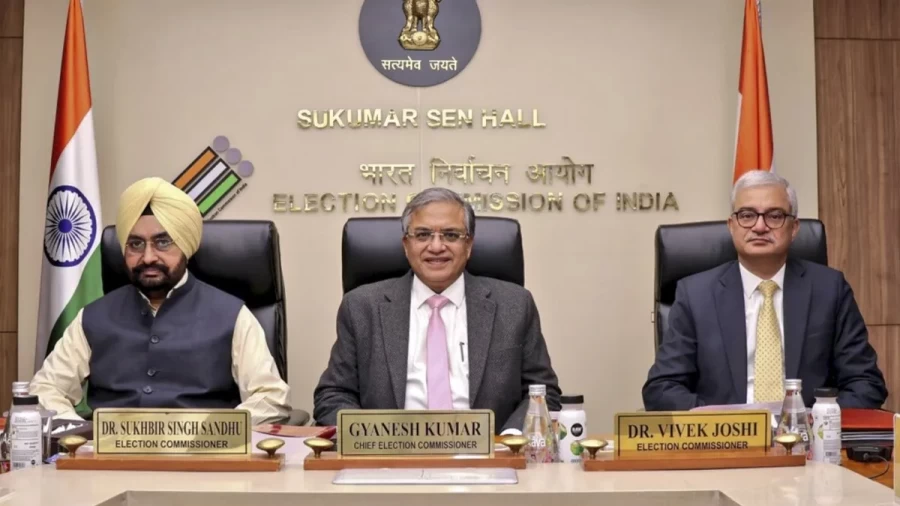
The Election Commission of India (ECI) has announced a Special Intensive Revision (SIR) of. Electoral rolls in 12 states and Union Territories across the country, commencing tomorrow, October 28. The Chief Election Commissioner (CEC) Gyanesh Kumar stated that the voter lists for these regions will. Be frozen tonight at midnight, with the extensive revision process set to conclude by February 7, 2025. This significant exercise aims to meticulously update the electoral rolls, ensuring that all eligible citizens are registered as voters while ineligible names are removed and existing errors are rectified.
A Crucial Initiative After 21 Years
CEC Gyanesh Kumar emphasized the critical importance of this revision, noting that the last such intensive special revision was conducted 21 years ago. He highlighted that an accurate and clean voter list is fundamental for conducting free, fair, and transparent elections. Following the successful implementation of SIR in Bihar, the ECI has decided to extend this crucial process to other key states and UTs in a second phase. Kumar, while extending wishes for the Chhath festival, reiterated that the core objective of SIR is to remove ineligible voters and empower. Eligible citizens with their right to vote, in line with Article 326 of the Indian Constitution, which mandates Indian citizenship for voting.
States and UTs Undergoing SIR
The 12 states and Union Territories included in this phase of SIR are Andaman & Nicobar Islands, Chhattisgarh, Goa, Gujarat, Kerala, Lakshadweep, Madhya Pradesh, Puducherry, Rajasthan, Tamil Nadu, Uttar Pradesh, and West Bengal, while this revision is particularly pertinent given the upcoming assembly elections in these regions. For instance, West Bengal, Kerala, Tamil Nadu, and Puducherry are scheduled for assembly elections in 2026, while Goa, Gujarat, and Uttar Pradesh will hold theirs in 2027, while chhattisgarh, Madhya Pradesh, and Rajasthan are slated for elections in 2028. Andaman & Nicobar Islands and Lakshadweep don't have legislative assemblies.
Detailed Process of Revision
CEC Gyanesh Kumar provided a detailed outline of the revision process, while training for polling officers is scheduled to begin on Tuesday. Booth Level Officers (BLOs) will conduct three rounds of house-to-house visits to collect voter information. Once the voter list is frozen, each registered voter will be provided with an Enumeration Form. BLOs will cross-reference the names in these forms with the 2003 voter list. If a name or the name of a parent matches. The 2003 list, no additional documents will be required for verification. This streamlined process is designed to curb the inclusion of. Bogus voters and ensure that genuine voters exercise their franchise.
Ensuring Political Party Engagement
The Election Commission has also directed all Chief Electoral Officers (CEOs) and District Election Officers (DEOs) to hold meetings with political parties by Wednesday. The purpose of these meetings is to apprise political parties of the complete SIR process, ensuring their active participation and maintaining transparency throughout the exercise. The active involvement of political parties is expected to aid in the verification and updating of electoral rolls, thereby enhancing the reliability and credibility of the entire process.
Strengthening Democratic Foundations
This special intensive revision marks a pivotal step towards strengthening India's democratic framework. By maintaining a clean and updated voter list, the ECI aims to ensure that every eligible citizen is enfranchised and the integrity of the electoral process remains sacrosanct, while this campaign won't only register new voters but also remove those who are no longer eligible or whose entries contain errors, thus establishing a solid and trustworthy foundation for future elections.
