

- India,
- 31-Jan-2026 09:17 PM IST


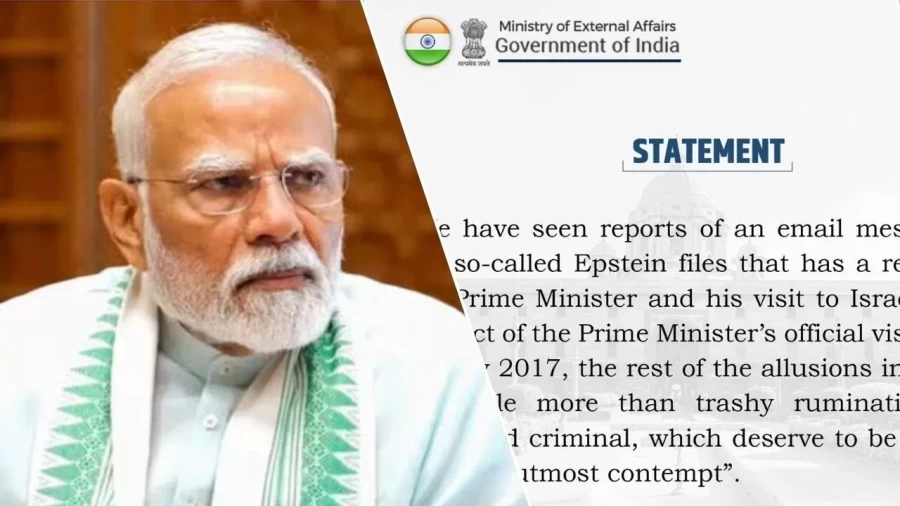
The Indian National Congress on Saturday triggered a major political controversy by alleging that Prime Minister Narendra Modi's name is mentioned in the Jeffrey Epstein files. Congress spokesperson Pawan Khera, through a series of posts on social media platform X, cited documents reportedly from the US Department of Justice. He claimed that internal communications involving the late convicted sex offender Jeffrey Epstein suggest a connection with the Prime Minister. In response, the Ministry of External Affairs (MEA) issued a stern rebuttal, dismissing the allegations as entirely baseless and defamatory.
The Core of Congress Allegations
Pawan Khera shared screenshots of an email dated May 24, 2019, which allegedly details a conversation between Jeffrey Epstein and Steve Bannon, a former strategist for Donald Trump. According to the Congress leader, the files suggest that Epstein claimed PM Modi followed his advice and performed certain actions during his Israel visit to benefit the then US President. Khera raised three specific questions, asking why the PM was allegedly in contact with a notorious criminal, the nature of the 'advice' mentioned, and the meaning behind the phrase 'IT WORKED' used in the purported emails. The opposition has demanded a direct clarification from the Prime Minister's Office regarding these claims.
Government and MEA Response
The Ministry of External Affairs has officially denied any link between the Prime Minister and Jeffrey Epstein, while in a formal statement, the MEA noted that the Prime Minister's visit to Israel in July 2017 was a landmark official event conducted at the invitation of Prime Minister Benjamin Netanyahu. "We've seen reports regarding an email from the Epstein files, while the contents of the email are the fabrications of a convicted criminal and should be rejected outright," the ministry stated. Government officials emphasized that the 2017 visit was purely diplomatic, aimed at strengthening bilateral ties in defense, agriculture, and technology, and had no connection to private individuals like Epstein.
Background of the Jeffrey Epstein Case
Jeffrey Epstein was a high-profile New York financier who was first accused of sexual assault involving a minor in 2005. He was convicted in 2008 and served 13 months in jail. In July 2019, he was arrested again on federal charges of sex trafficking of minors in Florida and New York. Epstein died in his jail cell in August 2019, an event ruled as suicide by the medical examiner, though it remains a subject of various theories. 80 lakh photographs, which mention several global figures including Donald Trump, Bill Gates, Elon Musk, and Prince Andrew.
Analysis of the Political Impact
According to political analysts, the timing of these allegations by the Congress party appears to be aimed at challenging the government's narrative on international diplomacy and transparency. However, diplomatic experts point out that the mention of a public figure in the private correspondence of a criminal doesn't constitute evidence of wrongdoing. The Epstein files have caused significant political ripples in the United States as well, with documents detailing Donald Trump's frequent visits to Epstein's Palm Beach residence. In the Indian context, the MEA's swift rejection aims to prevent any damage to the Prime Minister's international standing or the sanctity of official state visits.
Disclaimer
This news report is based on public statements and available documents. It doesn't provide any legal judgment or personal opinion. Readers are encouraged to refer to official government communications and verified legal documents for further information.
