

- India,
- 23-Nov-2025 12:15 PM IST


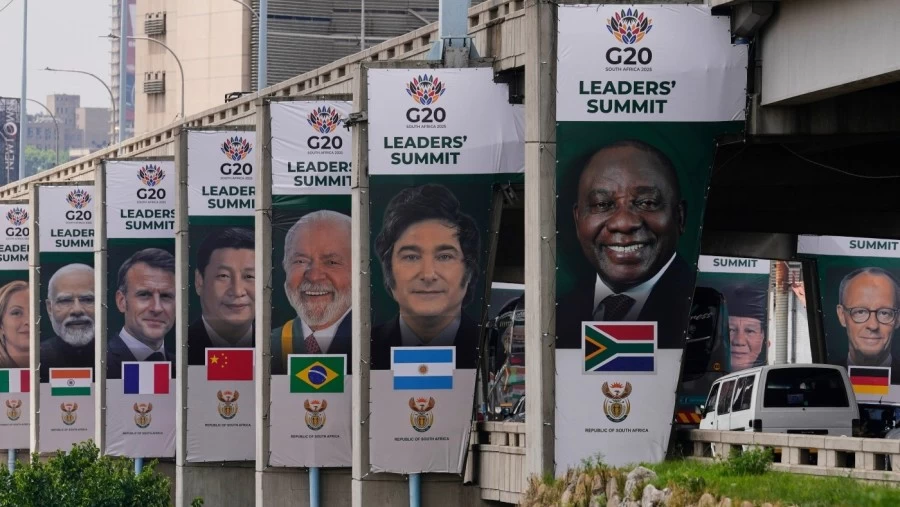
The G20 Summit in South Africa commenced with a significant development on its first day, as member nations unanimously approved the declaration drafted by the host country, despite a notable boycott by the United States. This consensus underscored the collective commitment of the world's leading economies to address. Pressing global issues, even in the absence of one of its most prominent members. South African President Cyril Ramaphosa emphasized the critical importance of all countries agreeing on the final statement, highlighting that this unity was paramount, irrespective of America's non-participation. This decision reflects a strong resolve among G20 members to work towards common goals and global stability.
US Boycott and the 'Empty Chair' Handover
The absence of US President Donald Trump cast a shadow over the proceedings, as he chose to boycott the summit. In a peculiar turn of events, Trump had initially proposed sending an American official to the final session to formally accept the G20's future hosting responsibilities. However, the South African presidency firmly rejected this proposition, maintaining the integrity of the summit's protocols and diplomatic norms. Consequently, President Ramaphosa is scheduled to symbolically hand over the next G20 presidency to an 'empty chair' today. This unusual gesture signifies that the United States is slated to host the G20 Summit in 2026, a responsibility that currently lacks a direct representative due to Trump's boycott and the absence of any American delegate at the current summit, highlighting a unique diplomatic situation.
PM Modi's Vision for Global Challenges
Prime Minister Narendra Modi played an active role in the summit, addressing the first two sessions with India's perspective on a range of global challenges. In his initial address, PM Modi presented India's comprehensive viewpoint on the multifaceted issues confronting the world today. He called for a fundamental re-evaluation of the existing development models, which he argued have historically led to the depletion of resources and exacerbated inequalities, while modi stressed the urgent need to transform these outdated paradigms, advocating for a more sustainable and equitable approach to global development that benefits all nations and communities.
Rethinking Development Models
During his address, Prime Minister Modi articulated a powerful critique of the conventional development models that have dominated global discourse. He highlighted that these models, while perhaps guiding the world economy in certain aspects, have inadvertently created significant disparities. Modi pointed out that the parameters of the current global development model have resulted in a large segment of the world's population being deprived of essential resources, simultaneously promoting the unsustainable exploitation of nature. He specifically noted that African countries have borne the brunt of these adverse effects, experiencing disproportionate impacts from resource extraction and environmental degradation, thus necessitating a paradigm shift.
Key Initiatives by India
In the second session of the summit, PM Modi further elaborated on India's contributions and concerns, while he spoke extensively about India's 'Shree Anna' initiative, promoting millets as a sustainable and nutritious food source, which aligns with global food security goals. He also addressed the critical issue of climate change, emphasizing the need for collective action and innovative solutions. On top of that, Modi highlighted the G20 Satellite Data Partnership and the importance of Disaster Risk Reduction strategies, showcasing India's commitment to leveraging technology and preparedness for global resilience, while beyond these discussions, Prime Minister Modi introduced three significant initiatives aimed at fostering global cooperation and addressing pressing issues.
Global Traditional Knowledge Repository
One of the pivotal initiatives proposed by Prime Minister Modi was the establishment of a 'Global Traditional Knowledge Repository'. This ambitious project aims to create a centralized platform that would consolidate and preserve the rich tapestry of the world's folk knowledge, traditional medicine systems, and diverse community practices. The repository would serve as a global resource, promoting the understanding, recognition, and appropriate utilization of indigenous wisdom for the benefit of humanity. This initiative reflects India's deep cultural heritage and its belief in the value of traditional knowledge in contemporary problem-solving and holistic well-being.
Africa Skill Initiative
Recognizing the immense potential of the African continent, PM Modi also unveiled the 'Africa Skill Initiative'. This comprehensive plan is designed to Importantly enhance skill development, provide solid training programs, and create new employment opportunities for the vibrant youth population across Africa. The initiative seeks to empower African youth with the necessary tools and capabilities to thrive in the modern economy, fostering economic growth and social progress on the continent. It underscores India's commitment to South-South cooperation and its strong partnership with African nations, aiming for mutual prosperity.
Initiative Against Drug-Terror Nexus
A third crucial initiative presented by the Prime Minister was a concerted effort against the 'Drug-Terror Nexus'. Emphasizing its critical importance, Modi highlighted the intricate and dangerous links between drug trafficking, illicit financial networks, and the funding of terrorist activities, while this initiative proposes to unite the financial, security, and governance mechanisms of G20 member countries to effectively combat these interconnected threats. The framework aims to deliver a severe blow to drug networks and Notably weaken the financial lifelines of terrorism, thereby enhancing global security and stability for all nations.
Praise for the Delhi Declaration and UNSC Expansion
During the G20 Summit in South Africa, the 18th G20. Delhi Declaration from 2023 received widespread commendation from all member countries. This declaration, which focused on key areas such as women's empowerment, climate change funding, and the promotion of digital literacy, saw its points reviewed, leading to new and impactful decisions. A particularly significant outcome was the passing of a proposal to expand the United Nations Security Council (UNSC) to include India, reflecting a growing recognition of India's global stature and its contributions to international peace and security. This move signifies a potential restructuring of global governance to better represent the contemporary world order.
The Genesis of G20
The G20 itself emerged as an expansion of the G7, a group comprising the world's most powerful economies: France, Germany, Italy, Japan, the United Kingdom, the United States, and Canada. The impetus for forming the G20 arose during the Asian financial crisis of 1997-98, which severely impacted several Asian nations, including Thailand, Indonesia, and Korea. At that time, global economic decisions were primarily made by the G7. However, the crisis underscored a critical realization among the G7 members: seven affluent nations alone could no longer effectively manage the complexities of the global economy, while it became evident that the inclusion of major developing economies like India, China, and Brazil was essential for comprehensive and effective global governance. Consequently, the G20 was established in 1999. Initially, it functioned as a forum exclusively for finance ministers and central bank governors. However, in 2008, a pivotal decision was made to elevate its. Status, allowing heads of state and government—presidents and prime ministers—to participate. The first Leaders' Summit was subsequently held in Washington in November 2008, and since then, these high-level summits have been conducted annually, solidifying the G20's role as a premier forum for international economic cooperation.
South Africa Declares Violence Against Women a National Disaster
On the eve of the G20 Summit, South Africa faced significant internal challenges, marked by widespread protests against the escalating violence targeting women. On Friday, large numbers of women gathered in various cities across the nation, demanding action. Following continuous pressure and sustained protests, the South African government took the unprecedented step of declaring violence against women a national disaster. This declaration underscores the severity of the crisis and the government's commitment to addressing it, bringing national and international attention to this critical social issue.
G20 Women Shutdown Movement
The protests, which took place in at least 15 locations including Johannesburg, Pretoria, Cape Town, and Durban, saw women dressed in black, symbolizing both mourning for the victims and defiance against the pervasive violence. A poignant moment of their demonstration involved women silently lying on the ground for 15 minutes, a. Symbolic act representing the tragic statistic that approximately 15 women are murdered every day in South Africa. This powerful movement, dubbed "G20 Women Shutdown," was organized by the "Women for Change" institution. The organizers urged women and the LGBTQ+ community to observe a day of abstention from work and spending, aiming to vividly demonstrate their indispensable role in society and the economy, thereby highlighting the profound impact of their absence.
Other Protests and Social Unrest
Beyond the critical issue of gender-based violence, South Africa also. Witnessed other forms of social unrest coinciding with the G20 Summit. Activists focused on climate change and the widening gap between the rich and poor. Organized a separate summit, expressing their dissent against the G20's perceived shortcomings in these areas. Also, unions representing the white minority community and various anti-immigration groups. Staged their own protests, voicing grievances related to unemployment and alleged discrimination. These diverse protests collectively painted a picture of a nation grappling with a range of socio-economic and. Human rights issues, even as it hosted a major international forum, drawing global attention to its internal challenges.
