

- India,
- 04-Jan-2026 10:34 AM IST


The United States' military action in Venezuela, which saw President Nicolas Maduro and his wife Celia Flores taken hostage on January 3, 2026, has ignited a firestorm of global reactions. This event has brought to the forefront differing international perspectives on sovereignty, the use of force, and the principles of international law, creating significant diplomatic tension.
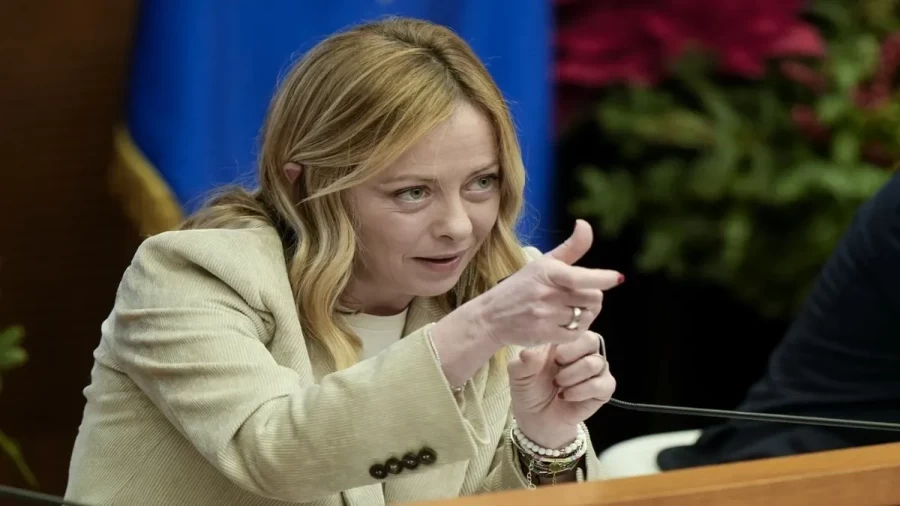
Italy's Prime Minister Giorgia Meloni's Stance
Italy's Prime Minister Giorgia Meloni presented a nuanced and complex view on the US military action in Venezuela. While defending the American intervention as 'justified defense,' Meloni articulated her government's belief that external military force shouldn't be employed to overthrow authoritarian regimes. However, she simultaneously asserted that defensive interventions against 'hybrid attacks' on a nation's security could be deemed legitimate. Specifically, she referenced government entities that promote drug trafficking, implying. That the US action might be justified in such a context. This statement highlights a delicate balance between respecting national sovereignty and acknowledging the potential for intervention in cases perceived as direct threats to security, sparking further debate within the international community regarding the parameters of such actions.
US President Donald Trump's Declaration
Meanwhile, US President Donald Trump adopted a direct and assertive stance regarding the situation in Venezuela. Trump announced that the United States would administer Venezuela until conditions in the country stabilize. To achieve this, he revealed the formation of a special team, which includes US Secretary of State Marco Rubio, Secretary of Defense Pete Hegseth, and other top officials, while this declaration carries significant implications for Venezuela's sovereignty and has raised serious questions within the international community about its adherence to the UN Charter and principles of international law. The US administration's move introduces considerable uncertainty about Venezuela's future and is likely to escalate geopolitical tensions in the region, drawing criticism from nations that prioritize non-interference in internal affairs.
Russia's Strong Condemnation
Following the US military action in Venezuela, Russia issued an immediate and strong condemnation. The Russian Foreign Ministry characterized the American action as 'armed aggression,' describing it as 'deeply concerning and condemnable. ' Russia urged the United States to reconsider its actions and to immediately release Venezuela's legitimately elected President Nicolas Maduro and his wife. The ministry further emphasized that any issues should be resolved solely through dialogue and diplomacy, rather than through the use of force, while this statement reflects Russia's traditional stance against the use of force in international relations and underscores its support for Venezuela's sovereignty. Russia views this incident as a grave threat to international stability and a dangerous precedent for global order.
China's Vehement Opposition
China also strongly denounced the US military action in Venezuela. The Chinese Foreign Ministry condemned the action as a 'serious violation of international law,' an 'attack on Venezuela's sovereignty,' and a 'threat to regional peace. ' China explicitly labeled the US action as 'bullying' and 'Hegemonic Behaviour,' calling on the United States to respect the UN Charter and cease its use of force. This position aligns with China's consistent advocacy for the principles of international law and sovereignty, and its opposition to unilateral military interventions. China perceives this event as a dangerous precedent for the global order, potentially undermining the sovereignty of smaller and developing nations, while this incident is likely to add another layer of complexity to the already strained relationship between the US and China.
Impact on International Diplomacy
The US military action in Venezuela and the subsequent global reactions are profoundly impacting international diplomacy and the geopolitical landscape. Italy's balanced yet defensive stance, the direct intervention by the United States, and the strong condemnations from Russia and China all highlight the diverse interpretations of sovereignty, intervention, and the legitimacy of using force within the international community. The hostage-taking of Nicolas Maduro and his wife has transformed Venezuela's internal crisis into an international flashpoint, escalating tensions among global powers. How this situation is ultimately resolved will set a significant precedent for future international. Relations and the role of the United Nations in maintaining global peace and security.
