

- India,
- 17-Nov-2025 01:31 PM IST


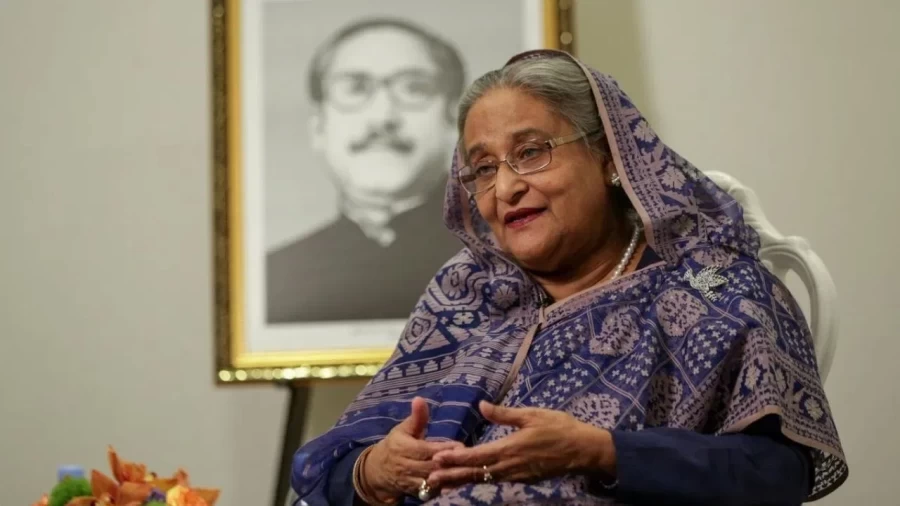
In a landmark decision, Bangladesh's International Court has convicted former Prime Minister Sheikh Hasina for her role in the July uprising, specifically for ordering the firing on unarmed citizens. This verdict Importantly escalates Hasina's legal and political challenges. The Yunus government's lawyer has demanded the death penalty for Hasina, citing 1400 charges against her, while the lawyer argued that failing to impose the death penalty would be a grave injustice to those who lost their lives due to Hasina's directives.
The July Uprising and Hasina's Role
The International Court has identified Sheikh Hasina as the primary culprit in the July uprising, while she stands accused of issuing orders to open fire on unarmed citizens who had taken to the streets during the protests. The court delivered its verdict after an extensive investigation, relying on several crucial pieces of evidence. This ruling could trigger a significant shift in Bangladesh's political landscape, particularly amidst existing political instability. The conviction marks a major blemish on Hasina's long political career.
Viral Audio and Human Rights Report
According to Bangladeshi media outlet 'Prothom Alo,' the court, while delivering its judgment, also released an audio recording of Sheikh Hasina that had gone viral across Bangladesh. In this audio, Hasina is purportedly heard instructing the police chief to open fire on people. The confirmation of the authenticity of this audio accelerated the legal proceedings against Hasina. Also, the court's verdict specifically referenced a report by the Human Rights Commission, which provided a detailed account of the deaths and human rights violations that occurred during the July uprising, while both these pieces of evidence played a pivotal role in strengthening the prosecution's case.
A Detailed 458-Page Verdict
The International Court has issued a comprehensive 458-page verdict against Sheikh Hasina. In this detailed judgment, the court explicitly stated that Sheikh Hasina was responsible for the deaths that occurred during the July uprising. The court made public all the evidence presented by the prosecution. The extensive verdict also noted that Hasina had been moving towards becoming a dictator since January 2024. Following the January 2024 elections, where she suppressed the opposition, she subsequently ordered firing on students when they took to the streets. This ruling further fuels criticisms regarding Hasina's tenure in power.
How Hasina Became Entangled in the Case
In the July uprising murder case, the Bangladesh government had named not only deposed Prime Minister Sheikh Hasina but also former Home Minister Asaduzzaman Khan Kamal and former Inspector General of Police Chowdhury Abdullah Al-Mamun as accused. When the trial against these three commenced in the International Court, Chowdhury Abdullah Al-Mamun changed his stance. Al-Mamun agreed to testify against Hasina, providing a significant advantage to the prosecution. Concurrently, Hasina's audio recording surfaced, in which she was heard conversing with the police chief and ordering the firing on people, while as soon as the authenticity of this audio was confirmed, the case against Hasina gained rapid momentum, ultimately leading to her conviction. This sequence of events highlights how internal witnesses and decisive evidence played a crucial role in this high-profile case.
