

- India,
- 28-Dec-2025 11:19 PM IST


The gaming industry is not going through cosmetic change. It is going through a structural shift. Web3 did not change genres or graphics. It changed the foundation — ownership. In the past, players paid for access to content they did not own. Today, they can hold digital assets they directly control.
In traditional games, everything of value — items, characters, currencies — belongs to the publisher. When servers shut down, value disappears. In crypto games, assets exist independently of any single game. The blockchain records ownership as firmly as a land registry records property. The player is no longer a renter. The player is an owner.
This shift changes the economics of entertainment. Money no longer flows in only one direction, from player to platform. New models allow time, skill, and risk to convert into real value. This is not theory. It already works across many platforms.
Crypto games are not a niche experiment or a passing trend. They form a new layer of the entertainment industry where games, finance, and technology merge into one system. Understanding this shift matters not only to players, but to anyone watching how the digital economy reshapes established markets.
What Web3 Is And Why It Matters For Games
Web3 is not an abstract idea or a marketing label. It is a technical shift that changes who controls digital objects. In Web2, platforms own data and value. In Web3, users do. The difference is simple and strict.
In games, this change is especially visible. Items, characters, and in-game currencies no longer live in closed databases. They exist as on-chain assets. Players can transfer them, sell them, or use them outside a single game. The blockchain acts like a notary. It records ownership without asking permission from a publisher.
This removes the need for trust. Players do not rely on promises. Code and networks enforce the rules. If an item is recorded on the blockchain, it cannot be quietly removed or devalued by a balance update. The rules are public and apply equally to everyone.
This logic already powers a new generation of gaming and entertainment platforms. For example, bcgame uses cryptocurrencies and blockchain infrastructure to give users direct control over funds and gameplay processes. There is no intermediary holding value. The principle is simple: if you control it, you own it.
Web3 does not automatically make games better or more fun. It changes the economic foundation. It is like moving from rented land to private property. Gameplay may vary, but the way players relate to time and money fundamentally changes.
Key Differences of Web3 in the Gaming Industry
Ownership rights — in-game items and currencies belong to players, not platforms.
On-chain assets — items exist on the blockchain rather than in a publisher’s internal database.
No intermediaries — users control assets directly, without relying on third parties.
Transparent rules — game mechanics and economies are defined in code and apply equally to everyone.
Freedom of use — assets can be sold, transferred, or used outside a single game.
A new economic model — players relate to time and money differently when value is truly owned.
How Crypto Games Differ From Traditional Games
The difference between traditional games and crypto games is easiest to see through comparison. This is not about taste or genre. It is about architecture and player rights.
In the traditional model, players spend money for an experience that cannot leave the game. Even rare items are just entries in someone else’s database. Their value depends entirely on trust in the company.
In crypto games, assets exist beyond the game itself. They live on the network. Players can sell them, transfer them, or reuse them in other products. This does not guarantee profit, but it makes value portable. That portability changes player behavior and market structure.
The Economics Of Crypto Games: How Players Earn And Lose
Economics in crypto games sit directly inside gameplay. They are not hidden behind microtransactions. Every token, item, or bet carries real value. This removes the illusion of “free.”
The “pay and play” model shifts toward “play, risk, and earn.” Players can generate income through skill, strategy, or smart decisions. But risk is real. Mistakes cost money.
One Web3 game developer summarized this clearly:
“Crypto games do not promise profit. They provide tools. Everything else depends on the player.”
This brings crypto games closer to financial markets. Success requires discipline, understanding of mechanics, and emotional control. This deters some players and attracts others who treat games as systems rather than amusement rides.
It is important to be clear: crypto games do not guarantee income. They create open economic environments. Players can win, but they can also lose. This transparency separates Web3 from traditional models, where financial consequences are often hidden behind bright interfaces.
Mobile Access And Lowering The Entry Barrier
For a long time, crypto games suffered from one major weakness: complexity. Wallets, networks, and fees discouraged mainstream users. That is changing. The focus has shifted to mobile access and simplified onboarding.
Smartphones are now the main screen for entertainment. Web3 platforms adapt to familiar patterns: app installation, fast login, minimal setup. The technology fades into the background. The user sees only the outcome.
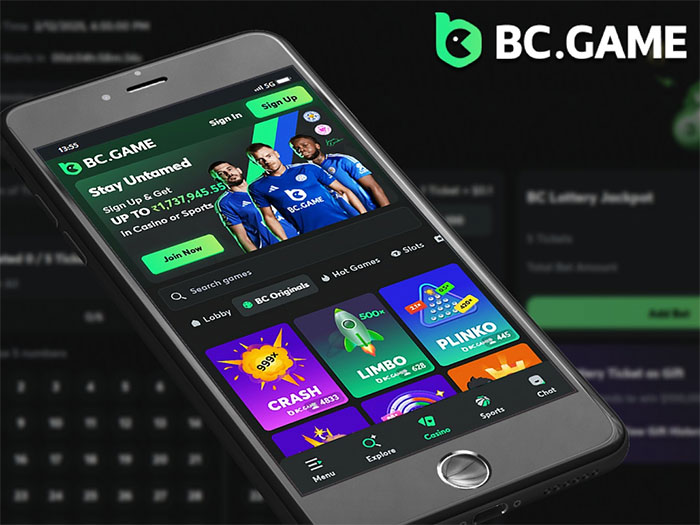
A clear example is bcgame apk. The APK format provides direct access to the platform without unnecessary intermediaries. For the user, it feels like a standard mobile app. For the platform, it ensures control over updates and functionality.
This approach lowers the entry barrier. Users start playing instead of learning infrastructure. That shift is critical for audience growth and for turning crypto games from experiments into mass-market products.
Why Crypto Games Are Not A Temporary Trend
Crypto games do not replace traditional games. They add a new layer — ownership, transparency, and real economics. Web3 removes intermediaries and changes the role of the player. The player becomes a participant, not just a consumer.
This shift has already happened. It is built into the architecture of the technology, not into marketing narratives. Just as online play once became standard, Web3 is forming a new layer of digital entertainment.
Understanding this matters now. Not for hype, but to see how the logic of the industry itself is changing.
