

- India,
- 02-Jan-2026 05:30 PM IST


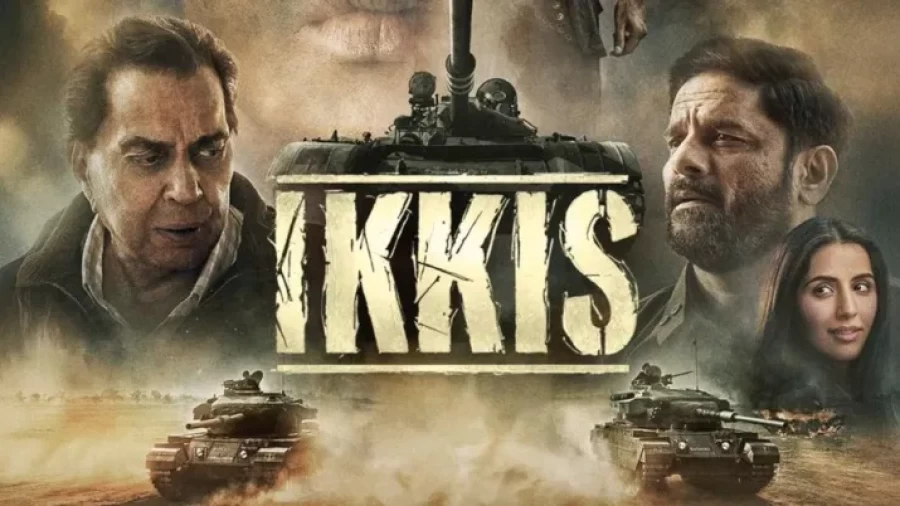
In a remarkable turn of events for Indian cinema, two significant films centered on India-Pakistan relations, 'Dhurandhar' and 'Ikkis', were released within a month of each other, each captivating audiences with vastly different tones and messages. This juxtaposition highlights the rich diversity and legacy of Bollywood, showcasing how a single theme can be explored through contrasting lenses, while while Aditya Dhar's 'Dhurandhar' presents an action-packed narrative of destruction and attack, Shriram Raghavan's 'Ikkis' delves into the pages of history to deliver an emotional and peaceful message.
Dhurandhar vs. The impact and buzz surrounding 'Dhurandhar' are still palpable, yet 'Ikkis' manages to stir. Emotions with a distinct narrative rooted in the immortal chapters of the 1971 war. The comparison between these two films is crucial because both share a backdrop of war with Pakistan, patriotism, national pride, and the zeal to defeat Pakistan, but their core narratives are poles apart. 'Dhurandhar' is built on a fictional premise where an Indian undercover agent infiltrates Pakistan to eliminate enemies, whereas 'Ikkis' is based on a real and unforgettable chapter of the 1971 war, narrating the heroic saga of martyr Arun Khetarpal.
Dharmendra's Heart That Conquers the World
In 'Ikkis', Dharmendra portrays Brigadier (Retd. ) Madan Khetarpal, whose son, Brigadier Arun Khetarpal, was martyred fighting Pakistan in the 1971 war. Dharmendra's performance and magnanimity in the film reveal a heart capable of conquering the world. His character harbors no hatred, going so far as to forgive the Pakistani Army officer responsible for his son's death. This emotional pivot sets the film distinctly apart from 'Dhurandhar's destructive narrative. Dharmendra's character advocates for peace and love against the backdrop of war,. Making 'Ikkis' a war film that ultimately delivers a powerful message of peace.
Historical Context and a Tale of Valor
The story of 'Ikkis' is rooted in the history of the 1971 war, depicting the bravery of Param Vir Chakra recipient martyr Arun Khetarpal. His valor is even acknowledged by the Pakistani Brigadier against whom he was martyred under challenging circumstances. The film's narrative shifts between the 1971 war and the year 2001, spanning thirty years up to the Kargil War, while on screen, the son Arun Khetarpal's war and the father Madan Khetarpal's journey to Pakistan are shown concurrently. Madan Khetarpal first visits his ancestral village in Sargodha, Pakistan, and then the very. Spot of the Battle of Basantar where his son achieved martyrdom in the 1971 war.
Agastya Nanda and Jaideep Ahlawat's Impact
Agastya Nanda, Amitabh Bachchan's grandson, has impressed audiences with his portrayal of Arun Khetarpal. His youthful energy and depiction of patriotism are commendable. Meanwhile, during Dharmendra's (Madan Khetarpal) journey to Pakistan, he's accompanied by Jan Mo, while nisar, the Pakistani Army officer from the 1971 war, whose character is brought to life by Jaideep Ahlawat. Ahlawat's performance is a crucial aspect of the film. Nisar takes Madan Khetarpal to Sargodha and Basantar, welcoming him as a guest,. Despite being the officer responsible for Arun Khetarpal's martyrdom in the 1971 war. The numerous scenes between Dharmendra and Jaideep Ahlawat are memorable, enhancing the film's emotional depth.
Nostalgia and Cultural Connection
While 'Dhurandhar' features songs like Usha Uthup's 'Rambha Ho Ho Ho... ' and Pakistani singer Hasan Jahangir's 'Hawa Hawa Ae Hawa... ' in the background of scenes depicting Lyari, Karachi, and intense combat, 'Ikkis' also uses nostalgic old Hindi film songs and photographs. 'Ikkis' doesn't imagine Lyari but rather portrays the real battles of Sargodha and Basantar, while when Dharmendra, inside Pakistan, sees a photograph of Dev Anand and hears old Hindi film songs, he becomes emotional. In this setting, Shamshad Begum's voice sings 'Chandni Aayi Banke Pyaar, O Sajna... ' and a song by Rajendra Krishan is also mentioned, highlighting the cultural ties between the two nations.
Dharmendra's Profound Performance and Dialogue
During his journey to Pakistan, Dharmendra (Madan Khetarpal) embodies a spectrum of emotions. For him, Pakistan is an enemy nation, the killer of his son, yet when he visits his ancestral village, he gets lost in memories. He recites poetry about the soil, air, and water, meets people with affection, and recalls his youthful love, Husna. Madan Khetarpal is warmly hosted at a gathering where he meets his old friend Asrani, who has forgotten everything. During this time, Madan Khetarpal's words are deeply thought-provoking: 'What is visible on the border, why is it not visible within both countries? On the border, we're bent on taking each other's lives, but within the country, we shower love. ' This dialogue reflects the state of mind of a father who, despite his inner anguish, speaks of peace against war. He questions why wars occur between two nations, who instigates such massacres, and how long this will continue. He also deems wars between two countries unnecessary, and it's at this point that he truly becomes a character with a heart that conquers the world.
A Message of Peace and the Diversity of Indian Cinema
The final scene of 'Ikkis' is particularly moving. Madan Khetarpal forgives the Pakistani Army officer responsible for his son's death,. Standing before him, and delivers a message of peace to the entire world. This stands in stark contrast to 'Dhurandhar's narrative, where there is no talk of yielding or forgiveness between traditional enemy nations. Films like 'Dhurandhar' serve as a symbolic retaliation against the tactics employed by the Pakistani government regarding the Kashmir issue and terrorism in India, which contributed to its blockbuster success.
However, what the filmmaker intended to convey through a character like Madan Khetarpal in 'Ikkis' is also a part of history. The 1971 war is a glorious chapter for India, where it split Pakistan into two, creating a new Bangladesh. Many soldiers like Arun Khetarpal set examples of bravery by defeating Pakistan. 'Ikkis' demonstrates how crucial the message of humanity and peace can be even after war, showcasing Indian cinema's ability to present diverse perspectives on the same subject.
