

- India,
- 11-Jan-2026 10:07 PM IST


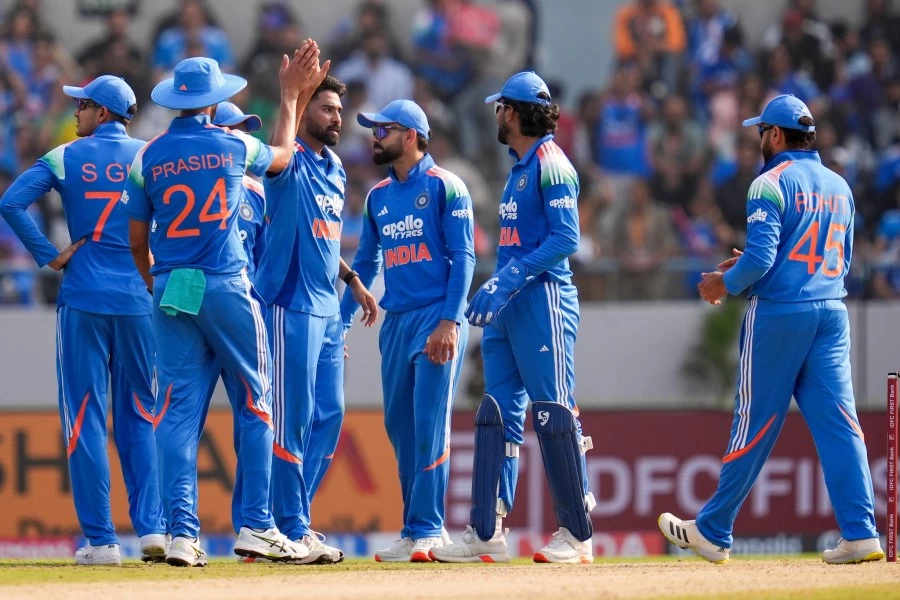
Vadodara witnessed a momentous occasion as men's international cricket made its return to the city after a significant hiatus of 15 years. This comeback wasn't just another match; it was a celebration for the city's ardent cricket fans, made even more memorable by a thrilling performance from Team India. The Kotambi Stadium, which served as the venue for this historic encounter, marked its own debut as an international cricket ground, hosting its very first international match. On this newly inaugurated pitch, Team India successfully chased a challenging target of 301 runs against New Zealand in the first One Day International (ODI), securing a victory by four wickets. This triumph wasn't only a nail-biting contest but also gave India a crucial 1-0 lead in the three-match ODI series, ensuring a positive and confident start to the new year, while
New Zealand's Strong Batting Performance
After losing the toss and being asked to bat first, New Zealand's top order delivered a formidable start, setting a strong tone for their innings. Openers Henry Nicholls and Devon Conway displayed exceptional skill and composure, putting immediate pressure on the Indian bowlers. The duo forged an impressive 117-run partnership for the first wicket, which spanned 21 overs and was instrumental in laying a solid foundation for a competitive total. Conway contributed a valuable 56 runs, while Nicholls scored a significant 62 runs, with both batsmen reaching their respective half-centuries. However, the partnership was eventually broken by the Indian pacer Harshit Rana, a crucial breakthrough that hinted at a potential shift in momentum for the home side, while
Mitchell's Half-Century and Lower Order Contributions
Following the departure of the well-set openers, Daryl Mitchell took charge of the New Zealand innings, showcasing resilience and a determined approach. He registered another impactful half-century against India, continuing to build on the strong start provided by the top order, while mitchell came agonizingly close to achieving a century, ultimately being dismissed for a brilliant 84 runs, just shy of the coveted three-figure mark. In the crucial final overs of their innings, New Zealand's lower-order batsmen managed to accumulate 14 quick runs, demonstrating their ability to score rapidly. This late surge pushed their total to a competitive 300 runs for the loss of 8 wickets in their allotted 50 overs, presenting a significant challenge for the Indian batting lineup.
Indian Bowlers' Impactful Spells
The Indian bowling attack showcased a commendable and. Disciplined effort to restrict New Zealand to a total of 300 runs. Mohammed Siraj, Harshit Rana, and Prasidh Krishna were the standout performers among the pacers, each claiming two vital wickets. Their collective effort was instrumental in preventing the Kiwis from posting an even larger and potentially insurmountable total, while spinner Kuldeep Yadav also contributed with a crucial wicket, adding to the team's success. Mohammed Siraj, in particular, was highly effective and economical, conceding only 40 runs in his 8 overs while picking up two important wickets. His precise line and length, combined with his ability to break partnerships, proved to be a key factor in keeping New Zealand's scoring in check and maintaining pressure throughout their innings.
Kohli's Masterclass and Milestone Achievement
In pursuit of the challenging 301-run target, Team India aimed to enthrall the Vadodara crowd with their batting prowess. Former captain Rohit Sharma started aggressively, hitting two powerful sixes and a few well-timed boundaries, but his stay at the crease was short-lived, while captain Shubman Gill initially struggled to find his rhythm and score freely. However, upon Rohit's dismissal, the seasoned Virat Kohli walked to the crease and immediately unleashed a flurry of boundaries, injecting momentum into the chase. During his magnificent innings, Kohli achieved another significant milestone, completing 28,000 runs in international cricket, a testament to his consistent brilliance, while he then formed a crucial 118-run partnership with Shubman Gill, steadily guiding India closer to the target with a blend of aggression and calculated stroke play.
Kohli's Near-Century and Late Wickets
Even after Shubman Gill's departure, Virat Kohli continued his magnificent form, extending his impressive streak of scoring 50 or more runs in seven consecutive List-A innings. Kohli, alongside Shreyas Iyer, meticulously propelled the team past the 200-run mark, building a strong platform for victory, while just when it seemed certain that Kohli would complete his century and lead India to a comfortable win, Kyle Jamieson struck a significant blow, dismissing him for a brilliant 93 runs on the first ball of the 40th over. This wicket proved to be a major setback for India's chase. Jamieson further compounded India's troubles by dismissing Ravindra Jadeja cheaply in the same over. Shreyas Iyer also departed in the 42nd over, leaving India in a precarious position and increasing the pressure on the remaining batsmen.
Harshit Rana and KL Rahul's Decisive Partnership
Facing a challenging and tense situation, fast bowler Harshit Rana stepped up with the bat, playing a vital, albeit brief, innings of 29 runs. He combined with the composed KL Rahul to forge a rapid 37-run partnership, which proved instrumental in bringing India back into contention and alleviating some of the mounting pressure. KL Rahul displayed exceptional composure and skill, remaining unbeaten until the very end. He, along with Washington Sundar, sealed the victory for Team India by hitting a magnificent six on the last ball of the 49th over, securing a thrilling 4-wicket win. Rahul remained unbeaten on 29 runs, ensuring a dramatic and successful conclusion to the match. This victory wasn't just crucial for India's series aspirations but also a truly memorable spectacle for the enthusiastic cricket followers in Vadodara, marking a triumphant return for international cricket to their city.
