

- India,
- 13-Dec-2025 12:09 PM IST


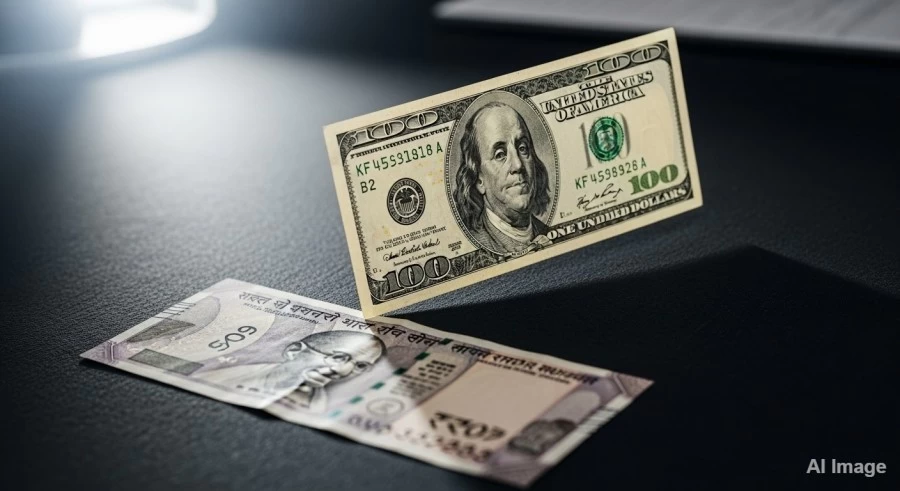
The Indian Rupee is currently experiencing a significant and concerning depreciation against the US Dollar, a situation few anticipated for one of the world's fastest-growing economies. In the current year, the rupee has already fallen by approximately. 6% against the dollar, marking its largest decline in three years. This substantial weakening has also led to the Indian Rupee becoming the worst-performing currency in Asia against the dollar this year. This historic downturn is attributed to three major crises that are collectively exerting immense. Pressure on the Indian currency and posing significant challenges to the nation's economic stability. The rupee's continuous slide has been a cause for alarm among investors and policymakers alike.
On Friday, the Indian Rupee closed at yet another historic low of 90, while 41 against the US Dollar, marking its second record low. Earlier in the trading session, the domestic currency had opened at an all-time low of 90. 31 against the US Dollar and further weakened to an unprecedented 90. 55. This sharp decline was primarily attributed to the ongoing delays in the trade agreement with the United States.
In the afternoon session, the rupee saw a marginal recovery, reaching 90. 37, but by market close, it had again weakened to settle at the new historic low of 90. 41, while over the course of this week alone, the rupee has depreciated by 0. 50% against the dollar, underscoring its fragile position in the global currency market, while the year-to-date depreciation of around 6% highlights a sustained period of weakness that has not been observed in the past three years, making the current situation particularly challenging.
Delay in US-India Trade Deal
One of the primary antagonists contributing to the rupee's vulnerability is the. Prolonged delay in finalizing a trade deal between the United States and India. Despite recent discussions between Indian Prime Minister Narendra Modi and US President Donald Trump on bilateral cooperation, there have been no concrete indications of any relief regarding tariffs. Experts widely believe that the imposition of tariffs by the US has been a persistent source of pressure on the rupee, and its full impact is expected to become more evident towards the year-end, while the market is eagerly awaiting the finalization of a comprehensive trade agreement with the US, as such a deal is seen as crucial for stabilizing and strengthening the rupee. Analysts emphasize that the future trajectory of the rupee's strength will largely depend on when the Indian government officially announces a definitive trade agreement with the United States. The uncertainty surrounding this critical deal continues to weigh heavily on investor sentiment and the currency's performance.
Profit Booking by Foreign Investors
Another significant factor exacerbating the pressure on the domestic currency is the continuous selling of domestic shares by foreign investors. According to a report by Reuters, foreign investors have withdrawn a staggering. $18 billion worth of shares from the Indian stock market this year. This substantial outflow of capital represents a significant divestment from Indian equities. Focusing on the current month, foreign investors have engaged in selling worth approximately 18,000 crore rupees. December marks the eighth month this year where foreign investors have been net sellers in the Indian market, indicating a sustained trend of capital flight. In contrast, there have been only four months this year when investors injected capital into the stock market. Over the past 15 months, foreign investors have pulled out money from the stock market in 10 of those months, a period during which the rupee has depreciated by approximately 8% against the dollar. This consistent outflow of foreign capital reduces the demand for the rupee and exerts downward pressure on its value, reflecting a broader lack of confidence among international investors.
Heavy Dollar Buying by Local Companies
The third critical factor contributing to the rupee's weakness is the substantial buying of dollars by local companies. As the year-end approaches, Indian companies are making significant dollar purchases to fulfill their year-end payment obligations. This heightened demand for the US currency in the local market naturally. Puts additional strain on the Indian Rupee, causing it to depreciate further. Traders have noted that the Reserve Bank of India (RBI) has intervened in the market to manage this situation; however, the central bank has not specified any particular target level for the currency. On December 16, the RBI announced its intention to buy dollars from banks through currency swapping operations, injecting several thousand crores of rupees into the banking system. While this measure is expected to provide some marginal support to the rupee, market participants believe that this support will likely be limited, given the persistent and strong demand for dollars for corporate payments.
Future Outlook for the Rupee
Commenting on the future prospects of the rupee, Anindya Banerjee, Head of Currency and Commodity at Kotak Securities, offered his insights. He stated that the USDINR pair continues to face pressure due to persistent foreign portfolio investment (FPI) outflows from both bond and equity markets. Also, the rise in global yields, coupled with the unwinding of carry trades involving the USD and JPY, is adding further pressure on Indian bonds. However, Banerjee also highlighted that there are some positive aspects related to the India-US trade agreement that could provide intermittent relief to the rupee, while overall, the analyst anticipates a broad trading range of 89. 50-91. 00 on the spot market. This suggests that the rupee is likely to fluctuate within this range in the near future, subject to any significant policy changes or global economic developments that could alter its trajectory.
