

- India,
- 15-Jan-2026 10:06 AM IST


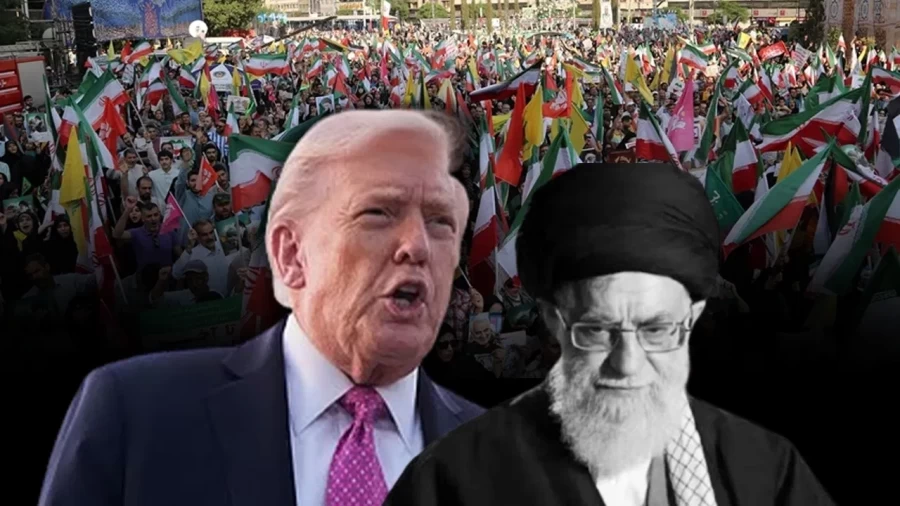
In a significant development, Iran has reportedly backed down from its earlier decision to execute protestors arrested during nationwide demonstrations, following direct and stern threats from US President Donald Trump, while this turn of events brings considerable relief to the international community, which has been closely monitoring the human rights situation in Iran. According to a Reuters report, Iranian Foreign Minister Abbas Aragchi explicitly stated on Wednesday that there are no. Plans by Iran to execute any of the protestors, effectively retracting earlier announcements that had sparked global outrage.
Iranian Foreign Minister's Statement
Iranian Foreign Minister Abbas Aragchi, during an interview on Fox News' 'Special Report with Bret Baier,' emphasized that there is no intention to carry out executions. He stated, 'There is no plan for executions. Executions are out of the question. ' This declaration marks a notable shift in Iran's stance, both domestically and internationally,. As the Iranian government had previously announced swift trials and rapid executions for protestors. This earlier announcement had escalated global concerns and drawn strong condemnation from several countries, including the United States, while aragchi's statement is widely seen as a direct response to the mounting international pressure on Iran.
Trump's Warnings and Claims
US President Donald Trump's direct and unequivocal threats are considered a primary factor behind Iran's sudden reversal. Trump had warned Iran of severe consequences, stating, 'If they do the executions, you're going to see some terrible things. ' This warning served as a grave caution to Iran, likely compelling Tehran to reconsider its decision. On Wednesday, Trump also reported that the killings of protestors in Iran had ceased, indicating the perceived impact of his threats. The Trump administration has consistently pressured Iran over its human rights abuses and the suppression of dissent, making this a key point in their foreign policy.
The Case of Irfan Sultani
At the heart of this unfolding drama was the case of 26-year-old protestor Irfan Sultani, who was scheduled to be executed by Iran on Wednesday. According to a report by The Guardian, Irfan was arrested on January 8th and, within a mere three days, was sentenced to death on January 11th. Sultani was accused of 'Moharebeh' (waging war against God), one. Of the most severe offenses under Iranian law, punishable by death. Human rights organizations had raised serious concerns that Sultani was denied a fair trial, legal representation, or the opportunity to appeal. The postponement of his execution has brought significant relief to human rights activists globally.
Human Rights Concerns and Judiciary Chief's Stance
Human rights organizations and exiled activists have consistently voiced concerns over the practice of 'fast-track executions' or 'rapid/show trials' in Iran. They believe that the government's objective is to instill fear and silence thousands of other protestors who have been arrested. According to the Norway-based Iran Human Rights (IHR) group, Iran is the second-highest country globally for executions, after China, while last year alone, Iran reportedly executed at least 1,500 people. In contrast, Iran's Judiciary Chief Gholamhossein Mohseni-Ejei had stated on Wednesday that. The government must swiftly punish those detained through fast trials and executions. He argued that delays in sentencing diminish its impact, highlighting a stark difference in perspective within the Iranian establishment.
Iran's Threat to Trump and No-Fly Zone
Amidst this tense atmosphere, Iran had issued a death threat against President Trump on state television. According to an AFP report, the threat was in Persian and featured footage of a 2024 assassination attempt on Trump in Butler, Pennsylvania, accompanied by a message stating, 'This time the bullet won't miss the target. ' This represented Tehran's most direct threat against Trump to date. On top of that, amid widespread protests and escalating tensions with the United States, Iran. Had closed its airspace for most flights for a two-hour period on Wednesday. Flightradar24 reported that Tehran issued a 'Notice to Air Missions' (NOTAM) warning shortly after 5 PM on Wednesday, restricting all flights except international ones entering and exiting Iran. This restriction affected several airlines, including Indigo, Lufthansa, and Aeroflot, causing significant disruption.
International Travel Advisories and India's Role
Given the deteriorating security situation in Iran, the Indian government issued an advisory on Wednesday for its citizens. It urged all Indian nationals, whether students, pilgrims, businesspeople, or tourists. Currently in Iran, to leave the country as soon as possible. There are currently over 10,000 Indian citizens in Iran. This advisory was a follow-up to a previous one issued on January 5th, reflecting the changing circumstances in Iran. Besides India, the governments of Spain, Italy, and Poland have also advised their citizens to leave Iran. India's External Affairs Minister S, while jaishankar spoke with Iranian Foreign Minister Abbas Aragchi late Wednesday evening to discuss the situation in Iran, underscoring India's concern.
Root Causes of Protests and Casualties
The violence that erupted in Iran on December 28th has been fueled by several deep-seated issues and is considered one of the largest protest movements to date. The Iranian currency, the Rial, has plummeted to its lowest historical value, with 1 US dollar now exchanging for approximately 1,455,000 to 1,457,000 Rials. Everyday necessities like tea and bread have become exorbitantly expensive, with inflation soaring over 50-70%. On December 28, 2025, merchants in Tehran's Grand Bazaar initiated a strike, which rapidly spread across the country. People are chanting slogans against Supreme Leader Ayatollah Khamenei and the entire Islamic Republic system, with many demanding the return of the old monarchy (Shah's rule). The Norway-based Iran Human Rights (IHR) NGO reported on Wednesday that Iranian security. Forces have killed at least 3,428 protestors and arrested over 10,000 during the crackdown. Iran International, a website covering Iranian affairs, claimed that at least 12,000 people have died across the country, mostly from gunshot wounds.
Growing Demand for Crown Prince Reza Pahlavi
Iran is currently grappling with severe challenges, including an economic crisis, rampant inflation, international sanctions, high unemployment, currency devaluation, and persistent popular uprisings. Following the 1979 Islamic Revolution, Ayatollah Ruhollah Khomeini came to power, serving as Supreme Leader from 1979 to 1989, while he was succeeded by Ayatollah Ali Khamenei, who has held power for 37 years since 1989. Disgruntled by the current economic hardship and strict religious rule, people are now demanding change. Consequently, there is a growing call for 65-year-old Crown Prince Reza Pahlavi to assume power. Protestors view him as a secular and democratic alternative. Young people and Generation Z believe that Pahlavi's return could. Bring economic stability, global acceptance, and individual freedoms to Iran. US President Trump also described Pahlavi as 'quite good,' though he expressed uncertainty about his internal support within Iran.
