

- India,
- 18-Apr-2026 08:50 AM IST


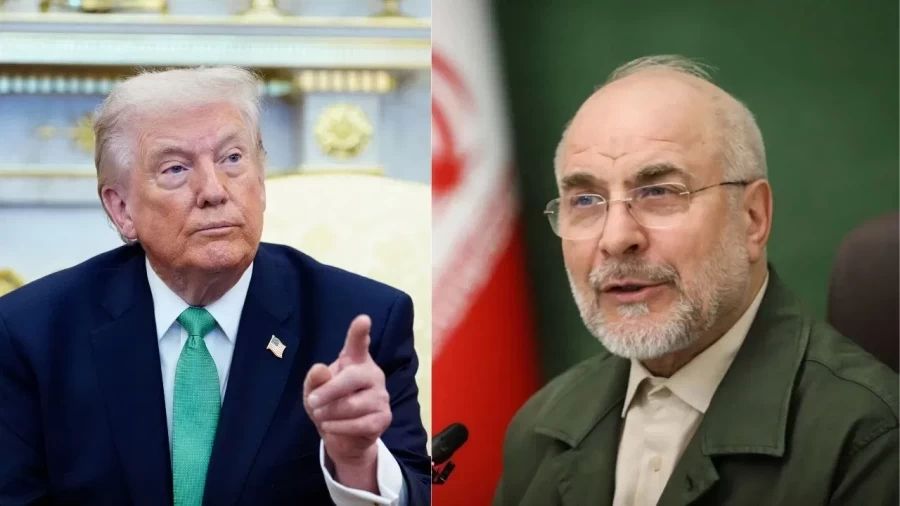
US President Donald Trump recently claimed that after approximately six weeks of conflict, the United States and Iran were nearing a significant agreement. Speaking at the White House, Trump asserted that Tehran had agreed to surrender its enriched uranium stockpile. However, Iran has categorically rejected these claims. Mohammad Bagher Ghalibaf, the Speaker of the Iranian Parliament, stated that Trump's remarks were inaccurate. He noted that the US President made seven claims within an hour, all of which were false, while ghalibaf further emphasized that the US would gain nothing through these negotiations.
Iranian Speaker Dismisses Trump's Seven Claims
In a post on the social media platform X, Speaker Mohammad Bagher Ghalibaf responded sharply to the US President's assertions. He wrote that the President of the United States made seven claims in a single hour, and all seven were lies. According to Ghalibaf, the US couldn't win the war through such falsehoods and would certainly find no success in negotiations either. The Speaker's reaction highlights the deep-seated mistrust and the significant gap between the narratives provided by Washington and Tehran regarding the progress of diplomatic talks.
Key Highlights and Critical Data
Threat to Close the Strategic Strait of Hormuz
Beyond dismissing the nuclear claims, the Iranian Speaker issued a stern warning regarding regional maritime security. He stated that if the blockade against Iran continues, Tehran would close the Strait of Hormuz. Ghalibaf wrote that the waterway wouldn't remain open under a continued blockade and added that passage through this strategic route would depend entirely on Iranian permission. This statement underscores the potential for escalation in one of the world's most vital oil transit corridors if diplomatic tensions aren't resolved.
Trump's Assertions on Nuclear Material and Islamabad Visit
During his White House address, Trump had stated that Tehran agreed to return nuclear material, referring to enriched uranium which Washington believes could be used for nuclear weapons. He mentioned a high probability of the deal being finalized and even hinted at a possible trip to Islamabad if the agreement is concluded there, suggesting that talks were reaching a decisive phase. However, Iranian sources contradicted this, stating that no such talks regarding the transfer of nuclear material have taken place. One source labeled the claim as "just another lie," noting that no significant progress has been made in the ongoing negotiations.
Foreign Ministry Denies Uranium Transfer Abroad
Adding to the rebuttal, Iranian Foreign Ministry spokesperson Esmaeil Baghaei clarified that Iran has no intention of sending its enriched uranium abroad. In an interview with state media, he stated that sending uranium to the US isn't an option for Iran. This directly contradicts Trump's earlier comments about a breakthrough. Sources within Iran emphasized that the talks remain incomplete and far from a final agreement. They suggested that Washington's statements might be premature and that any progress remains conditional on the US meeting specific terms set by Tehran, which have not been made public. These conflicting reports highlight the fragile state of diplomacy between the two nations.
