
- India,
- 20-Oct-2026 08:39 AM IST



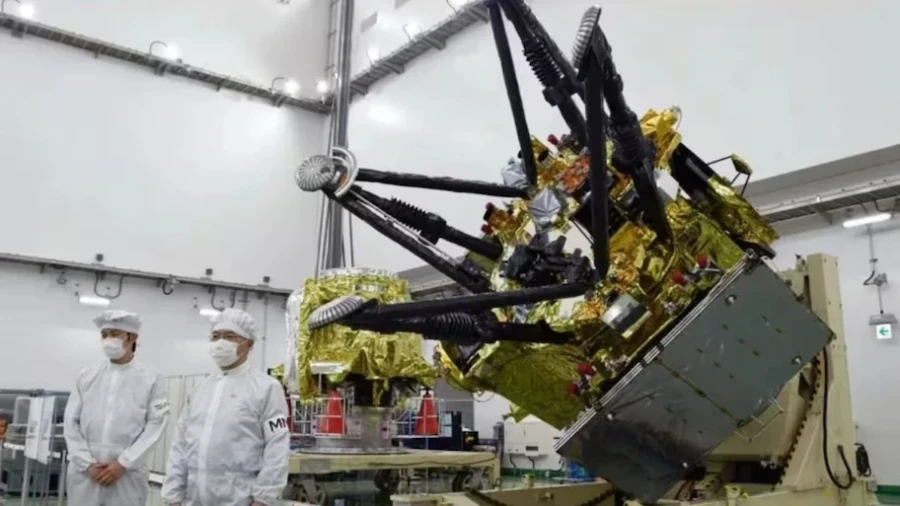
In a groundbreaking and audacious endeavor to unlock the enduring mysteries of Mars and retrieve pristine extraterrestrial samples directly to Earth, a sophisticated Japanese spacecraft has officially embarked on its long journey toward the Red Planet. This high-stakes, five-year interplanetary mission represents a monumental collaborative effort bringing together five major space agencies from across the globe, while the primary objective of this ambitious campaign is to successfully land a robotic prospector and an advanced rover upon Phobos, the larger and closer of the two diminutive natural satellites orbiting Mars.
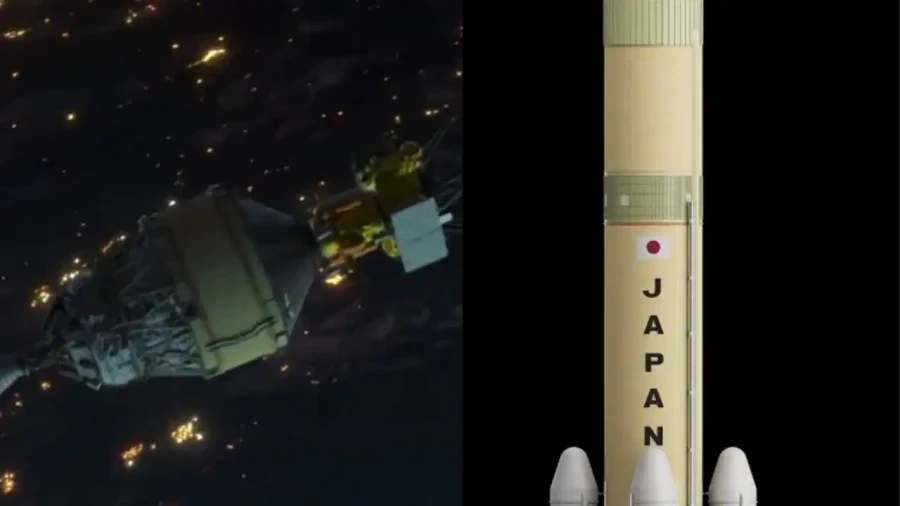
The Japan Aerospace Exploration Agency, commonly known as JAXA, is leading this historic space expedition. Early Tuesday morning on October 20, the agency successfully launched the massive spacecraft from its primary spaceport situated on Tanegashima Island. Officially designated as the Martian Moons Exploration mission, or MMX, the entire undertaking carries an estimated total cost of approximately 578 million dollars, marking it as a monumental investment in planetary science and deep space exploration.
Unprecedented Challenges in Space Exploration
Reviewing the historical landscape of space exploration over the past five decades, the United States space agency NASA has successfully landed a total of nine spacecraft onto the surface of Mars, while China also achieved a successful landing on the Martian terrain in the year 2021. Despite these remarkable technological achievements, no nation has ever managed to successfully reach Phobos or its companion moon, Deimos. On top of that, no space program in human history has yet succeeded in returning physical soil and rock samples from Mars or its orbiting moons back to our home planet.
Consequently, the international scientific community views this mission with extraordinary anticipation. If Japan's MMX mission proceeds according to plan, pristine dust, soil, and rock samples from Phobos will safely arrive on Earth by the year 2031. This will mark the first time in human history that samples are retrieved directly from a Martian moon for comprehensive laboratory analysis on Earth. Scientists harbor immense optimism that these invaluable specimens will shed crucial light on the origin of Martian moons and provide fundamental insights into the formation processes of planets throughout our solar system.
Japan's Proven Expertise in Asteroid Sample Return
Tom Statler, a prominent astrophysicist at NASA closely associated with the project, remarked that the endeavor is packed with immense excitement, deep wonder, and boundless adventure. Japan maintains a distinct strategic advantage in this specialized domain, having already successfully returned asteroid samples to Earth on two separate occasions, while phobos itself resembles an irregularly shaped, potato-like rock floating in the void of space, measuring roughly 14 miles or 22 kilometers across. Detailed microscopic analysis of fragments from Phobos could definitively reveal how the moons of Mars, and potentially celestial bodies in other regions of the cosmos, originally came into existence.
The Martian Moons Exploration mission comprises a single comprehensive spacecraft designed to reach the vicinity of Mars by the end of next summer, while this powerful craft will insert itself into a stable orbit around the Red Planet specifically around Phobos, from where it will deploy a joint French-German surface rover. Named Idefix in honor of the loyal white terrier comic book character from the popular Asterix series, this tiny robot represents a pinnacle of miniaturized engineering.
The Tiny Idefix Rover Smaller Than a Microwave Oven
Measuring no larger than a standard kitchen microwave oven, the Idefix rover is engineered to autonomously touch down on the rugged surface of Phobos, while because gravitational forces on Phobos are exceptionally weak, the rover will bounce repeatedly across the terrain for several minutes before finally coming to a rest. The four-wheeled vehicle is ingeniously designed to automatically right itself should it happen to land upside down on the rocky regolith.
However, addressing potential hazards, Julian Barroux of the French space agency noted that if the rover becomes deeply embedded in soft dust or trapped tightly between jagged boulders, predicting its recovery becomes impossible. He further explained that once the rover's solar panels deploy fully, it will lose the capability to reorient itself. 04 inches per second.
According to Barroux, Idefix will spend 100 days roving around Phobos to act as an advanced security scout. Japanese flight controllers intend to use this reconnaissance data to ensure that when their main spacecraft, a four-legged stationary lander, descends to collect samples in late 2028 or 2029, it successfully steers clear of treacherous dust pits and hazardous boulder fields.
A Brief Two-Hour Surface Operations Window
The primary lander will spend a remarkably brief window of only two hours directly on the surface of Phobos. During this narrow timeframe, the craft will execute specialized drilling operations to harvest a minimum of 10 grams of material before blasting off back into space. Prior to departing the Martian vicinity in 2030, the spacecraft will perform multiple close flybys to conduct detailed scientific observations of the smaller moon, Deimos. Following these maneuvers, the craft will execute a high-speed trajectory back toward Earth, aiming to drop its precious cargo container into the Australian desert in 2031.
A High-Risk Interplanetary Campaign
This mission represents a profoundly high-risk undertaking, navigating through an orbital path littered with ancient space debris and meteorite impacts. The names of the Martian moons themselves carry grim historical connotations derived from Greek mythology, where Phobos translates directly to fear and Deimos translates to terror, representing the twin sons of Ares, the Greek god of war equivalent to the Roman god Mars.
History records that Russia faced successive failures across all three of its dedicated attempts targeting Phobos, alongside multiple setbacks in broader Martian missions, while japan's own historical record includes a previous Mars endeavor wherein its spacecraft failed to achieve proper insertion into the Red Planet's orbit. Even NASA has experienced considerable setbacks while striving to answer fundamental astrobiological questions regarding whether ancient microbial life ever existed on Mars.
Unraveling the Origins of Martian Moons
Through exhaustive study of the Martian moons, planetary scientists hope to resolve longstanding debates regarding whether Phobos and Deimos coalesced following a colossal primordial collision between Mars and a wandering asteroid. Alternatively, these satellites may represent captured rogue asteroids ensnared by the gravitational pull of Mars long ago. Regardless of their precise origin, researchers anticipate discovering microscopic fragments of Mars embedded within the regolith of Phobos, offering an invaluable two-for-one scientific return that could illuminate both planetary accretion dynamics and the chemical precursors of life.
NASA Acting Planetary Science Director Lindsay Hays emphasized that these forthcoming discoveries will prove instrumental in designing future human exploration architectures for crewed missions to Mars. Marcus Grebenstein, rover project manager at the German Space Agency, described the initiative as a once-in-a-lifetime opportunity to participate in humanity's inaugural sample return from the Martian system.
Japan is far from alone in this cosmic pursuit, as China actively prepares a competing Mars sample return mission slated for launch in 2028. Meanwhile, NASA continues evaluating architectural options to retrieve more than 30 sealed sample tubes meticulously cached on the Martian surface by the Perseverance rover, which currently leads planetary surface exploration efforts.
Intense Global Competition Between Japan and China
This race to return pristine Martian samples has ignited intense international competition between space powers like Japan and China, with both programs targeting the crucial year 2031 milestone. Japan is committing approximately 350 million dollars directly to the MMX mission architecture. Additional international financial and technical contributions include roughly 87 million dollars from NASA, 68 million dollars from the French space agency, 56 million dollars from the German space agency, and 17 million dollars from the European Space Agency.