

- India,
- 27-Nov-2025 12:23 PM IST


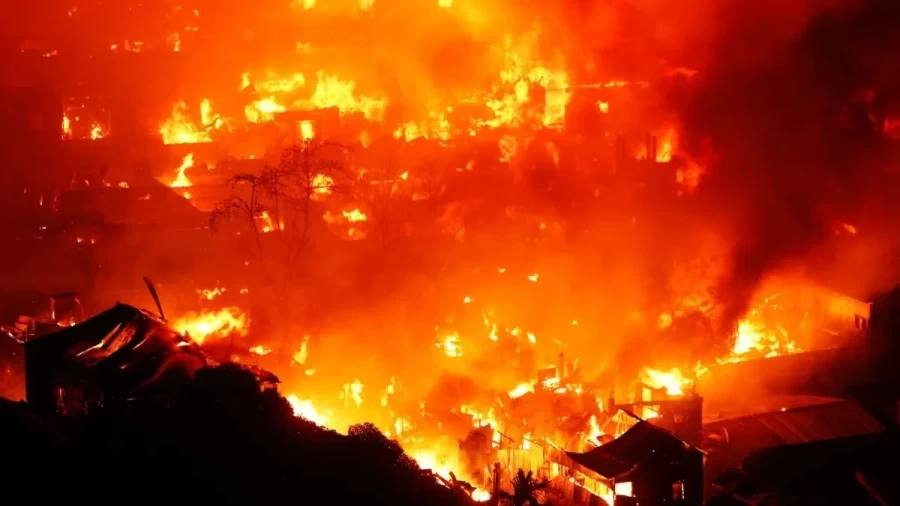
A massive fire erupted in Dhaka's Korail slum on Tuesday evening, causing widespread devastation and reducing over 1500 shanties to ashes, leaving thousands of residents homeless, while the incident occurred in one of the capital city's most densely populated informal settlements, where life is already fraught with challenges. The intensity of the blaze was such that it engulfed a significant portion of the slum,. Turning the night sky crimson with flames and shrouding the area in thick smoke for hours.
Devastating Blaze Engulfs Korail Slum
The fire, which started on Tuesday evening, spread rapidly through the densely packed shanties, many of which are constructed from highly flammable materials. The sheer scale of the inferno necessitated a prolonged and arduous firefighting effort, lasting a full 16 hours before it could finally be brought under control on Wednesday. The towering flames were visible from a considerable distance, and the dense smoke plume extended for several kilometers, making breathing difficult in surrounding areas, while during the chaos, thousands of slum dwellers scrambled to safety, abandoning their meager possessions to the raging fire.
A 16-Hour Battle Against the Flames
Rashid Bin Khalid, a duty officer with the Fire Service and Civil Defense Department, stated that it took a significant amount of time to bring the fire under control. Firefighters faced immense difficulties in accessing the heart of the blaze due to the extremely narrow alleys and congested pathways within the slum. Their vehicles and equipment struggled to navigate the labyrinthine layout,. Severely hampering their efforts to contain the rapidly spreading flames. Lieutenant Colonel Mohammad Tajul Islam Chowdhury, Director of the Fire Service, confirmed that approximately 1500 shanties were either completely destroyed or severely damaged in the conflagration. Despite the relentless efforts of the emergency services, the structural challenges of the slum made their task exceptionally arduous.
Thousands Rendered Homeless and Desperate
This catastrophic fire has rendered thousands of people instantly homeless. On Wednesday, after the flames were extinguished, residents whose homes had been destroyed were seen sifting through the charred debris, desperately searching for any salvageable belongings, while their faces reflected profound distress and helplessness. Many were forced to spend the night in the open, with their children and what little they could carry. The tragedy has completely upended their lives, creating an immediate and urgent need for shelter, food, and other basic necessities. This incident starkly highlights the precarious existence of millions living in Dhaka's informal settlements.
Korail Slum: A Portrait of Urban Vulnerability
Korail slum is one of Dhaka's largest and most densely populated informal settlements, sprawling across more than 160 acres. According to official figures, approximately 60,000 families reside within this vast area, while a significant portion of these residents are climate change refugees who have migrated from rural areas, forced to abandon their homes due to natural disasters or extreme poverty. The slum occupies a unique geographical position, nestled between Dhaka's affluent Gulshan and Banani areas, surrounded by towering apartment buildings and corporate offices. This stark juxtaposition underscores the deep socio-economic disparities prevalent within the city.
Dhaka's Slum Dwellers: A Socio-Economic Perspective
With a population exceeding 12. 5 million, Dhaka is home to hundreds of such slum areas. People migrate from rural regions driven by poverty, exploitation, and the hope of better opportunities in the capital. Also, climate-related disasters, such as floods and river erosion, compel thousands to abandon their ancestral lands and seek refuge in these urban slums. Residents of these informal settlements often sustain themselves through precarious livelihoods, working as rickshaw pullers, domestic helpers, or cleaners, while while they contribute Importantly to the city's economy, they themselves live in highly vulnerable and deprived conditions. This fire once again brings to the forefront the plight of these marginalized communities, who possess minimal resources to cope with such devastating events.
The Aftermath and Future Challenges
In the wake of this massive fire, the rehabilitation and support for thousands of displaced individuals present a formidable challenge. Government agencies and non-governmental organizations will need to collaborate closely to provide immediate relief to these affected families. Concurrently, there is an urgent need to strengthen fire safety measures within slum areas and implement improved urban planning strategies to prevent similar tragedies in the future, while the narrow alleys and use of unstable construction materials make these settlements highly susceptible to fires, and this disaster serves as a stark reminder that these critical issues demand immediate and sustained attention.
