

- India,
- 02-Dec-2025 12:44 PM IST


Pakistan is currently facing an unprecedented political crisis, with the nation teetering on the brink of what many are calling a 'civil war countdown'. The arrest and alleged mistreatment of former Prime Minister Imran Khan. Have ignited widespread anger among his supporters, leading to massive planned protests. Simultaneously, a critical meeting has taken place in Lahore between former Prime Minister Nawaz Sharif and current Prime Minister Shehbaz Sharif, where a significant decision regarding Asim Munir's Chief of Defence Staff (CDF) notification is anticipated. These developments are poised to have far-reaching implications for Pakistan's future.
Imran Khan's Imprisonment and Allegations of Torture
Imran Khan, who is currently incarcerated in Adiala Jail in Rawalpindi, has not been seen publicly for the past 29 days, fueling growing concerns about his well-being and safety. His sister, Noreen Niazi, has issued a strong statement claiming that Imran is being subjected to severe torture in jail. She explicitly stated that Imran is being held in solitary confinement and is enduring inhumane treatment. Noreen Niazi also made a direct appeal, suggesting that if Munir would allow even one person to meet Imran, the situation might not escalate further. This demand underscores the family's urgent desire for contact and raises serious questions about human rights practices within Pakistan's detention facilities, further exacerbating the already volatile political climate.
PTI's Protest March and Anticipated Confrontation
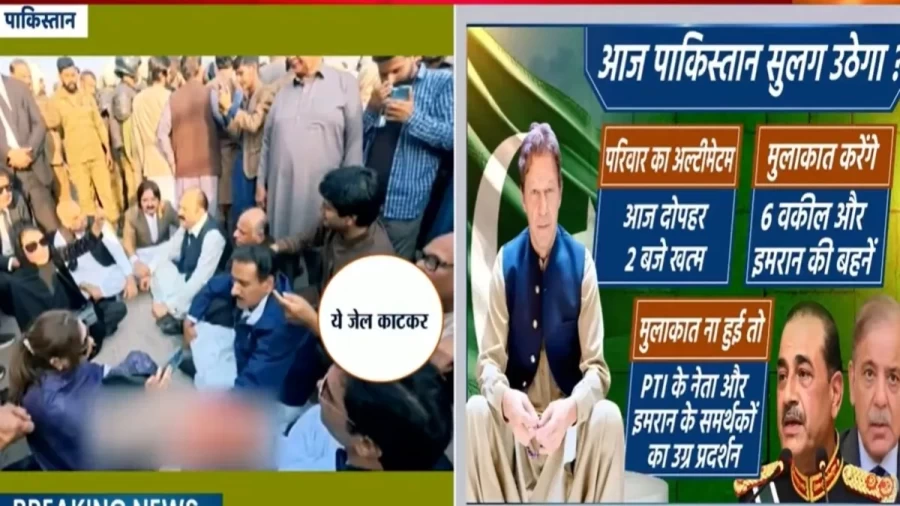
Leaders and workers of Imran Khan's party, Pakistan Tehreek-e-Insaf (PTI), are gearing up for a major protest march towards Adiala Jail. Imran's supporters have already begun moving towards the jail in vehicles, demanding a meeting between Imran and his family. PTI Members of Parliament and Members of Provincial Assembly, including Khyber Pakhtunkhwa Chief Minister Sohaile Afridi, are expected to lead this march, while their plan involves first picketing the High Court in Islamabad, followed by a procession to Adiala Jail in Rawalpindi, where they intend to join Imran's sisters in their protest. To counter this, Asim Munir has deployed heavy security forces at every strategic point. All roads leading to Rawalpindi have been sealed, and a substantial security presence has been established. Outside Adiala Jail, indicating a high likelihood of a fierce confrontation today across Islamabad and Rawalpindi.
Suspense Over Munir's CDF Notification
The suspense surrounding Asim Munir's Chief of Defence Staff (CDF) notification continues to deepen. Reports from Pakistani media indicate that Shehbaz Sharif traveled to Lahore to meet Nawaz Sharif, where a major decision on this notification is expected, while a journalist close to Imran Khan has claimed that four key positions in the Pakistan Army are currently vacant: CDF, Vice Chief of Army, Head of Strategic Command, and ISI Chief. Asim Munir is reportedly awaiting the CDF notification, while the Head of Strategic Command. Position is particularly critical, as it holds the responsibility for safeguarding Pakistan's nuclear arsenal. Amidst this uncertainty, Mohsin Naqvi, Pakistan's Interior Minister and a close associate of Munir, has issued a statement asserting that there is no issue with the CDF notification's delay and that those questioning it are making no difference, while this statement, rather than calming nerves, has only added to the complexity of the situation.
Family's Demand for Meeting and Government's Stance
Imran Khan's sisters have successfully reached Adiala Jail, accompanied by six lawyers, all seeking permission to meet Imran. Imran's supporters are adamant about securing a meeting today, but Munir and Shehbaz are reportedly unwilling to allow any contact between Imran and his supporters under any circumstances. Pakistani media outlets are claiming that 'no meeting with Imran will be allowed until the notification is issued. ' This rigid stance is further escalating tensions, as the family and supporters are resolute in their demand for a meeting, while the government and military remain determined to prevent it. Section 144 has been imposed in Islamabad-Rawalpindi, prohibiting any large gatherings, underscoring the gravity of the situation.
Potential Outcomes in the Coming Days
This political deadlock in Pakistan has evolved into a severe crisis. The decision regarding Asim Munir's CDF notification, the allowance or denial of Imran Khan's release or meeting, and the outcomes of the PTI's protests will collectively determine the nation's future trajectory, while should the confrontation intensify and the government and military resort to forceful suppression of protests, the country could plunge deeper into a civil war-like scenario. The international community is closely observing Pakistan's internal situation, as instability in a nuclear-armed nation could have profound global repercussions. The next few hours and days will undoubtedly be critical for Pakistan, shaping its political landscape for the foreseeable future.
