
- India,
- 01-Oct-2026 01:38 PM IST



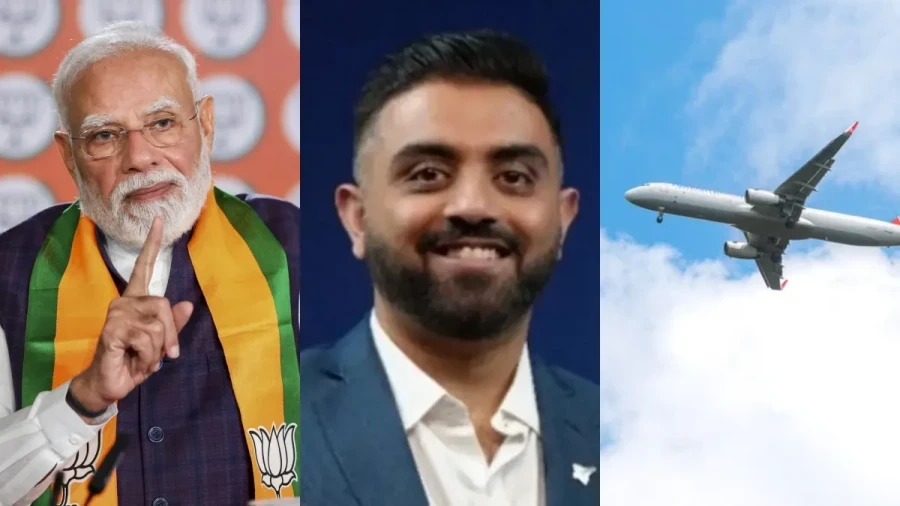
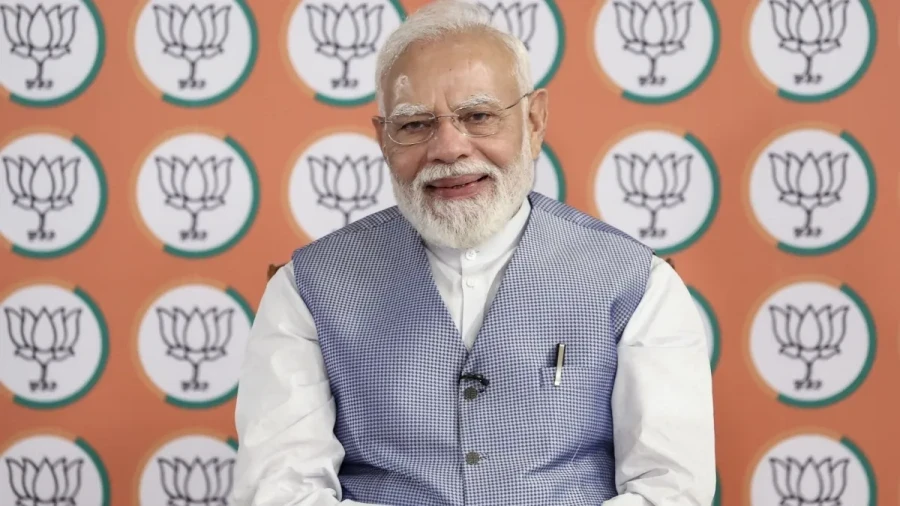
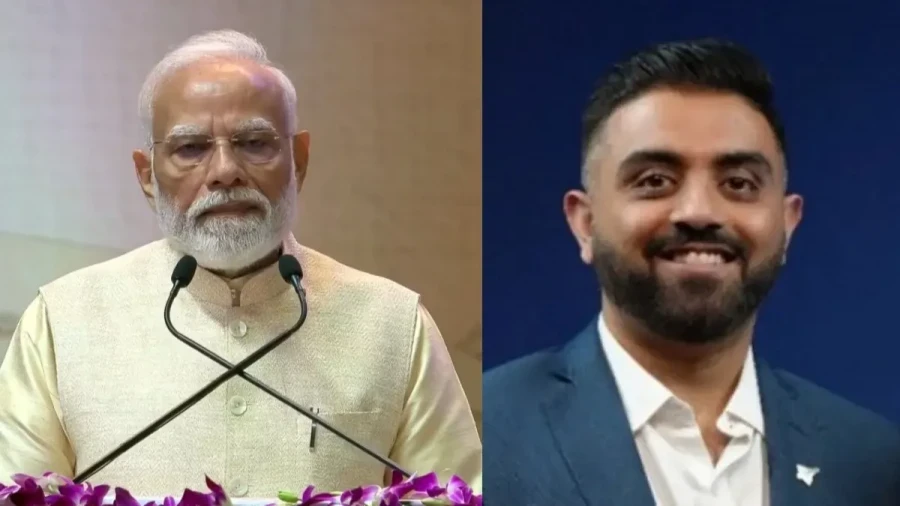
Prime Minister Narendra Modi addressed the Union Public Service Commission (UPSC) Centenary celebrations at Bharat Mandapam in Delhi today. During his speech, the Prime Minister lauded the heroic actions of Captain Smit Machhar, an Indian pilot who saved the lives of 174 passengers on a Fly Dubai flight. PM Modi highlighted that Captain Smit's bravery prevented a tragedy similar to the 9/11 terrorist attacks that occurred in the United States in 2001. The Prime Minister expressed immense pride in the captain's courage, stating that his actions have brought honor to the entire nation.
The Heroic Act of Captain Smit Machhar
The incident involved a Fly Dubai flight traveling from Dubai to Tel Aviv with 174 passengers on board. According to the details shared, the Omani co-pilot of the aircraft attempted to crash the plane. However, Captain Smit Machhar intervened with extraordinary bravery. Despite being attacked by the co-pilot with a sharp weapon, Captain Smit continued to fight back and managed to open the cockpit door. This allowed the passengers on board to intervene and overpower the co-pilot. Subsequently, other pilots present on the flight assisted in making a safe landing in Saudi Arabia, while pM Modi noted that the Prime Minister of Israel also acknowledged this feat, stating that an Indian had prevented a 9/11 like event from happening.
PM Modi's Interaction with the Family
During the event, Prime Minister Modi shared that he had spoken with Captain Smit's family members. He mentioned his conversations with Smit's father, Bhupendra Bhai, his mother, Gita Ben, and his wife, Sonal. The Prime Minister remarked that the entire world is currently proud of Captain Smit's valor. He urged the citizens of India to pray for Smit's long life and good health, and to congratulate him for enhancing India's global prestige.
UPSC: A Century of Trust and Legacy
Addressing the UPSC Centenary, PM Modi emphasized that the day was a celebration of a 100 year legacy. He described the commission as the backbone of India's bureaucracy and a symbol of hope for millions of young aspirants every year. The Prime Minister noted that while generations, technologies, syllabi, and governments have changed over the last 100 years, the public's trust in the UPSC remains as strong as ever. To commemorate this historic milestone, a special postage stamp and a coin were released. Also, a collection of 100 significant case laws was launched during the ceremony. PM Modi paid tribute to everyone associated with this century-long journey and extended his best wishes to the institution.
Vision for a Developed India
Looking toward the future, PM Modi stated that the next 20 to 25 years are extremely crucial for India. With the first quarter of the 21st century already passed, he emphasized that the UPSC and state selection commissions are vital in providing the leadership required for a Viksit Bharat (Developed India). He reiterated the mantra of Nation First and Citizen First, highlighting that in the current era, the guiding principle is Nagrik Devo Bhavah (The Citizen is God).
Adapting to Technology and AI
The Prime Minister also spoke about the rapid changes in technology, specifically Artificial Intelligence (AI), while he mentioned that AI can process thousands of documents in moments, and this changing landscape demands new adaptations within the civil services. He called for attracting youth who are motivated by Public Service rather than just Public Office. PM Modi pointed out that 21st-century India is moving forward with a new work culture, and civil servants will need to operate in evolving circumstances as AI continues to spark discussions across society.
Inclusivity and Women's Participation
Reflecting on the evolution of the UPSC, PM Modi observed that while the opportunity was once limited to children from wealthy families in big cities, today, youth from small villages and towns are making their mark. He also highlighted the increasing participation of women in the civil services. He noted that in the history of the UPSC, there have been 4 female chairpersons, and Notably, 3 of them were appointed after 2014. He concluded by reminding the officials that their work is intrinsically linked to the future of India's youth power, which is a pillar of the nation's strength.