

- India,
- 30-Dec-2025 08:26 AM IST


Rajasthan is currently in the grip of an intense cold wave, with December's final week bringing severe winter conditions across the state. Residents are experiencing biting cold, dense fog, and cold wave conditions that have Importantly impacted daily life and various sectors, while the Meteorological Department has issued a forecast indicating a high probability of light rain, locally known as Mawath, from December 31st to January 1st, which is expected to further lower temperatures by two to three degrees Celsius.
Current Cold Snap Grips Rajasthan
The last week of December has seen winter assert its full dominance over Rajasthan, while monday witnessed most parts of the state experiencing severe cold, accompanied by cold wave conditions and dense fog. This intense weather has created challenging circumstances for commuters and travelers alike, with its effects clearly visible on both air and rail traffic, leading to potential delays and disruptions. The pervasive chill has transformed the landscape, making outdoor activities difficult and prompting residents to seek warmth indoors.
Impact on Daily Life and Agriculture
The severe cold has led to significant impacts across various regions. In areas such as Hanumangarh, Karauli, Mount Abu, and Fatehpur (Sikar), the extreme temperatures have caused dew drops to freeze, resulting in the formation of frost. This phenomenon, known as 'pala girna', poses a considerable threat to agricultural crops, particularly sensitive plants that can't withstand freezing conditions. Farmers in these regions are advised to take precautionary measures to protect their produce from potential damage. The maximum temperature across many parts of the state has been. Recorded below 30 degrees Celsius, indicating the widespread nature of the cold.
Temperature Extremes Across Districts
Over the past 24 hours, the state has witnessed a wide range of temperatures. Barmer recorded the highest maximum temperature at 29. 4 degrees Celsius, offering a slight respite compared to other colder regions. In stark contrast, Fatehpur in Sikar district registered the lowest minimum temperature at a chilling 3. 5 degrees Celsius, highlighting the extreme cold prevalent in certain pockets. The average humidity across the state was observed to be between 40 and 85 percent, contributing to the feeling of chilliness in the air. Other notable minimum temperatures include Ajmer at 9, while 7 degrees, Bhilwara at 9. 0 degrees, Alwar at 4. 8 degrees, Jaipur at 9. 3 degrees, Pilani at 6. 0 degrees, Sikar at 5. 0 degrees, Kota at 8. 8 degrees, Chittorgarh at 8, while 8 degrees, Jaisalmer at 10. 4 degrees, Jodhpur at 11. 5 degrees, Mount Abu at 5. 1 degrees, Bikaner at 12, while 8 degrees, Churu at 6. 3 degrees, Sri Ganganagar at 8, while 9 degrees, Dungarpur at 11. 4 degrees, Jalore at 7, while 6 degrees, Sirohi at 7. 3 degrees, Karauli at 6. 8 degrees, Dausa at 4. 5 degrees, and Jhunjhunu at 7, while 1 degrees Celsius. These figures underscore the varied intensity of the cold across Rajasthan's diverse geography.
Dense Fog and Cold Wave Warning for December 30
The start of December 30th is predicted to bring intense cold to North and West Rajasthan, while regions including Bikaner, Sri Ganganagar, Hanumangarh, Churu, Jhunjhunu, Suratgarh, Anupgarh, Nohar, Pilani, Khetri, and Rajgarh are expected to experience dense fog and cold wave conditions in the morning hours. This widespread fog can severely reduce visibility, making driving hazardous and further impacting transportation networks. Along with the fog, there is also a possibility of frost in several places,. Reiterating the need for farmers to remain vigilant and protect their crops from freezing temperatures.
Western Disturbance to Bring Mawath Rain
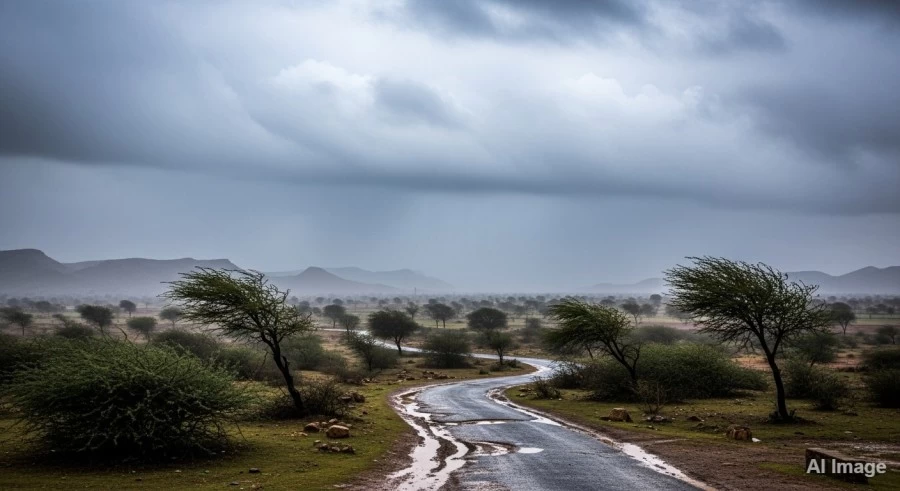
According to the Jaipur Meteorological Centre, a new and strong Western Disturbance is set to become active, bringing a significant change in weather patterns. As a result, light rain or 'Mawath' is anticipated in some parts of the Bikaner, Jodhpur, and Ajmer divisions, as well as the Shekhawati region, on December 31st. This weather phenomenon is crucial for winter crops but also signals a further drop in mercury. The rainfall activity is expected to continue into January 1st, affecting some parts of the Bikaner, Jaipur, and Bharatpur divisions. This spell of rain is a characteristic feature of winter in North India, often bringing relief to dry conditions but intensifying the cold.
Post-Rain Weather Outlook
Following the anticipated rainfall, the weather is expected to turn dry again from January 2nd. However, the relief from rain doesn't mean an end to the severe winter conditions. The Meteorological Department has indicated that dense fog is likely to be recorded in the northern and western parts of the state during the first week of January. This suggests that even after the rain subsides, visibility issues and cold conditions will persist, requiring continued caution from residents.
Anticipated Temperature Fluctuations
The forecast also suggests a complex pattern of temperature changes. While the state's minimum temperatures are expected to see a slight increase of 1-3 degrees Celsius over the next three to four days, this temporary rise will be followed by a significant drop, while the 'Mawath' rain, predicted from December 31st, is specifically expected to cause the mercury to fall by two to three degrees, intensifying the cold wave conditions across Rajasthan. This fluctuation means that residents should prepare for varying degrees of cold, with the period immediately following the rain likely to be the coldest.
