

- India,
- 06-Jan-2026 09:50 AM IST


Bangladesh is witnessing a disturbing surge in violence against its minority communities, particularly Hindus, leading to widespread alarm and fear across the nation, while a chilling pattern has emerged with six Hindu youths brutally murdered in just the past 18 days, underscoring a deepening crisis of insecurity. The most recent and alarming incidents occurred on Monday, when two Hindu individuals were killed within. A 24-hour span, further intensifying concerns regarding law and order and the protection of minorities in Bangladesh.
The Brutal Murder of Sharath Chakraborty Mani
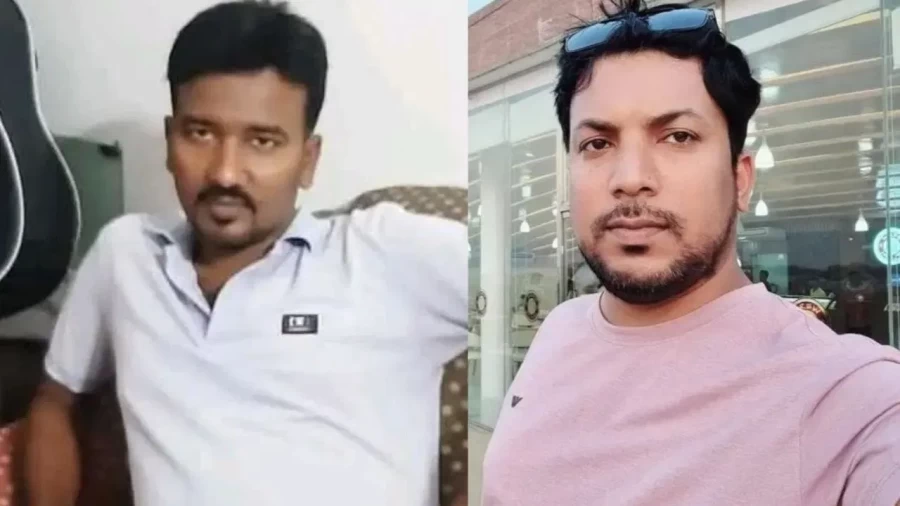
On Monday night, Sharath Chakraborty Mani, a 40-year-old grocery shop owner, was brutally attacked and killed with sharp weapons in Narsingdi district. The incident took place in Charasindur Bazar of Palash Upazila, where Mani was operating his shop. According to eyewitnesses and reports from Bangladeshi news channel Blitz, unknown assailants suddenly ambushed him, inflicting severe injuries. Local residents immediately attempted to rush him to a hospital, but he succumbed to his injuries on the way. The attack occurred while Mani was engaged in his daily routine, making the incident particularly shocking and highlighting the vulnerability of ordinary citizens. Sharath Chakraborty Mani led a simple life, while he's survived by his wife, Antara Mukherjee, a homemaker, and their 12-year-old son. Family members, who requested anonymity, stated that Mani had no known disputes with anyone. He had previously worked in South Korea and returned to Bangladesh a few years ago to establish his grocery business, while his family is now grappling with this sudden tragedy and is pleading for justice. The murder of an individual with no apparent enemies further exacerbates the sense of insecurity among minority communities, who feel increasingly targeted and unprotected in their daily lives.
Journalist Rana Pratap Bairagi's Tragic End
On the very same day, in another heartbreaking incident, Hindu journalist Rana Pratap Bairagi, also. Known as Rana Pratap, was shot multiple times and had his throat slit in Monirampur, Jashore. The 45-year-old Rana Pratap wasn't only a journalist, serving as. The executive editor of 'BD Khabar,' but also a factory owner. The attack occurred around 6 PM in the Kopalia Bazar. Area when assailants called him out of his ice factory. Mohammad Rajiullah Khan, the Officer-in-Charge (OC) of Monirampur Police Station, confirmed the incident, stating that Rana was shot three times in the head and his throat was slit. Upon receiving information, the police promptly arrived at the scene, recovered the body, and sent it for post-mortem examination. Police also recovered seven empty cartridges from the crime scene, indicating the brutality of the attack, while authorities have launched an intensive investigation to apprehend the perpetrators. Eyewitness Ripon Hossain recounted that the attackers arrived on a motorcycle, called Rana out, fired multiple shots, and fled immediately. Rana was the son of a school teacher from Arua village in Keshabpur Upazila and had been running his ice factory for the past two years. His murder has sent shockwaves through the journalistic community and local business circles, raising serious questions about the safety of professionals and entrepreneurs.
Six Deaths in 18 Days: A Disturbing Pattern
The six murders of Hindu youths within the last 18 days underscore a deeply disturbing pattern of violence against minorities in Bangladesh. These incidents aren't merely isolated tragedies but rather symptoms of a larger social and security crisis. The sheer brutality and frequency of these killings have raised profound questions about the state of. Law and order in the country and the government's ability to protect its most vulnerable citizens. Last month, in Mymensingh district, Dipu Chandra Das, a local garment factory worker, was lynched by a mob. Following this barbaric act, his body was hung from a tree and set on fire, a gruesome act that highlights the extreme level of violence being perpetrated. This incident serves as a stark example of the increasing trend of hate crimes against minorities.
The murder of Dipu Chandra Das deeply shook the entire. Community and intensified calls for justice and accountability from the authorities. Similarly, last week, 50-year-old Khokan Das, a Hindu medicine shop owner and bKash mobile banking agent, was attacked in Keharbhanga Bazar. The assault occurred as he was returning home after closing his shop, while three to four assailants attacked him near the Tilai area, causing severe injuries. He later succumbed to his wounds, while the murder of a hardworking individual like Khokan Das has further fueled fear and insecurity within the local community, who now feel vulnerable even in their daily routines. Also last week, Bajendra Biswas, a Hindu garment factory employee in Mymensingh, was shot dead while on duty, while bajendra Biswas's killing also occurred at a time when the minority community already feels insecure. The murder of an employee while on duty has raised concerns about workplace safety as well. These continuous killings clearly indicate that the minority community in Bangladesh is facing a severe threat and requires immediate protection and justice. There is a growing demand for swift and effective action from the government and concerned authorities regarding these incidents.
Growing Concerns and Calls for Action
While local administration and police have assured investigations and efforts to catch the assailants in some cases, more concrete steps are needed to restore confidence within the community. The recurrence of these incidents suggests that investigations alone are insufficient; a comprehensive strategy is required to ensure the safety of minorities. The government must identify the root causes behind these crimes and implement stringent measures to eradicate them, ensuring that all citizens in Bangladesh, regardless of their religion or community, can live safe and dignified lives free from fear and persecution. The escalating violence against minorities in Bangladesh has drawn concerns both nationally and internationally.
Human rights organizations and leaders of minority communities are vehemently condemning these incidents. And demanding that the government immediately apprehend the perpetrators and bring them to justice. These murders have also cast a shadow over the country's secular image and demonstrate that minorities continue to struggle for the safety of their lives and property.
