

- India,
- 13-Mar-2026 01:14 PM IST


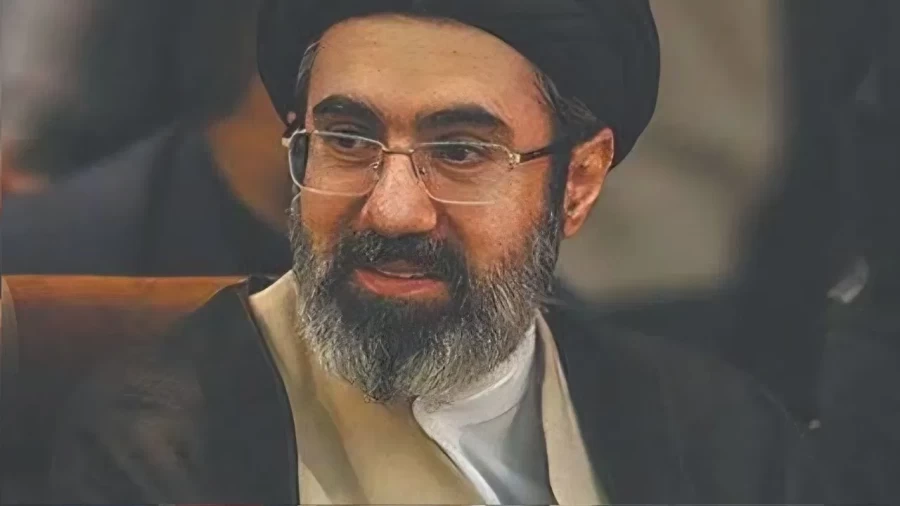
In a significant transition within the Islamic Republic of Iran, Mojtaba Khamenei has been officially appointed as the new Supreme Leader. Following the formal announcement, he has adopted the title 'Rahbar-e-Enghelab' for his global identity. This appointment, finalized on March 8, marks a new era in Iranian governance as the 56-year-old leader takes over the highest office in the country. Mojtaba Khamenei, the second son of the late Ayatollah Ali Khamenei, has been a central figure in the nation's power structure for decades, while his assumption of office was marked by a change in official social media handles to reflect his new title, through which he delivered his first address to the nation and the international community. According to official reports, his leadership signifies a continuation of the core ideological principles established during the 1979 revolution.
Significance of the Title 'Rahbar-e-Enghelab'
The title 'Rahbar-e-Enghelab' carries profound historical and linguistic weight in Persian culture. The word 'Enghelab' translates to 'Revolution' or 'Transformation' and is synonymous with the 1979 Islamic Revolution that reshaped Iran. It's a term that resonates deeply with the Iranian public, notably immortalized in 'Enghelab Street' in Tehran, the site of pivotal historical protests. The word 'Rahbar' means 'Guide' or 'Leader'. Because of this, 'Rahbar-e-Enghelab' literally means 'Leader of the Revolution'. By choosing this specific title over the more geographical 'Khamenei Iran' used by his father, Mojtaba Khamenei is signaling a focus on the ideological and revolutionary roots of the state. Experts suggest this choice is intended to reinforce his commitment to the foundational values of the Islamic Republic during a period of regional transition.
Military Service and Political Ascent
Mojtaba Khamenei’s journey to the supreme leadership is rooted in both military and administrative experience. At the age of 17, he joined the Iranian military and served during the Iran-Iraq War, where he gained firsthand experience in strategic leadership and defense operations. This military background has provided him with significant credibility among the nation's security apparatus. In the 1990s, he transitioned into a more administrative role within the Office of the Supreme Leader. During this period, he was responsible for coordinating between various government branches and security agencies, effectively acting as a bridge between the supreme leadership and the executive. In 2022, he was elevated to the rank of 'Ayatollah', a necessary religious qualification for his eventual succession. His long-standing membership in the political affairs committee further solidified his position as a primary decision-maker.
Global Communication Strategy and First Address
One of the most notable aspects of Mojtaba Khamenei’s transition has been his immediate focus on global communication. Within 48 hours of his appointment, he launched official social media accounts in six different languages, including English, Arabic, and Persian. These platforms quickly garnered over 1 million followers, reflecting high global interest in his leadership. In his first official address delivered via these channels, the new Supreme Leader maintained a firm stance on foreign policy. He declared that the struggle against the United States and Israel would continue, aligning with the long-standing geopolitical posture of the Iranian state. This multi-lingual approach is seen by observers as a strategic move to directly communicate Iran's official positions to a global audience without external mediation.
The Selection Process and Financial Profile
The appointment of Mojtaba Khamenei was conducted by the Assembly of Experts, the constitutional body tasked with selecting and supervising the Supreme Leader. Following the passing of Ayatollah Ali Khamenei, the assembly convened to finalize the succession, choosing Mojtaba based on his extensive experience in state affairs and his religious standing. Beyond his political role, his financial background has also been a subject of international reporting. According to data cited by Bloomberg, Mojtaba Khamenei is reported to have assets exceeding $100 million, including interests in London and various Gulf countries. While these reports are often contested by Iranian state officials as politically motivated, they form a part of the broader discourse surrounding the new leader's background. As he begins his tenure, the focus remains on his ability to navigate Iran's complex economic landscape and maintain internal stability.
