

- India,
- 21-Jan-2026 09:34 AM IST


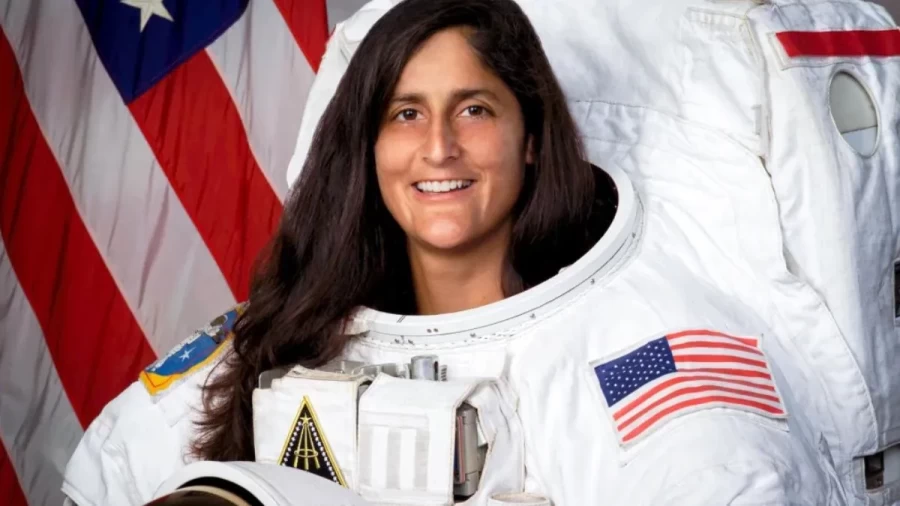
Sunita Williams, the iconic Indian-origin NASA astronaut who became a household name for her extraordinary feats in space, has officially announced her retirement. Her journey from a naval aviator to one of the most experienced astronauts in history is nothing short of legendary. Over the decades, Williams has not only pushed the boundaries of human endurance but has also played a pivotal role in advancing our understanding of life in microgravity. Her retirement marks the conclusion of a career defined by courage, scientific excellence, and an unbreakable bond with her roots.
A Record-Breaking 608 Days in Orbit
One of the most staggering statistics of Sunita Williams' career is the total time she spent in space. Across three major missions, she logged a total of 608 days living and working aboard the International Space Station (ISS). This feat places her among the elite group of humans who have spent more than a year and a half away from Earth. Her missions, including Expeditions 14/15, 32/33, and the recent 71/72, involved complex experiments that have contributed Importantly to global space research.
The Queen of Spacewalks
Sunita Williams earned the nickname 'Queen of Spacewalks' for her incredible proficiency outside the spacecraft. She has performed a total of 9 spacewalks, cumulative time of which exceeds 62 hours and 6 minutes. For a significant period, she held the world record for the most spacewalks and the longest spacewalk time by a female astronaut. These Extravehicular Activities (EVAs) are among the most dangerous tasks an astronaut can perform, requiring immense physical strength and technical precision.
Deep Connection with Indian Heritage
Despite being born and raised in the United States, Sunita Williams has always maintained a profound connection with India. Her father, Dr. Deepak Pandya, hailed from the village of Jhulasan in Gujarat's Mehsana district, while williams has visited her ancestral home several times, where she was greeted as a national hero. She often carried symbols of Indian culture, including the Bhagavad Gita and Upanishads, to space, showcasing her pride in her heritage and inspiring millions of young Indians to dream big.
Decorated Career and Global Honors
Throughout her tenure at NASA, which began in 1998, Williams has been the recipient of numerous prestigious awards, while her accolades include the Legion of Merit, two Defense Superior Service Medals, and the Navy Commendation Medal. She was also honored with the Humanitarian Service Medal, reflecting her contributions beyond the realm of science. These honors recognize her leadership, bravery, and dedication to the mission of exploring the unknown for the benefit of all mankind.
The Final Frontier: The Starliner Mission
Her final mission was perhaps her most testing one. During the Boeing Starliner's first crewed flight, technical issues extended her stay on the ISS by several months, while while the world watched with bated breath, Williams remained composed, continuing her research and maintenance work on the station. Her safe return to Earth was celebrated globally, serving as a fitting finale to a career that saw her overcome every challenge with grace. As she steps into retirement, her legacy remains etched in the stars.
