

- India,
- 09-Oct-2025 06:19 PM IST


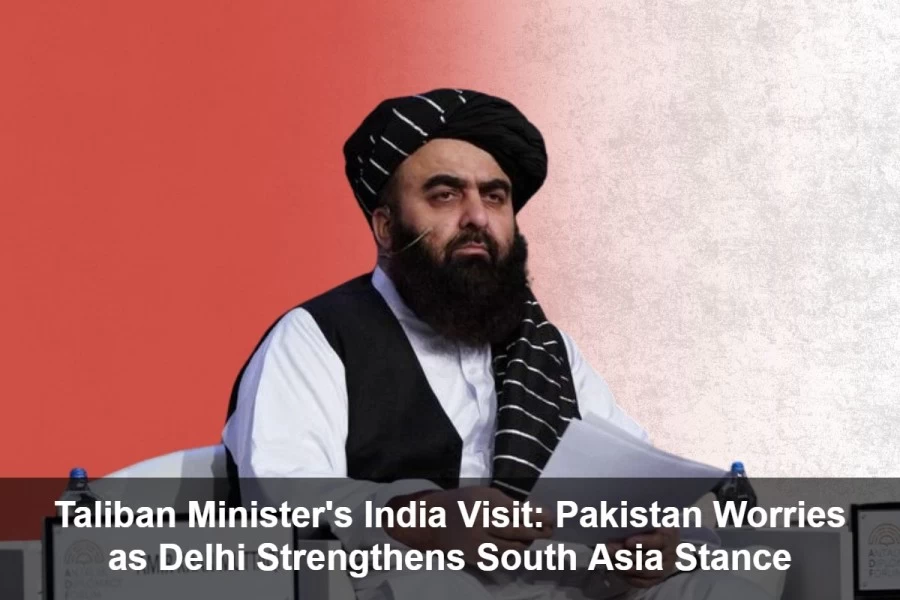
Amir Khan Muttaqi: Afghanistan's acting Foreign Minister, Amir Khan Muttaqi, is on a significant visit to India from October 13-16. Muttaqi, who is on the UN Security Council's banned terrorists list, required a special exemption for his travel. This visit follows his participation in the 'Moscow Format Consultation,' where India notably supported Afghanistan, particularly by opposing former US President Donald Trump's plan to withdraw from Bagram Airbase—a stance backed by Pakistan, China, and Russia. Despite these engagements, no country, including India, has officially recognized the Taliban government.
Resumption of India-Taliban Dialogue
Since the US withdrawal from Afghanistan and the Taliban's takeover in 2021, India closed its embassy in Kabul, severing formal diplomatic ties. However, back-channel diplomacy has been ongoing. Muttaqi's visit marks a critical step towards formalizing discussions after nearly five years of Taliban rule. While the Afghan Foreign Ministry spokesperson didn't respond to queries regarding the agenda, sources indicate a likely meeting with India's External Affairs Minister S. Jaishankar. The agenda for discussions is expected to cover humanitarian aid, visa issues, facilities for traders, and matters concerning Afghan citizens. Other crucial topics include dry fruit exports, the Chabahar Port and its linked routes, regional security, counter-terrorism efforts (especially concerning the TTP), and the potential for international recognition of the Afghan government, while according to Professor Rajan Raj, an international affairs expert, Afghanistan views India as a crucial partner to alleviate trade and economic sanctions. India's recent humanitarian aid after the earthquake further solidified this perception.
India's Strategic Shift and Historical Context
Professor Omair Anas of Ankara University highlights the historical significance of India-Afghanistan relations, describing them as crucial neighbors. He notes that Afghanistan has historically sided with India, with few instances of strained ties. Experts like Rajan Raj believe India is now taking the Taliban government seriously, acknowledging its enduring presence. Raj suggests that India perceives the Taliban as the representative body of Afghanistan, especially since the previous Hamid Karzai government was seen as a “chairman of Kabul” with limited national control.
Regional Dynamics and Pakistan's Concerns
The visit's impact extends beyond bilateral ties, influencing the entire South Asian region, especially in the context of changing geopolitics post-"Operation Sindoor, while " Professor Anas suggests that India's strengthened ties with Afghanistan could bolster its position against Pakistan, which previously benefited from regional instability. Rajan Raj explains that direct talks with the Taliban could diminish Pakistan's influence, particularly its. Use through the Haqqani Network, preventing it from using Afghanistan as a base for anti-India activities.
The Need for Caution and Trust-Building
Despite the potential benefits, Professor Anas advises India to proceed with extreme caution, while a key objective for India would be to secure an assurance from Afghanistan that its soil won't be used for anti-India terrorist activities. This visit presents a unique opportunity for India to build trust with a Taliban government that largely controls the country, potentially leading to more stable and favorable outcomes for regional security, while afghanistan, historically resenting Pakistan's exploitation of its internal conflicts, is now keen to diversify its regional alliances, reducing its dependence on Pakistan and strengthening ties with countries like China, Iran, and India.
