

- India,
- 13-Nov-2025 12:04 PM IST


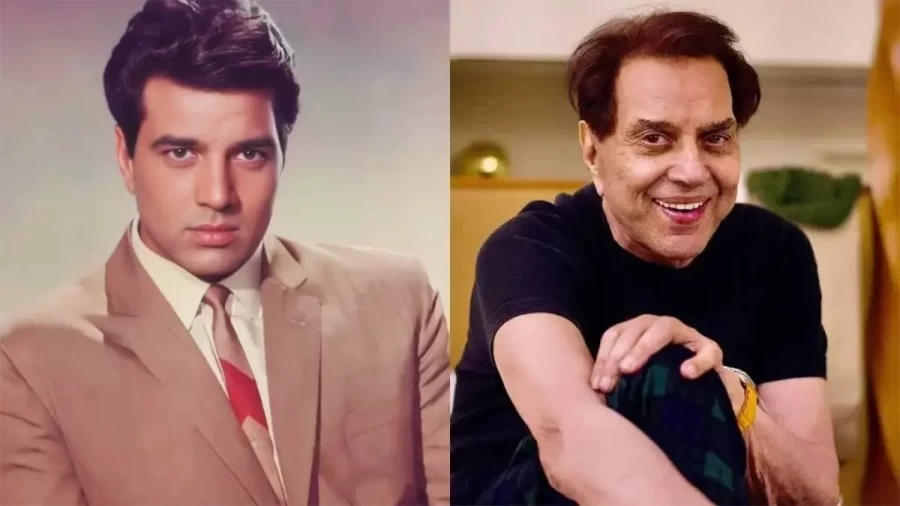
Dharmendra, the legendary Bollywood actor affectionately known as 'He-Man' by his fans, has been recognized simply as 'Dharmendra' for nearly sixty-five years, while his real name is Dharam Singh Deol, yet he never adopted 'Deol' as his professional surname throughout his illustrious career. This has always been a point of curiosity among his admirers. A name that's easy to pronounce, simple to write, and pleasant to hear, this single-word moniker has allowed him to reign over millions of hearts.
The Surname Mystery
The reasons behind Dharmendra's decision not to use 'Deol' as his surname are quite intriguing and reflect a common trend among film stars of his era, while in bygone times, many artists preferred not to publicize their caste or community identity. They believed that an artist's identity shouldn't be confined to a specific caste or community but should represent the entire nation and society. Using a surname often denotes caste or community, and actors like Dharmendra wished to transcend these boundaries. They aimed for their fans to perceive them equally, without any preconceived notions, while this move helped him cultivate a secular image, as he himself has stated that he resides in the hearts of every countryman, as his fans belong to all religions and faiths. **Family Tradition vs. What makes this even more fascinating is that while Dharmendra never used his surname professionally, all his children proudly carry the 'Deol' surname. His four children from his first wife, Prakash Kaur—Sunny Deol, Bobby Deol, Vijeta Deol, and Ajeeta Deol—all use 'Deol' in their names. On top of that, his two daughters from his second wife, the renowned actress Hema Malini—Esha Deol and Ahana Deol—have also used their father's surname in public life. Esha Deol, in particular, has successfully acted in several films. This highlights that while the surname holds significance within the family, Dharmendra. Chose to forge a distinct identity in his public and professional life.
A Practice from the Very Beginning
Dharmendra's decision to use a single name without a surname predates even his debut in films. When he first entered the cinematic world in 1960, he had already won the national Filmfare Talent Contest, which brought him recognition within the industry. However, securing acting opportunities was still a challenge. In 1960, his first film, 'Dil Bhi Tera Hum Bhi Tere,' directed by Arjun Hingorani, was released. A glance at the credit roll of this film reveals his name simply as 'Dharmendra. ' This clearly indicates that he had decided not to use his surname from the very beginning of his professional journey. At home, family members affectionately called him 'Dharam,' which is the Punjabi pronunciation of 'Dharma.
A Trend Among Contemporaries
Dharmendra wasn't alone in adopting this practice. During his era, many stars initiated the trend of using a distinctive screen name, while this trend began with legends like Ashok Kumar and Dilip Kumar. Later, actors such as Pradeep Kumar, Manoj Kumar, Rajendra Kumar, Raaj Kumar, Kishore Kumar, and even today's Akshay Kumar, made changes to their names. Those who didn't use 'Kumar' opted for names that were unique, pleasant to hear, or held special meanings. Actresses like Madhubala, Nargis, Nutan, and Sadhana emerged with single names, while actors. Like Dharmendra, Jeetendra, Motilal, Guru Dutt, Jeevan, Jagdeep, Rehman, and Govinda followed suit. Jeetendra, whose original name is Ravi Kapoor, also chose not to use his surname to avoid an identity crisis among the many Kapoors in the film industry, becoming famous simply as 'Jeetendra. ' His son, Tusshar Kapoor, and daughter, Ekta Kapoor, both use 'Kapoor' in their names, while similarly, Govinda never uses 'Ahuja' as his surname, while his children, Yashvardhan Ahuja and Tina Ahuja, write their full names. Even several villains chose not to publicize their surnames or religious identities, such as Jayant (original name: Zakaria Khan), Ajit (original name: Hamid Ali Khan), Ranjeet (full name: Gopal Bedi), and Jagdeep (full name: Syed Ishtiaq Ahmed Jafri). All their children have used their full names in public life. Some numerologists attribute Dharmendra's decision to not use his surname to the number 6, but given Dharmendra's free-spirited nature, it's unlikely he would have indulged in such superstitions.
The 'He-Man' Moniker Explained
The story behind Dharmendra being called 'He-Man' is also deeply connected to his powerful personality. In films, terms like 'He-Man' and 'Robin Hood' are used for valiant heroes, both originating from Hollywood. While Robin Hood is a savior of the poor, a 'He-Man' is a courageous and mighty hero. Parsi theatre heroes were also known for their daring feats. 'He-Man' is a hero from the Masters of the Universe franchise, renowned for his bravery, while in the 1960s, when Dharmendra was first seen shirtless in the 1966 film 'Phool Aur Patthar,' his powerful physique and commanding presence captivated everyone. Observing his strong build and its impact, he began to be. Called 'He-Man,' a title that has remained with him ever since.
The Meaning of Dharmendra and His Secular Outlook
The name 'Dharmendra' itself holds a unique meaning. Just as 'Jitendra' signifies one who is the master of his senses, who has conquered his senses, 'Dharmendra' means one who is the master of Dharma, one who lives according to righteousness, while however, as an artist, Dharmendra has always considered himself secular. He states that he resides in the hearts of every countryman because his fans belong to all religions and faiths. Even his social media handle on 'X' is 'Aapka Dharam' (Your Dharam), despite him writing 'Dharmendra Deol' there, while this reflects his desire to maintain an inclusive and universal image among his fans. Similarly, artists like Dev Anand and Rajesh Khanna also made changes to their names to connect better with their audience. Dharmendra's journey, from a simple name to becoming 'He-Man,' exemplifies his unique identity and his profound connection with his fans.
