
- India,
- 10-Jun-2026 03:07 PM IST



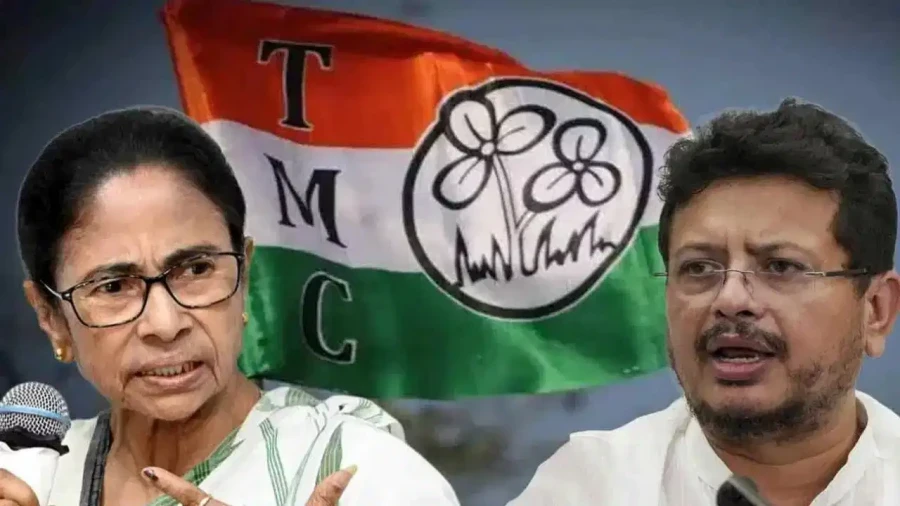
The Trinamool Congress (TMC) is currently grappling with a severe internal rebellion that threatens to destabilize its standing following the West Bengal Assembly elections, while in a series of rapid developments, the party has been hit by consecutive blows as prominent leaders signal their departure. The day began with the high-profile resignation of Sushmita Dev, a Rajya Sabha Member of Parliament, who officially stepped down from both her parliamentary seat and the party. However, the crisis deepened shortly after when reports emerged that another firebrand leader, Sayani Ghosh, has also joined the ranks of the rebels.
The Growing List of Rebels
According to recent media reports, the list of disgruntled members within the Trinamool Congress is expanding rapidly. Sayani Ghosh is now reportedly part of a group consisting of 20 rebel MPs who have decided to distance themselves from the party leadership. In a significant move that signals a shift in the political landscape of West Bengal, Sayani Ghosh has reportedly written a formal letter to the Speaker. In this communication, she has requested separate seating arrangements in the house and has openly declared her intention to support the National Democratic Alliance (NDA). This move is being viewed as a massive setback for Mamata Banerjee, as it indicates a coordinated effort by a substantial block of her parliamentary representatives to switch allegiances.
Who is Sayani Ghosh?
Sayani Ghosh is widely recognized as one of the most vocal and influential firebrand leaders within the Trinamool Congress. Beyond her political career, she's a celebrated figure in West Bengal, known for her work as a prominent Bengali actress and singer. Her transition into politics was marked by her representation of the prestigious Jadavpur parliamentary Lok Sabha constituency, while as the sitting MP for Jadavpur, her decision to align with the rebel faction and express support for the NDA carries significant weight, given her popularity and the strategic importance of her constituency. Her departure marks the loss of a key youth face for the TMC.
A History of Controversy and Bold Statements
Throughout her tenure, Sayani Ghosh has never been far from the spotlight, often finding herself at the center of discussions and controversies. In the Lok Sabha, she gained a reputation for her sharp critiques of the ruling government, frequently using poetry and pointed statements to challenge the treasury benches. ' While the song was intended as a cultural expression, it sparked a massive political firestorm. Leaders from the Bharatiya Janata Party (BJP) used the song to target Mamata Banerjee, accusing the TMC of practicing communal appeasement, while the controversy surrounding this song became a major talking point during the elections, putting Ghosh under intense scrutiny.
The Roots of Discontent
The primary question emerging from this political upheaval is why a leader as prominent as Sayani Ghosh decided to turn rebel. Reports suggest that the firebrand leader began to feel that her political future within the Trinamool Congress was no longer secure. A significant turning point appears to have been the period during the election campaign when she was under heavy fire from opposition parties. Sources indicate that Ghosh felt isolated during this challenging time, believing that the party leadership didn't provide the necessary support or stand by her when she was being targeted. It's alleged that she felt abandoned when she was instructed to terminate her election campaign prematurely. This sense of being left to fend for herself in a hostile political environment has reportedly fueled her resentment. While neither Sayani Ghosh nor the Trinamool Congress has released an official statement regarding these developments, the move to support the NDA suggests a definitive break from the party's ranks.