

- India,
- 07-Mar-2026 05:52 PM IST


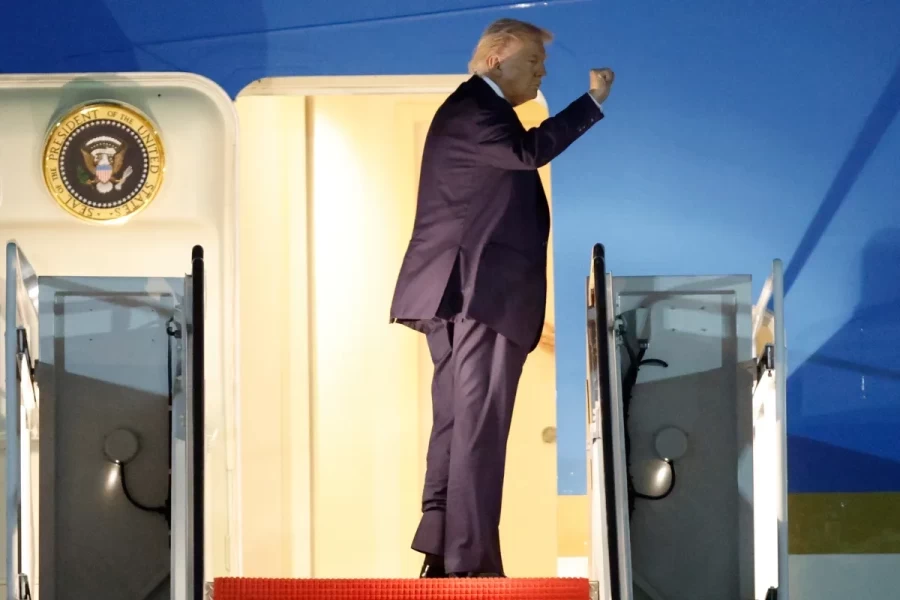
US President Donald Trump has made a significant announcement on his Truth Social platform, claiming that Iran has effectively surrendered and apologized to its Middle Eastern neighbors. According to Trump, Iran, which he described as losing badly, has promised to cease all firing and missile attacks against its neighbors. This development follows a series of continuous military strikes by the United States and Israel, which have reportedly crippled Iran's strategic capabilities and leadership. Trump emphasized that Iran's ambition to rule the Middle East has been thwarted, marking a historic shift in the region's power dynamics after decades of Iranian influence and aggression.
Details of Donald Trump's Truth Social Statement
In a strongly worded post, Donald Trump stated that Iran has transitioned from being the Bully of the Middle East to the Loser of the Middle East. He claimed that for the first time in thousands of years, Iran has been defeated by its neighboring nations. Trump noted that regional leaders have expressed their gratitude to him for the US role in this outcome. He further warned that Iran remains under the threat of total collapse unless it fully complies with the terms of surrender. Trump also hinted at imminent large-scale attacks on Iranian targets that were previously not considered, citing Iran's bad behavior as the primary reason for this potential total destruction.
President Masoud Pezeshkian's Official Apology
In what is being viewed as a major step toward de-escalation, Iranian President Masoud Pezeshkian issued a formal apology to neighboring countries on Friday. He announced a critical decision by Iran's interim leadership council, stating that Tehran will no longer initiate missile strikes or any form of aggression against neighboring states, while however, this pledge comes with the condition that these countries don't allow their territories to be used as launchpads for attacks against Iran. This statement from Tehran follows the recent US-Israeli strikes that reportedly resulted in the death of Iranian Supreme Leader Ayatollah Ali Khamenei and hundreds of other officials, Importantly weakening the regime's command structure.
Iran's New Military Policy and De-escalation Efforts
The new policy announced by the Iranian leadership marks a departure from its long-standing regional strategy. By pledging non-aggression, Tehran is attempting to mitigate the risk of further devastating strikes on its soil. The interim council's decision reflects the internal pressure and the military reality following the loss of key leadership figures. According to reports from news agencies, this shift is an attempt to stabilize the region and prevent a full-scale war that could lead to the total collapse of the Iranian state. Trump, however, remains skeptical, suggesting that the pressure must continue until Iran is no longer a threat to international security.
Impact of Recent US and Israeli Military Operations
The military operations conducted by the US and Israel over the past weekend have had a profound impact on Iran's military infrastructure. The precision strikes targeted high-value assets and leadership hubs, leading to the reported death of the Supreme Leader. Trump attributed Iran's sudden change in stance directly to these military actions, stating that the persistent pressure left Tehran with no other choice but to surrender. The loss of Ayatollah Ali Khamenei has created a significant power vacuum within the country, forcing the interim leadership to adopt a more conciliatory tone with its neighbors to avoid further isolation and military targeting.
Changing Geopolitical Climate in the Middle East
The reported surrender of Iran and its apology to neighbors could redefine the geopolitical landscape of the Middle East. For years, the region has been defined by the rivalry between Iran and its neighbors, often leading to proxy wars and instability. Trump's assertion that Iran is now a loser suggests a shift toward a new security architecture where Iranian influence is Importantly diminished, while while the Iranian President's apology is a diplomatic gesture, the underlying tension remains high due to Trump's warnings of further massive attacks. The international community is closely monitoring whether this policy shift by Tehran will lead to long-term regional stability or if it's a temporary measure for survival.
