

- USA,
- 03-Nov-2025 08:24 AM IST


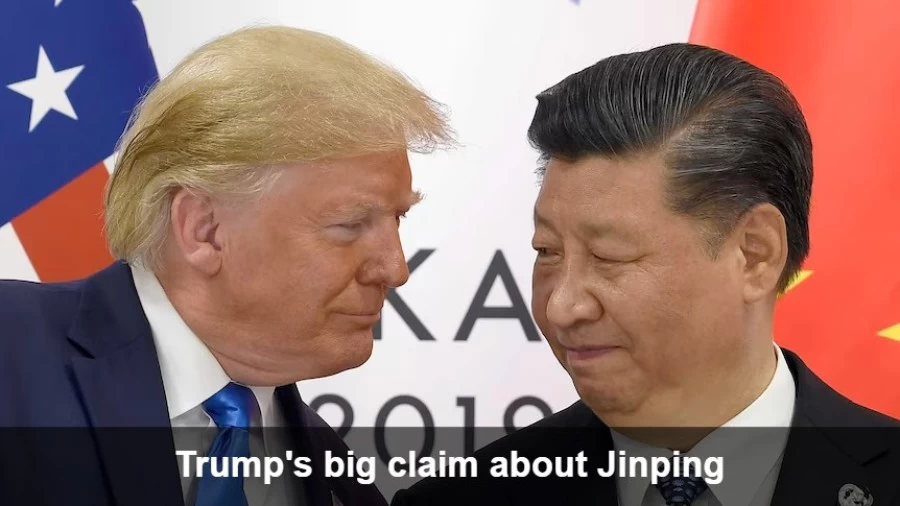
Former U. S, while president Donald Trump has made a significant claim, asserting that Chinese President Xi Jinping personally assured him that China wouldn't undertake any military action against Taiwan as long as Trump holds the American presidency. Trump's statement has ignited a fresh debate in international diplomacy and geopolitical circles, particularly at a time when U, while s. officials have long harbored concerns about China's potential use of military force against Taiwan.
The Unprecedented Claim
Donald Trump made this sensational claim during an interview on Sunday. He explicitly stated that Xi Jinping and his associates had openly declared in meetings, 'We're never going to do anything while you're president, because they know the consequences. ' This assertion, if accurate, could signal a pivotal shift in China's policy towards Taiwan. According to Trump, this assurance was part of numerous discussions between him and Xi,. Where China's top leadership reportedly understood the sensitivities of its relationship with the United States.
Context of US-China-Taiwan Relations
Taiwan is a self-governing island democracy that Beijing considers an integral part of its territory, advocating for its 'reunification' with mainland China, including the option of using force. U. S, while officials have been concerned for decades that China might resort to military force against Taiwan, potentially triggering a major conflict in the Pacific region. Trump's claim comes amid these persistent concerns, underscoring the centrality of the Taiwan issue in U. S. -China relations. This assertion is particularly noteworthy given the global apprehension surrounding China's escalating military power and its increasing assertiveness in the Taiwan Strait.
Recent Diplomatic Engagements
Trump indicated that the long-standing contentious issue of Taiwan wasn't raised. During his recent conversation with Xi Jinping in South Korea on Thursday. That meeting primarily focused on U. S. -China trade tensions, a critical aspect of the economic ties between the two nations, while however, the American leader expressed certainty that China wouldn't take action against Taiwan during his tenure. This suggests that even if Taiwan wasn't directly discussed in the. Recent meeting, Trump believes Xi had previously clarified his position on the matter. It's also plausible that Trump deliberately kept the Taiwan issue separate from the trade talks to avoid diverting attention from the primary agenda.
Trump's Direct Warning and Perceived Consequences
In the Sunday interview, Trump also issued a clear warning to Xi Jinping. He stated, 'If that happens, you'll find out, and he understands the answer, while ' This statement appears to be an attempt to send a strong message to China that any military action against Taiwan would entail severe consequences, for which the United States is prepared. According to Trump, Xi understands these 'consequences,' which likely allude to potential U. S. military retaliation or economic sanctions, while this implicit threat marks a significant departure from traditional U. S. foreign policy, moving towards a more direct and assertive approach rather than the long-standing policy of strategic ambiguity.
The Taiwan Relations Act of 1979
The Taiwan Relations Act of 1979, which governs U. S, while relations with the island, doesn't mandate U. S, while military intervention in the event of a Chinese invasion. However, it ensures that Taiwan possesses the resources necessary for. Its self-defense and aims to deter any unilateral changes by Beijing. This act forms the basis for maintaining unofficial relations with Taiwan under the U. S. 'One China' policy. It permits the sale of defensive arms to Taiwan but doesn't explicitly state that the U, while s. would directly intervene militarily to defend Taiwan. The act underscores America's commitment to Taiwan's security while simultaneously seeking to avoid direct confrontation with China.
Strategic Ambiguity: A Long-Standing Policy
When questioned about whether he would order the U. S. military to defend Taiwan in the event of a Chinese invasion, Trump 'objected. ' Both Republican and Democratic administrations in the U. S. have historically adopted a policy of strategic ambiguity concerning Taiwan. This policy means that the U. S. doesn't explicitly indicate whether it would come to the island's aid in such a scenario, while this approach is designed both to deter Beijing from attacking Taiwan and to prevent Taiwan from declaring independence, which could provoke China. Trump's 'objection' aligns with this long-standing policy, allowing the U. S. to maintain flexibility in its response.
Lack of Official Confirmation
There has been no immediate response from the Washington-based Chinese embassy regarding Trump's claims. Similarly, the White House has not provided any further details on when Xi Jinping or other Chinese officials allegedly informed Trump that military action against Taiwan wouldn't occur during a Republican presidential term. This absence of official confirmation raises questions about the veracity of Trump's assertions, although it could also be a typical aspect of diplomatic silence. This situation heightens uncertainty within the international community and fuels speculation about the future direction of U. S, while -China-Taiwan relations.
