

- India,
- 22-Jan-2026 05:53 PM IST
- (Updated 22-Jan-2026 06:04 PM IST)


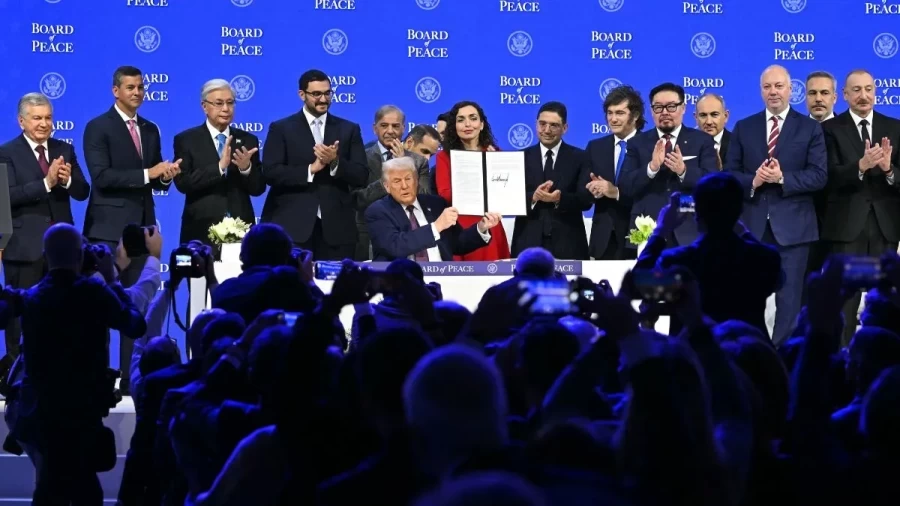
In a bold move at the World Economic Forum in Davos, US President Donald. Trump officially inaugurated the 'Board of Peace,' an international body designed to resolve global conflicts. Initially conceived to oversee the reconstruction and governance of Gaza following the Israel-Hamas conflict, the board's mandate has now expanded Importantly to address broader global disputes, including the war in Ukraine.
The Vision Behind the Board of Peace
President Trump described the board as a group of the "most influential" and "action-oriented" leaders, while according to the charter, Trump will serve as the chairman, a position he can hold for life or eventually nominate a successor. The board carries a $1 billion price tag for permanent membership, positioning it as an elite tier of global diplomacy. Trump emphasized that while the United Nations should continue to exist, this. Board would focus on "getting things done" where other international bodies have failed.
Key Signatories and Global Support
Over 20 countries have already signed the charter or confirmed their participation. Notable signatories include Pakistan's Prime Minister Shehbaz Sharif, Argentina's President Javier Milei, and Indonesia's President Prabowo Subianto. Other member nations include Saudi Arabia, Turkey, Egypt, UAE, Qatar, and Vietnam. These nations expressed support for a "just peace" and reconstruction efforts in conflict zones, particularly Gaza.
Why Major Powers are Hesitant
Despite the high-profile launch, several major global players, including India, China,. The United Kingdom, France, and Germany, didn't sign the charter. India, led by Prime Minister Narendra Modi, was invited but chose not to participate in the signing ceremony, while european allies expressed concerns that the board might undermine the United Nations. UK Foreign Secretary Yvette Cooper specifically cited concerns over the potential involvement of Russia and the legal complexities of the treaty as reasons for Britain's refusal to sign.
Trump’s Stance on the UN and Critics
Trump has been vocal about the board's potential to replace some functions of the UN, which he suggested might eventually become irrelevant, while "We've a lot of great people who want to be in," Trump stated during meetings in Davos. However, critics argue that the inclusion of "controversial" figures and the high membership fee could create a transactional form of diplomacy that bypasses established international norms.
Future Outlook
The success of the Board of Peace remains to be seen, as it depends heavily on the stability of the Gaza ceasefire and the willingness of other world powers like Russia and China to engage. While 35 countries are reportedly in agreement with the project, the absence of key Western and Asian powers poses a significant challenge to its legitimacy as a truly global peacekeeping body. As the situation evolves, the world watches to see if Trump’s new venture will reshape international relations or remain a polarizing initiative.
