

- India,
- 13-Mar-2026 07:00 AM IST


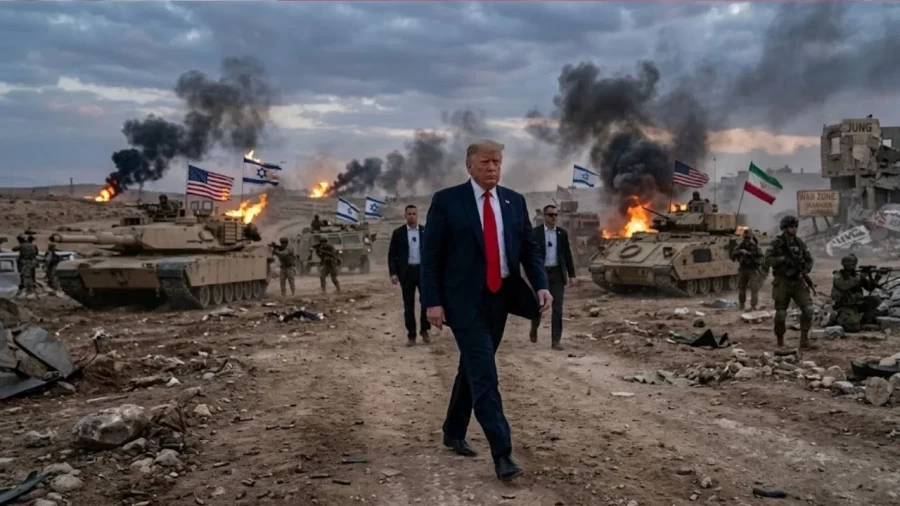
The military confrontation between the United States and Iran in the Persian Gulf has entered a critical phase. According to field reports and official statements, the US administration is evaluating alternative strategies as the conflict intensifies. Following Iranian strikes on US oil tankers and military bases, discussions regarding a 'Plan B' have surfaced in Washington. Iran has maintained a defiant stance, asserting that it won't cease operations until its strategic objectives are met.
Iranian Strikes on US Assets and Infrastructure
Reports from the conflict zone indicate that Iran has launched significant strikes against US interests. According to officials, two US oil tankers were severely damaged in recent attacks. Plus, approximately 17 US military bases across the Arab region have reportedly been targeted. Iran has deployed naval mines in the Strait of Hormuz and stationed long-range missiles along its coastline. There are also indications that Iranian forces are preparing to increase activity in the Bab al-Mandeb strait, potentially threatening global maritime trade routes.
Trump’s Assertions on Naval Engagements
Donald Trump has recently claimed that the US military is rapidly neutralizing Iranian capabilities. According to Trump, the US has destroyed 54 Iranian vessels and 58 naval ships within a 48-hour window. He further stated that Iran's naval strength and mine-laying capabilities have been effectively dismantled. However, the Iranian Foreign Ministry has dismissed these claims as rhetoric, stating that the US strategy of 'regime change' has failed. Tehran maintains that Washington's initial 'Plan A' has collapsed, forcing a search for alternative measures.
The Dahiya Doctrine and Strategic Shifts
' This military strategy focuses on targeting civilian infrastructure rather than solely military assets, while the plan reportedly includes targeting schools, hospitals, gas plants, and oil depots to create a shortage of essential services within Iran. The objective is to incite internal public dissent and trigger a domestic uprising against the current administration. This approach aims to weaken the Iranian state from within through economic and social pressure.
Proxy Warfare and the Role of Kurdish Fighters
A key component of the revised US strategy involves the potential mobilization of Kurdish fighters against the Iranian state. By initiating a proxy war, the US aims to destabilize Iran internally. However, the history of US-Kurdish relations presents significant challenges. Given the complex history of shifting alliances, securing the full cooperation of Kurdish groups for a sustained campaign against Tehran remains a difficult task. This proxy approach is seen as a way for the US to reduce direct military involvement while maintaining pressure on the Iranian government.
Implications for Israel and Netanyahu
The shift in US strategy carries significant implications for Israel and Prime Minister Benjamin Netanyahu. If the US pivots toward a proxy-based or infrastructure-focused strategy, Israel may find itself more exposed to direct regional threats. Analysts suggest that a US withdrawal from direct combat could embolden Iran-backed groups such as Hezbollah and the Houthis to intensify their operations against Israel. Trump’s 'Plan B' could potentially leave Israel to manage multiple fronts independently, complicating the security landscape for the Netanyahu administration.
