

- India,
- 17-Jan-2026 08:40 AM IST


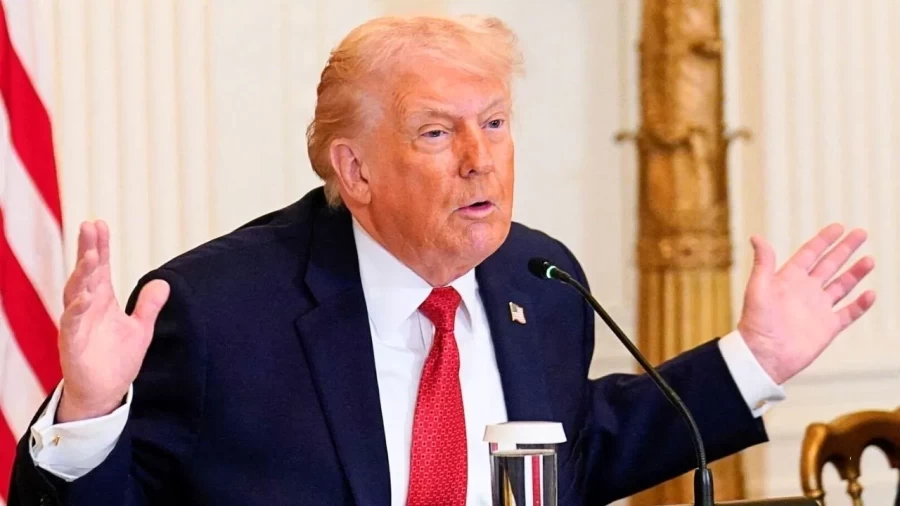
US President Donald Trump recently reiterated his stance that countries failing. To cooperate with the United States regarding Greenland could face tariffs. On Friday, Trump explicitly signaled that nations not supporting American control over Greenland might be penalized with duties. This statement comes at a critical juncture as a US congressional delegation was. In Copenhagen, meeting with Danish and Greenlandic lawmakers in an effort to de-escalate tensions. Trump's assertive posture underscores his firm resolve to secure what he perceives as vital strategic interests for the United States in the Arctic region.
Trump's Persistent Pursuit of Greenland
President Trump has consistently advocated for the acquisition of Greenland, which is a semi-autonomous territory of NATO (North Atlantic Treaty Organization) member Denmark. Earlier this week, he made it clear that nothing less than US control over the Arctic island would be acceptable, while trump views Greenland's geographical location as paramount to US national security, particularly in light of the increasing presence of Russia and China in the Arctic Ocean. His perspective highlights the intensifying geopolitical competition in the region,. Where major powers are vying for strategic advantage and influence.
Tariffs as a Coercive Tool
During a separate event at the White House concerning rural healthcare, Trump elaborated on Friday how he had previously threatened European allies with tariffs on drugs. He indicated that he could employ a similar strategy for Greenland, while trump stated unequivocally, “If a country doesn’t cooperate with us on Greenland, I can put tariffs on them, because we need Greenland for national security. So I can do that. ” This statement illuminates his tactic of utilizing tariffs as an economic benefit from. Tool, aimed at achieving his geopolitical objectives and compelling cooperation from other nations.
International Rejection and Countermeasures
Trump has repeatedly emphasized Greenland's critical importance for the defense of the United States against the presence of Russia and China in the Arctic Ocean, and he has formally sought to purchase the self-governing territory from the Kingdom of Denmark. However, Denmark and other NATO allies have unequivocally refused to cede the territory to the United States. In a contrasting move, France, Germany, and other European nations have dispatched their forces to Greenland to help enhance security, signaling a collective international response and growing concern over the issue. This action can be interpreted as a unified European counter-response to the perceived unilateral approach of the United States.
Russia's Critique of Western Policies
Earlier, while speaking to reporters on the South Lawn, Trump underscored the necessity of acquiring Greenland and also boasted about the formidable strength of the US military, citing recent American operations in Venezuela and Iran. He remarked, “NATO is talking to us about the Greenland issue. We desperately need Greenland for national security. If we don’t have it, it’s going to be a major threat to our. National security, especially in terms of the Golden Dome and all the other things. ” Trump further expressed pride in the military's capabilities, stating, “We’ve invested so much in the military, while we've the strongest military in the world, and it’s getting stronger.
You saw it in the case of Venezuela. You saw it in the case of the attack on Iran and destroying their nuclear capabilities. Russia, which has denied any intentions of acquiring Greenland itself, criticized the West over recent developments, blaming it for a failure to uphold a rules-based international order, while the Russian Foreign Ministry, in an X post quoting Zakharova, stated, “The current tension over Greenland clearly highlights the failure of the West’s so-called ‘rules-based international order’. ” Russia also commented that “it's clearly visible that Copenhagen’s long-term policy of unconditional subservience to the United States is fundamentally flawed. ” This statement places the Greenland issue within a broader geopolitical context, where Russia is seizing an opportunity to criticize the policies of Western nations.
Denmark's Enhanced Military Presence
On Wednesday, Denmark announced its plans to increase its military presence in Greenland. This declaration coincided with a group of senators and House of Representatives members meeting with Danish Prime Minister Mette Frederiksen, as well as Danish and Greenlandic lawmakers in Copenhagen. Senator Chris Coons, a Delaware Democrat and leader of the delegation, thanked the group’s hosts for being a good and trustworthy ally and partner for 225 years, adding that “we had a solid and meaningful dialogue about how to advance that relationship into the future. ” This indicates that Denmark is taking proactive steps to bolster its territorial security while also attempting to maintain diplomatic ties with the United States.
A Complex Geopolitical Standoff
The ongoing situation surrounding Greenland represents a complex geopolitical standoff, involving economic threats, military posturing, and diplomatic maneuvers. President Trump's insistence on acquiring the territory, driven by national security concerns, has met with firm resistance from Denmark and other European allies. The involvement of a US congressional delegation in diplomatic talks, coupled with Denmark's decision to enhance its military presence, underscores the multifaceted nature of this international issue, while the criticism from Russia further complicates the narrative, framing the dispute as a symptom of broader failures in the international system. As various nations navigate their strategic interests in the Arctic, the future of Greenland remains a focal point of global attention and potential contention.
