

- India,
- 21-Jan-2026 01:35 PM IST


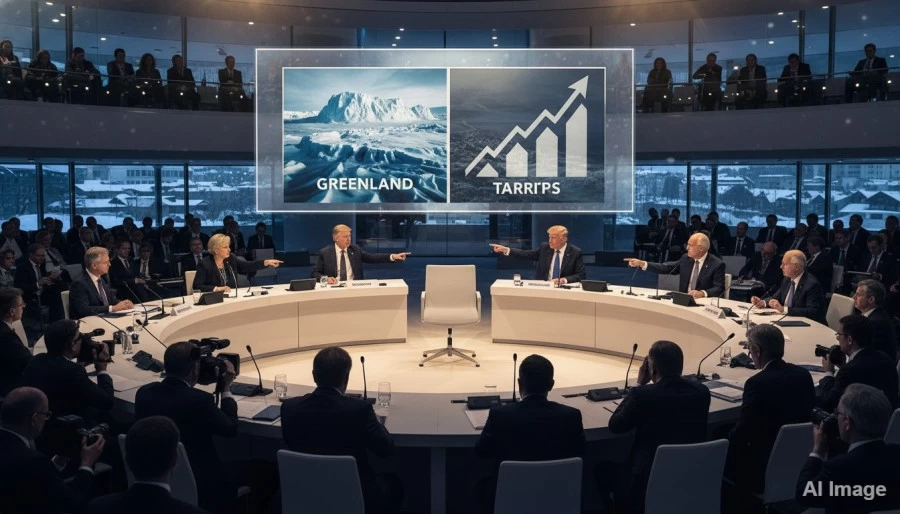
The World Economic Forum in Davos, Switzerland, has transformed into a high-stakes diplomatic battlefield as global leaders confront the United States over its controversial stance on Greenland, while even before President Donald Trump's scheduled arrival on Wednesday, the atmosphere at the Swiss Alps summit was charged with resentment. European and NATO allies have collectively condemned what they describe as illegal attempts by the U, while s. to exert control over Greenland, a move that has strained long-standing international alliances and raised questions about the future of global sovereignty.
The Greenland Sovereignty Dispute
At the heart of the tension is President Trump's ambition to gain control over Greenland from Denmark. This move has been met with fierce resistance from European leaders who view it as a direct violation of international law, while the controversy has overshadowed the forum's traditional focus on economic cooperation, shifting the spotlight toward a potential geopolitical crisis. Leaders at the summit have expressed their unwavering support for Denmark, emphasizing that the era of powerful nations encroaching on the sovereignty of others must come to an end.
Economic Warfare and Tariff Threats
Adding fuel to the fire, President Trump announced a series of aggressive tariffs targeting nations that don't support the U. S. position on Greenland. He stated that tariffs would start at 10 percent next month and could escalate to 25 percent by June. This announcement has triggered a sharp response from the European Commission. President Ursula von der Leyen warned that any such move would be met with a united and proportionate response from the European Union, potentially dismantling the hard-won trade frameworks established in previous years.
Before departing for Davos, President Trump maintained his aggressive rhetoric, linking his stance to his disappointment over not receiving the Nobel Peace Prize, while in a message to the Norwegian Prime Minister, he indicated that he no longer felt obligated to prioritize peace over national interests. His journey to Switzerland was also marred by technical difficulties, as a minor electrical issue on Air Force One. Forced the aircraft to return shortly after takeoff, delaying his arrival at the summit where a hostile reception awaited him.
Global Leaders React to U. S.
Prominent figures such as Canadian Prime Minister Mark Carney and French President Emmanuel Macron have been vocal in their criticism, while carney remarked that the rules-based international order is under threat when powerful nations ignore the sovereignty of medium-sized states. Macron echoed these sentiments, calling the proposed tariffs a mistake and reaffirming the solidarity of NATO and European nations against American pressure. The consensus among these leaders is that the U, while s. approach is undermining global stability and economic trust.
India's Strategic Role at WEF
Amidst the geopolitical friction, India has made a significant impact with its largest-ever delegation at the forum. Union Minister Ashwini Vaishnaw highlighted India's leadership in Artificial Intelligence and technology, positioning the country as a trusted global partner. Vaishnaw emphasized the importance of inclusive and democratized AI solutions, focusing on the 5th Industrial Revolution, while he noted that India's economic growth and technological advancements are now central to global discussions, showcasing a model of development that balances innovation with social responsibility.
