

- India,
- 10-Mar-2026 06:09 PM IST


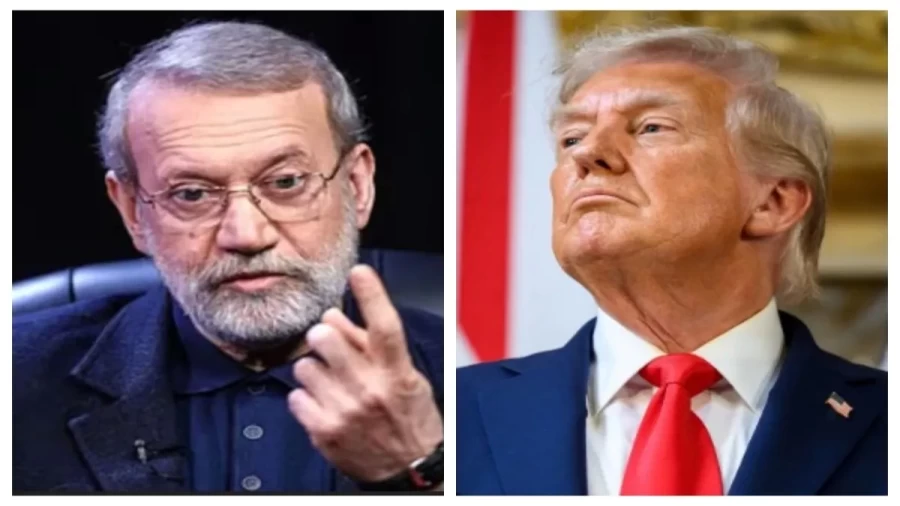
Ali Larijani, a senior advisor to Iran's Supreme Leader and former Speaker of the Parliament, has issued a direct and stern warning to US President Donald Trump, while " This development comes amid heightened geopolitical friction between the two nations, with both sides exchanging warnings over maritime security and military capabilities. According to officials, Larijani's message was a direct rebuttal to President Trump's earlier social media posts regarding potential military action against Tehran.
Larijani’s Response to US Rhetoric
In a strongly worded statement, Ali Larijani emphasized that the Iranian people, inspired by their historical and religious values, remain resilient against external pressure. He specifically mentioned that those who have attempted to eliminate Iran in the past have failed, suggesting that the current US administration should learn from history, while larijani warned President Trump to be cautious, stating that such aggressive posturing could lead to unforeseen consequences for the United States itself. The Iranian official’s remarks reflect Tehran's long-standing policy of maintaining a defensive yet firm stance against what it perceives as Western hegemony and intimidation in the Middle East.
Trump’s Warning on Strait of Hormuz
The exchange was triggered by President Donald Trump’s recent warning regarding the Strait of Hormuz, a vital artery for global energy supplies, while trump stated that if Iran were to take any action to block the flow of oil through the strait, the United States would respond with force "twenty times" greater than any previous engagement. He detailed that the US military would target Iranian assets that are easily destructible, making it nearly impossible for the country to rebuild as a nation. Trump described a potential scenario of "death, fire, and fury," while noting that he hoped such a conflict could be avoided, while he framed this stance as a commitment to global trade security, particularly for nations like China that rely heavily on the passage.
Strategic Significance of Global Oil Routes
The Strait of Hormuz is widely regarded as the world's most important oil transit chokepoint, while approximately 20% of the world's total petroleum consumption passes through this narrow waterway, which connects the Persian Gulf with the Gulf of Oman. For major oil producers like Saudi Arabia, Iraq, and Kuwait, it's the primary route to international markets. Any disruption in this region has immediate and severe implications for global oil prices and economic stability. While the US maintains a significant naval presence to ensure freedom of navigation, Iran has historically asserted its influence over the waterway, leading to periodic naval standoffs and diplomatic crises.
Allegations by Defense Secretary Pete Hegseth
Adding to the tension, US Secretary of Defense Pete Hegseth has leveled serious allegations against the Iranian leadership. Hegseth characterized the Iranian regime as "barbaric" and accused it of orchestrating the deaths of American service members over the past 47 years. He emphasized that the conflict is deeply personal for the American military community, citing the loss of comrades to Iranian-backed activities. These comments align with the broader US strategy of holding Tehran accountable for its regional influence and proxy operations. On top of that, US officials have previously raised concerns regarding alleged Iranian plots targeting American officials, claims that Tehran has consistently denied as fabricated.
Historical Context of the Conflict
The current animosity between Iran and the United States is rooted in decades of diplomatic and military confrontation, beginning with the 1979 Islamic Revolution. Over the years, the relationship has been defined by economic sanctions, proxy wars, and disagreements over Iran's nuclear program. During his previous term, President Trump withdrew the US from the Joint Comprehensive Plan of Action (JCPOA) and implemented a "maximum pressure" campaign. The recent escalation over the Strait of Hormuz represents a continuation of this volatile dynamic. As both nations engage in high-stakes rhetoric, the international community remains watchful of the potential for miscalculation in one of the world's most sensitive geopolitical zones.
