

- India,
- 21-Nov-2025 07:37 AM IST


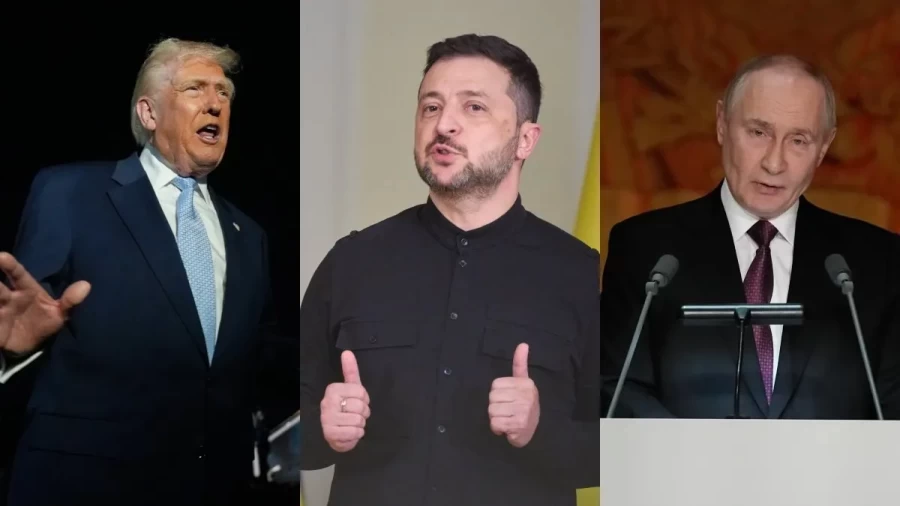
The United States has reportedly drafted a peace proposal aimed at bringing an. End to the protracted conflict in Ukraine, which has raged for over three years. This proposed framework includes contentious provisions, notably suggesting that Ukraine cede territory to Russia and reduce the size of its military forces, while the emergence of this proposal comes at a critical juncture, as all previous attempts to resolve the conflict between Russia and Ukraine have failed to yield a conclusive outcome, leaving the region in a state of prolonged instability and humanitarian crisis.
Zelensky's Reported Rejection of the Proposal
For more than three years, the devastating war between Russia and Ukraine has continued, resulting in immense human suffering and widespread geopolitical repercussions. Throughout this extended period, numerous international mediators and nations have endeavored to broker a peace agreement, but none have succeeded in bringing the hostilities to a definitive close, while uS President Donald Trump, who has consistently advocated for an end to this conflict, has reiterated his commitment to fostering peace. According to an Associated Press (AP) report, the US has now formulated. A new and detailed peace proposal, intended to break the current stalemate.
The core tenets of this proposal, involving territorial concessions by Ukraine to Russia and a. Reduction in Ukraine's military capacity, carry significant implications for Ukraine's sovereignty and future security posture. The AP report further indicates that several high-level military officials, including the US military secretary, have traveled to Ukraine to assist in peace negotiations. Stephen Miller, Deputy Chief of Staff at the US White House,. Refrained from directly commenting on the specifics of the new peace proposal.
However, he emphasized President Trump's broader objective of establishing peace in Europe and saving innocent lives. Despite these diplomatic efforts, news quickly emerged that Ukrainian President Volodymyr Zelensky had already rejected the draft proposal, while zelensky's reported stance underscores Ukraine's unwavering commitment to its territorial integrity and sovereignty, as the proposal's call for ceding a portion of its land to Russia is fundamentally unacceptable to Kyiv.
Reactions from the US and Russia
US Secretary of State Marco Rubio confirmed that his officials are indeed exploring a lasting peace agreement, and this process will continue. He stressed that both parties, Russia and Ukraine, would need to make "difficult but necessary compromises" to achieve this objective. This statement suggests that the US believes mutual concessions are essential for peace. Conversely, Dmitry Peskov, the spokesperson for the Russian government, commented on the matter by stating that there are currently no active negotiations with the US aimed at ending the Ukraine war, while he acknowledged that some "contacts" have occurred, but clarified that these can't be characterized as "real consultations. " Peskov's remarks highlight that Russia doesn't perceive this proposal as a formal or serious negotiation, or at least isn't publicly presenting it as such.
Europe's Intervention and the Need for Consensus
Amidst the speculation surrounding the peace proposal, Europe has also actively engaged in the discussion, while top European diplomats have made it clear that any attempt to halt Russia's aggression against Ukraine must involve consultation and consent from both Ukraine and Europe. Kaja Kallas, the European Union's foreign policy chief, emphasized that "for any plan to be successful, it must have the consent of Ukrainians and Europeans. Europe must also be involved. " This statement underscores Europe's significant role in any peace settlement in the region and its commitment to Ukraine's sovereignty. The EU believes that no peace plan can be sustainable without Ukraine's. Direct participation, and Europe's security interests must also be taken into account.
The Path Forward and Lingering Challenges
This new US peace proposal, despite being reportedly rejected by Zelensky and not viewed as active negotiations by Russia, signals that the international community is exploring new avenues to end the war, while however, the terms of the proposal, particularly territorial concessions and military reductions, present a significant challenge for Ukraine. Ukraine remains committed to preserving its sovereignty and territorial integrity, making it difficult to accept any proposal that infringes upon these fundamental principles. Europe's position is also clear: no solution is viable without Ukraine's consent. Thus, the path to finding a lasting and acceptable resolution to the war remains uncertain and fraught with challenges. Reaching a consensus among the various stakeholders continues to be a complex task,. And all these aspects will need to be carefully considered in any future discussions.
