

- USA,
- 03-Jan-2026 01:21 PM IST


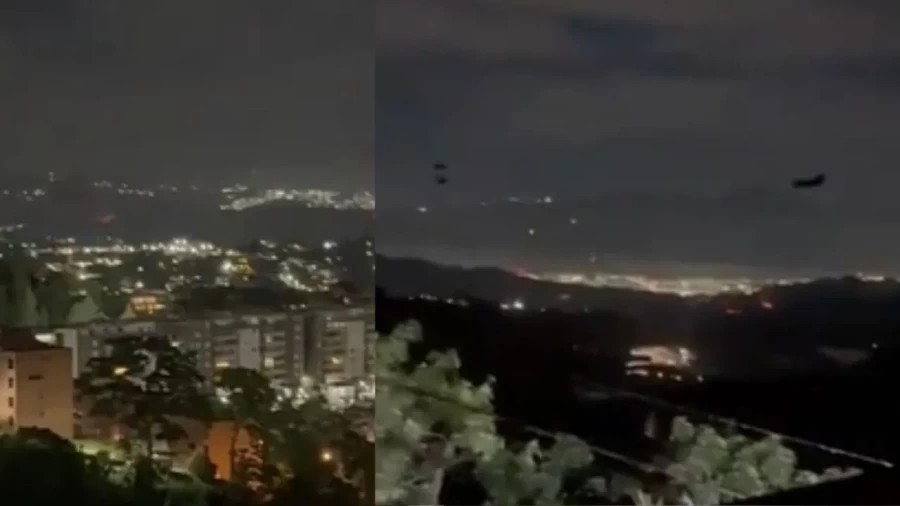
The United States has launched a direct military attack on Venezuela, escalating the long-standing tensions between the two nations into an active conflict. The capital city of Caracas was reportedly rocked by at. Least seven powerful explosions, sending shockwaves through the urban center. Residents across various districts described hearing loud blasts that shattered the relative calm, accompanied by the distinct and unsettling sound of aircraft flying at unusually low altitudes over the city's skyline, adding to the palpable sense of alarm among the populace. This assault comes after repeated warnings from US President Donald Trump, who had previously indicated that military action against Venezuela was imminent.
Details of the Assault: Explosions Rock Caracas and Isla Margarita
The series of explosions in Caracas prompted residents to pour out of their homes and onto the streets, seeking safety and understanding amidst the chaos. According to reports from Russia Today, the US Air Force specifically targeted and bombed Venezuela's Isla Margarita, an island known to house top military bases. This strategic targeting of key military infrastructure suggests a well-planned and significant military operation. Other media outlets have also corroborated the reports of explosions in Caracas, confirming the widespread nature of the attack. President Trump's earlier warnings had explicitly stated that US forces might initiate ground attacks within Venezuela in the coming days, further underscoring the gravity of the current situation and the potential for further escalation.
Public Reaction and Government's Silence
In the immediate aftermath of the reported attacks, the Venezuelan government has maintained a conspicuous silence, issuing no official statement or response regarding the events unfolding in its capital. This lack of communication has only amplified the uncertainty and fear among the populace. Following the sounds of explosions, people from various parts of Caracas were observed emerging from their residences and gathering on the streets. On top of that, some residents were seen leaving the capital, potentially seeking refuge or attempting to evacuate due to the perceived threat and the volatile situation. The widespread presence of people across different areas of the city underscored the. Pervasive impact of the incident and the deep concern it instilled in the population. The government's silence, in particular, has left citizens anxious for information and guidance.
Underlying Causes: US Accusations and Venezuela's Counter-Claims
The escalating tensions between the United States and Venezuela are rooted in a complex web of political and economic disputes that have simmered for an extended period. The Trump administration has consistently accused Venezuelan President Nicolas Maduro of operating a drug cartel and engaging in narco-terrorism, while the US has committed to stringent measures against drug trafficking, identifying Venezuela as a primary target in this global campaign. However, President Maduro has vehemently denied all such allegations. In a pre-recorded interview aired on Thursday, Maduro asserted that the United States' true intention is to orchestrate a change in government within Venezuela and gain access to its vast oil reserves. He claims that the US seeks to depose him to seize control of Venezuela's immense petroleum and mineral wealth.
Recent Military Operations: From Sea to Land
The recent attack follows a period where the US military had been actively. Targeting drug trafficking vessels in the Caribbean Sea and the Eastern Pacific Ocean. According to information provided by the US military, these maritime operations. Have resulted in at least 30 attacks and 107 fatalities to date. Last week, a drone attack occurred at a docking area, which is believed. To have been used by Venezuelan drug cartels, with the CIA suspected of involvement. This incident marked the first known direct ground operation on Venezuelan soil since the US. Began its sea-based attacks in September, signaling a significant shift in the nature of the conflict. Notably, just a day prior to the current attack, on Friday, Venezuela had expressed its willingness to negotiate an agreement with the US to combat drug trafficking, a proposition that now appears to be overshadowed by the military offensive.
Trump's Warnings and Sanctions
US President Donald Trump had repeatedly issued stern warnings, indicating that ground operations. Against Venezuela were a distinct possibility, aimed at pressuring President Maduro to relinquish power. In conjunction with these threats, the US had also imposed strict sanctions designed to cripple Venezuela's economy and intensify the pressure on the Maduro government. In October, Trump had further revealed that he had authorized the CIA to operate within Venezuela to curb illegal drug trafficking and stem the flow of migrants, while these persistent warnings and economic sanctions have now culminated in a major military intervention, raising concerns about potential destabilization in the region. The long-term impact of these actions on Venezuela's political landscape and its people remains a critical concern.
Unanswered Questions and International Implications
The immediate lack of response from the Venezuelan government regarding the attack further complicates an already volatile situation. CNN has reportedly reached out to the White House for comment on the matter, but as of now, no official reply has been received. The international implications of such a direct military assault on a sovereign nation are profound and far-reaching. This event plunges the relationship between the United States and Venezuela to an unprecedented low and has the potential to Notably heighten geopolitical tensions across Latin America. Nations worldwide are closely monitoring the situation, as this incident raises critical questions about international law and the principles of national sovereignty, while given the gravity of the situation, further information and reactions are anticipated in the coming days, which will undoubtedly shape the future trajectory of this escalating conflict.
US AIR FORCE BOMBS Venezuela's Isla Margarita island housing top army bases pic.twitter.com/2Hp5LFBA6X
— RT (@RT_com) January 3, 2026
