

- India,
- 31-Oct-2025 08:42 AM IST


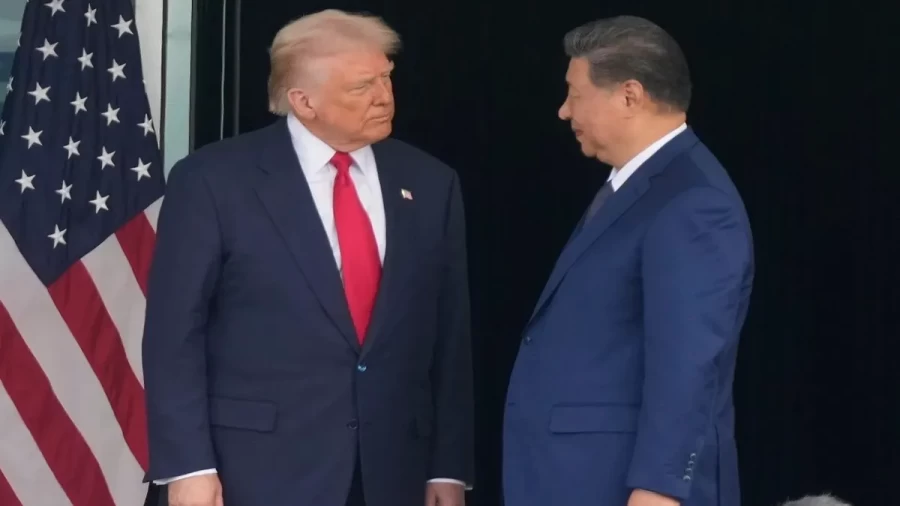
The recent meeting between US President Donald Trump and Chinese President Xi Jinping in Busan, South Korea, on Thursday, was initially heralded by Trump as an extraordinary success. Trump, known for his emphatic assessments, rated the encounter a "10 out of 10," even going so far as to declare it a "12. " This glowing appraisal set a tone of apparent diplomatic triumph following a crucial bilateral discussion, while the world watched closely, anticipating a unified front or at least a shared understanding on various geopolitical issues. However, the narrative surrounding this high-level engagement has since taken a significant turn, revealing a stark.
Divergence in perspectives between the two global leaders, particularly concerning regional peace efforts in Southeast Asia. Despite President Trump's optimistic portrayal of the meeting, Chinese President Xi Jinping has subsequently challenged a key claim made by his American counterpart. Xi explicitly refuted Trump's assertion that China wasn't involved in facilitating peace between Cambodia and Thailand, while this direct contradiction from the Chinese leader casts a shadow over the perceived unanimity of the Busan summit, highlighting a fundamental disagreement on the diplomatic roles played by their respective nations in resolving regional conflicts. While acknowledging Trump's contributions to the recent Gaza ceasefire agreement, Xi's subsequent remarks made it clear that China's involvement in other peace initiatives wasn't to be overlooked or understated.
China's Active Diplomatic Engagement
President Xi Jinping clarified China's position, stating that Beijing is actively assisting the two Southeast Asian neighbors in resolving their border dispute "in its own way. " This statement, as reported by the Hong Kong-based 'South China Morning Post,'. Underscores China's commitment to regional stability and its preferred approach to international mediation. Further evidence of China's direct involvement emerged with reports detailing closed-door consultations led by Chinese Foreign Minister Wang Yi, while these discussions were held when tensions between Thailand and Cambodia escalated, indicating a proactive and significant diplomatic role played by China in de-escalating the conflict and guiding the two nations towards a resolution. This behind-the-scenes engagement directly contradicts the narrative of China's non-involvement.
Trump's Earlier "Historic" Peace Declaration
Prior to the Busan summit, during his broader Asia tour, President Donald Trump had made a notable declaration in Malaysia. In the presence of leaders from both Thailand and Cambodia, Trump announced what he termed a "peace agreement" between the two nations, hailing it as "historic. " This announcement was presented as a significant diplomatic achievement under American auspices. However, the celebratory tone was quickly tempered by a clarification from Thailand's Foreign Minister Sihasak Phuangketkaeo, who refrained from calling it a full "peace agreement. " Instead, Phuangketkaeo characterized it more cautiously as merely "a path toward peace," suggesting that while progress was being made, a definitive resolution had not yet been fully achieved. This nuance highlights the complexities of international diplomacy and the differing interpretations of progress.
The Enduring Thailand-Cambodia Border Dispute
The conflict between Thailand and Cambodia centers primarily on the ancient Preah Vihear. Temple and the surrounding border territory, a dispute that dates back to the 1950s. Following Cambodia's independence from France in 1954, Thai forces occupied. The temple area, setting the stage for decades of contention. In 1962, the International Court of Justice (ICJ) ruled in favor of Cambodia, granting it sovereignty over the temple. However, this ruling didn't fully resolve the broader border demarcation issues, leaving a persistent source of tension. The situation flared up again in 2008 when UNESCO designated the Preah Vihear temple as a World Heritage Site, triggering renewed clashes and military confrontations between the two nations.
Recent Escalations and Shared Border
In recent years, the border dispute has continued to be a flashpoint, with significant escalations reported, particularly in 2025. These recent clashes have tragically resulted in dozens of fatalities, underscoring the volatile nature of the unresolved territorial claims. The 800-kilometer-long shared border between Thailand and Cambodia remains a sensitive area, prone to renewed hostilities if diplomatic efforts falter. The involvement of international mediators, including China, is So crucial in preventing further bloodshed and fostering a lasting resolution to this deeply entrenched historical and territorial disagreement. The differing accounts of who is mediating and how reflect the intricate power dynamics at play in regional diplomacy.
Implications for International Diplomacy
The public disagreement between President Trump and President Xi regarding China's role in the Thailand-Cambodia peace process carries significant implications for international diplomacy. It highlights a potential struggle for influence and credit in resolving regional conflicts, particularly in Southeast Asia, a region of strategic importance to both the US and China. This divergence in narratives could complicate future cooperative efforts between the two global powers, as it reveals a lack of alignment even on seemingly straightforward facts about diplomatic engagement. Such public contradictions can erode trust and make it more challenging to forge common ground. On other pressing global issues, underscoring the delicate balance of power and perception in international relations.
