

- India,
- 14-Jan-2026 08:48 AM IST


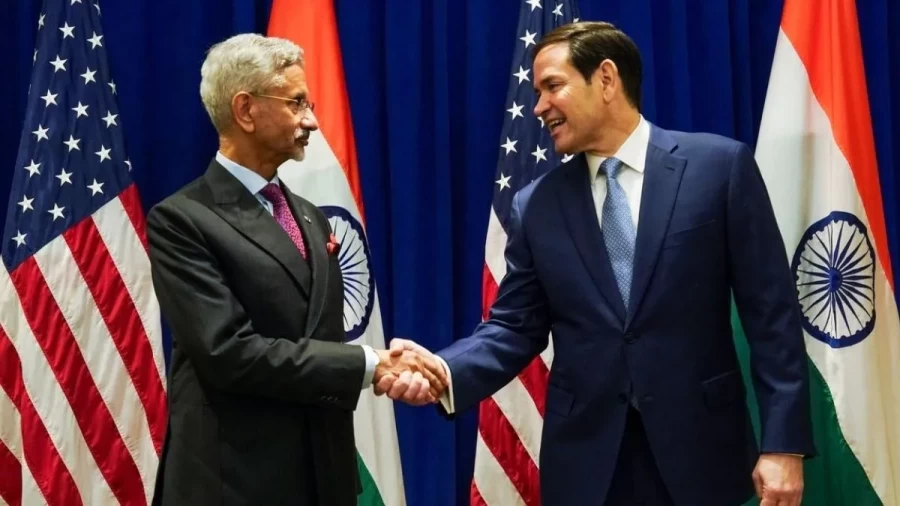
The United States has conveyed keen interest in India's Nuclear Energy. Bill, 2025, a landmark legislation recently passed by the Indian Parliament. This development was a central point of discussion during a comprehensive dialogue. Between US Secretary of State Marco Rubio and India's External Affairs Minister S. Jaishankar. Their extensive talks not only focused on strengthening civil nuclear cooperation but also touched upon the critical Indo-Pacific region, a subject that's anticipated to cause considerable unease in Beijing. The engagement underscores a deepening strategic partnership between Washington and New Delhi, particularly in areas of energy security and regional stability.
US Expresses Interest in India's Nuclear Energy Bill
According to a statement from Principal Deputy Spokesperson Tommy Pigott, Secretary Rubio extended new year greetings to Minister Jaishankar and congratulated India on the passage of the "Sustainable Harnessing and Advancement of Nuclear Energy for Transforming India Bill, 2025. " This bill has garnered significant attention from the US, which sees it as a pivotal step. Secretary Rubio specifically articulated America's interest in bolstering the US-India Civil Nuclear Cooperation, expanding avenues for American companies within India's nuclear sector, advancing shared energy security objectives, and ensuring the resilience and security of critical mineral supply chains. This interest highlights the potential for substantial collaboration and investment in India's burgeoning nuclear energy landscape.
Discussions on the Indo-Pacific Region
Beyond nuclear energy, the high-level discussion between Secretary Rubio and Minister Jaishankar also encompassed regional developments, with both leaders exchanging views on the evolving geopolitical landscape. A significant portion of their conversation was dedicated to reaffirming the unwavering commitment. Of both the United States and India to a free and open Indo-Pacific region. This shared vision for a region characterized by open navigation, adherence to international law, and peaceful resolution of disputes is a direct counterpoint to certain expansionist tendencies observed in the area. The emphasis on a free and open Indo-Pacific is a clear signal that's expected to provoke a strong reaction from China, which views such discussions with suspicion and often interprets them as efforts to contain its influence.
Strengthening Bilateral Economic Cooperation
The dialogue between the two foreign ministers also delved into avenues for enhancing bilateral economic ties. Secretary Rubio and Minister Jaishankar discussed ongoing negotiations for a bilateral trade agreement, signaling a mutual desire to deepen economic engagement. Also, they explored broader opportunities to strengthen economic cooperation across various sectors. This focus on trade and economic partnership complements the strategic and energy-related discussions, aiming to build a strong and multifaceted relationship that benefits both nations and contributes to global economic stability.
Understanding India's Nuclear Energy Bill, 2025
The Nuclear Energy Bill, 2025, often referred to as the "Peace Bill," represents a transformative legislative reform in India's nuclear energy sector. Passed by the Indian Parliament, its primary objective is to facilitate the involvement of private companies in nuclear energy production. This strategic move is designed to attract both private and foreign investment into the sector, which is crucial for India to achieve its ambitious clean energy goals. By opening up the nuclear energy landscape to private participation, India aims to accelerate its transition to sustainable energy sources, reduce its carbon footprint, and enhance its energy independence, while also creating new economic opportunities, while the bill signifies India's commitment to leveraging nuclear power as a key component of its future energy mix.
